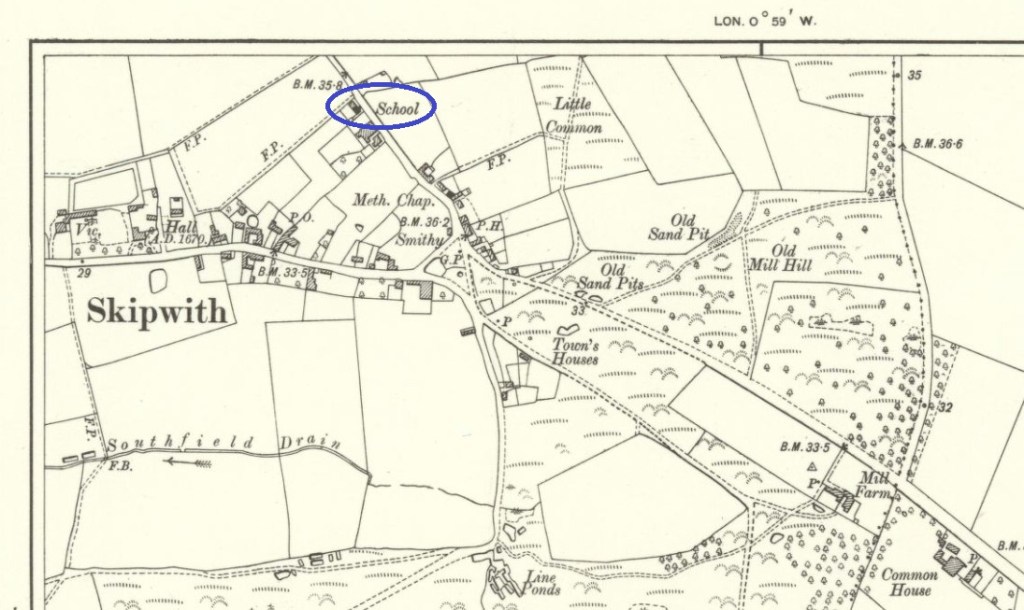
I’ve been writing about my family for some time now and decided to go back and look at the siblings of my grandparents. I came across John, the eldest brother of my granny Charlotte. He was born in Cliffe, Yorkshire on 12 March 1892 to my great grandparents William Ireland Barrett (1859-1942) and Charlotte Mary Burton (1870-1942). By the 1901 census the family had moved to Skipwith and John was a student at the Skipwith National School, having previously been educated in South Duffield. (See the following Ordnance Survey map for Yorkshire CCII.SW published in 1910.)
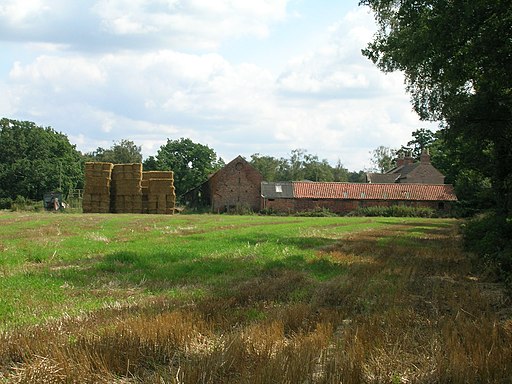
By the 1911 census John was working as a waggoner on Manor Farm, Skipwith: the farm run by his grandparents Thomas Burton (1842-1912) and Sarah Palframan (1844-1920). His grandfather Thomas died the following year, and Sarah took over the running of the farm. As World War I approached she continued to run Manor Farm. Sarah was a tenant of the Escrick Estate who owned the farm. In a letter she received from them on 27 August 1917 changes were made to the acreage of her farm. Sarah’s continued tenancy of the farm was conditional on her ‘keeping as much stock as you can to get manure as much more food must be produced on your farm if you wish to remain on it’. The following photograph is a more recent picture of Manor Farm.
Manor Farm, Skipwith – 2011 photograph. (See bibliography for acknowledgement.)
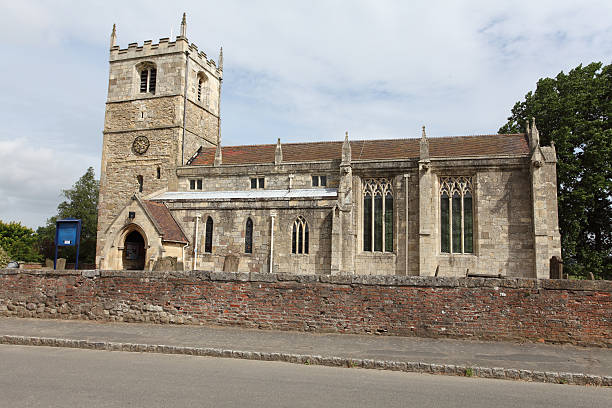
Meanwhile John had married Emily Marshall (1895-1962) on 8 December 1915 in St Helen’s Church, Skipwith. He was described as a farmer from Skipwith, and his father William the same. Emily was from nearby Hemingbrough, and her father Joshua Townsend Marshall was a farmer. There were three witnesses: Leonard Maud, William Alfred Barrett and Amelia Marshall; all relatives of John and Emily.
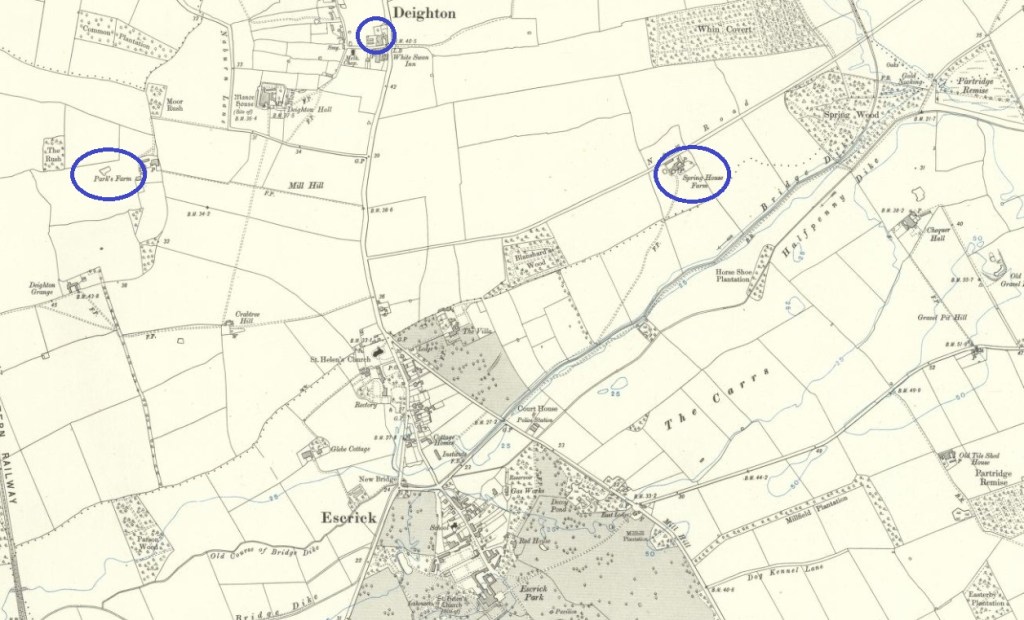
John and Emily went on to have a family and so far, I have found three daughters and four sons. By 1921 John was a farmer at Little Skipwith, Yorkshire. However, in 1939 John was a farm foreman living with Emily at Swan Farm, near Deighton with sons Thomas (1918-1984) and John (1933-1937). Their son Joseph (1920-1988) was a general farm labourer at a nearby farm called Parks Farm and son William (1917-1984) was a cowman working for his grandfather at Manor Farm, Skipwith. The following map shows the location of Swan and Parks farms near Deighton and Spring House Farm where John died in a cottage linked to the farm on 8 February 1978 aged 85. John left effects worth £1,768 in his will.
What surprised me when I researched John and his family was that they lived near the village of Escrick where I lived when I was a child. I don’t remember meeting them. I do think I visited Manor Farm with my father, although I just remember cold stone floors and being given a home baked scone. I would like to know more about the family members mentioned in this blog post. Do contact me if you have any further information which you are willing to share with me.
England and Wales, National Probate Calendar (Index of Wills and Administrations), 1858-1966. https://www.ancestry.co.uk/ : accessed November 2025.
Escrick Estate Letter 1917. Papers of the Forbes Adam/Thompson/Lawley (Barons Wenlock) Family of Escrick, 1387-1988. Collection ref U DDFA. http://catalogue.hullhistorycentre.org.uk/ : accessed November 2025.
National School Admission Registers & Logbooks 1870-1914.
I have previously written about Elias Sargeantson (1778-1812), my five times great grandfather who, was convicted of larceny at the East Riding of Yorkshire Quarter Sessions on 1 May 1810. Despite it probably being his first offence, he was sentenced to seven years transportation for stealing, as he was thought to be a member of the Snowden Dunhill gang. Elias didn’t make it to Australia. After his conviction he was moved to the prison hulk Laurel, moored in Portsmouth harbour. He died of hulk fever on the hospital ship on 11 April 1812.
The life of Snowden Dunhill has already been written about on the East Riding’s museum website and is worth a read. What is interesting to me is how he became connected to my five times great grandfather Elias. At the time of his conviction, he was probably living in Eastrington, just a few miles from Spaldington which is where Snowden and his family were living at the time.
In the early 19th century Snowden and his gang were known for stealing grain from farmers and that is certainly the crime Elias was convicted of in 1810. Snowden himself was convicted of larceny on 6 March 1813 to seven years transportation. He only seems to have got a far as the prison hulks moored at Woolwich. He was discharged from the prison hulk Bellerophon with a free pardon on 16 June 1819.
While he had been in the prison hulk most of his family had committed crimes, been caught and sentenced to transportation. More on this can be found on the East Riding Museum website. I was somewhat intrigued by this family and their possible connection to mine so I have put together the following outline family tree and would like to know more about the people mentioned in this blog post. Do contact me if you have any further information which you are willing to share with me.
Descendant chart for Snowden and Sarah
Bibliography:
Australian, Convict Transportation Registers – Other Fleets & Ships, 1791-1868.https://www.ancestry.co.uk/ : accessed July 2025.
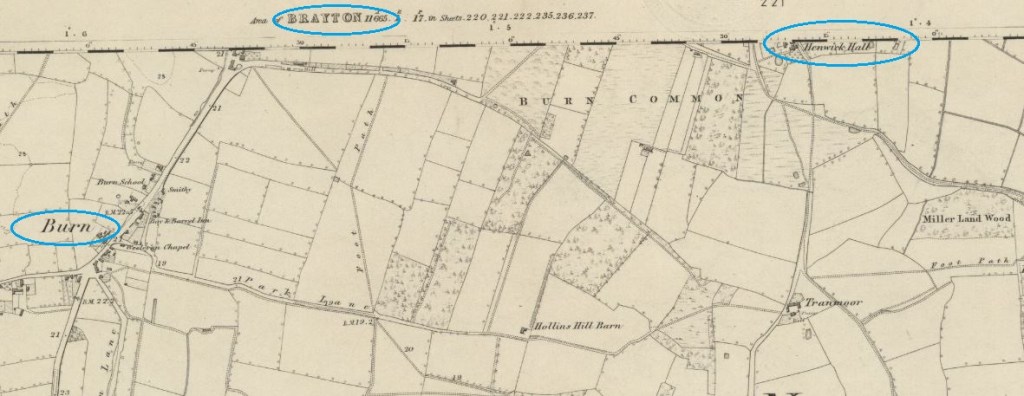
John, my first cousin four times removed, was baptised on 5 July 1817 in Brayton, Yorkshire. His parents were Thomas Palframan (1786-1858) a farmer, and Mary Ann Brabs (1792-1852). John married Sarah Otley, by licence, on 22 September 1846 in Brayton parish church. He was a bachelor and farmer from Henwick Hall in nearby Burn and Sarah (1818-1872) a spinster from Brayton. Together they had nine children, six daughters and three sons, although one son died in infancy. (The following map is OS Yorkshire sheet 236 published in 1853 and shows the location of Henwick Hall.)
By the 1851 census the family had moved to Old Ouse, Wistow where John was a farmer of 76 acres. By 1861 he was farming 80 acres and employed one man and two boys and in 1871 he was farming 86 acres with two farm labourers. John’s wife Sarah died on 25 November 1872 and was buried on 27 November in All Saints, Wistow churchyard. On her burial record her location in Wistow was given as Wistow Lordship. Not long after his wife’s death John made his last will and testament which was dated 20 January 1873.
John died on 11 April 1874. At the time of his death two of his daughters, Joanna (1848-1902) and Mary (1846-1916), were married and the ages of his other six children were as follows:
Daughters Amplias 25 (1849-1878), Emily 22 (1852-1927), Annie 21 (1853-1939) and Elizabeth 19 (1855-1883).
Sons John 17 (1856-1924) and Ot(t)ley 13 (1861-1937).
Unusually for members of my family John left a will with effects of less than £600. His married daughters, Joanna and Mary, were left £19 19s each with the specific request that the money was for them and not their husbands. Sons John and Otley were left £50 each on the basis they received the bequest when they were 21. John’s remaining goods, chattels etc were to be divided equally among his six unmarried children. His farming stock, horses, cattle, carts and carriages, hay, corn and all other produce on the farm and his tenant rights and insurances were left in trust. The trustees were his friends George Riley of Henwick Hall, farmer, Robert Hodgson of Selby, Gentleman and Henry Dixon of Wistow, shopkeeper.
John requested in his will that his tenanted farm should carry on after his death, to benefit his six unmarried children, until his youngest son Otley was 21, which would have been in 1882. There was a further request that the farm stock should be offered to John when he was 21. John senior’s executors were George Riley, Henry Dixon and Robert Hogson.
John’s will was proved at Wakefield and his executors posted a notice in the Selby Times (31 July 1874, p1) requesting that his creditors came forward with their claims on John’s estate by 1 September 1874. After that date the executors intended to distribute his assets according to his will.
It seems there may have been difficulties managing John’s affairs after his death. Notices were submitted to the Selby Times on 13, 20 and 27 October 1876 advising that John Palframan the younger was ‘no longer authorised to transact business’ on behalf of the executors (George Riley and Henry Dixon). And that they ‘are not answerable to any business debt or claim’ that anyone may have against him.
Although Otley had not reached the age of 21 by 1877, the farm and two closes of excellent land (lots 2 and 3) occupied by the trustees of John, appeared in an advert for sale by auction in the Selby Times (29 June 1877, p1). Lot 1 was a farm in Wistow occupied by Mr William Varley and lot 4 a house and premises in Sherburn St, Cawood occupied by Mr John Farrer. The properties were said to be ‘Copyhold of the manors of Wistow and Cawood where the Fine is small and certain’. At this stage it wasn’t clear who the owner of the four lots was, just that the auctioneer was Mr Acton and the auction was to be held at the Londesborough Arms Hotel in Selby on 10 July 1877 at 5pm.
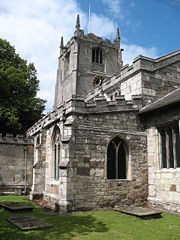
Further information from the Selby Times (20 July 1877, p1) indicated that lots 1 and 2 were not sold and that lot 3 was bought by Mr T Jackson of Cawood Hagg for £350. Lot 2 consisted of 64 acres 0 roods 8 perches of land, a farm house and buildings and that the price reached £4,700 before the lot was withdrawn from sale. The lots were the residue of Mr Morritt’s estate, which had mostly been sold in the autumn of 1876. A full list of the lots sold then had appeared in the Selby Times (10 November 1876, p4). Lots 55 and 56, in the occupation of Mr Palframan, were the two lots later withdrawn from sale in 1877. The owner of the properties was R A Morritt esq of Rokeby, county Durham. The Morritt family had been landlords in the area for many years and memorials to them are in Wistow church. R A Morritt (1816-1890) had retained some interest in Wistow as he donated £25 to the Wistow new school building fund in 1877 (Selby Times 23 March 1877, p1).
A further request from John’s trustees, regarding outstanding debts for his estate, was made in the Selby Times of 15 February 1878. The intention was to distribute his assets to those parties entitled to receive them. Not long after this date, the Selby Times of 21 June 1878 reported on the results of a case at Selby County Court brought by E Shearsmith potato merchant against George Riley and Henry Dixon, trustees. He had lent a saddle to John the younger in September 1877. When he learnt that the trustees were selling the farming stock he went to them and asked them not to sell it. The saddle was sold by the auctioneer. Shearsmith was awarded 12s 6d with costs. The Justice of the Peace remarked that ‘if trustees would act in an overbearing manner, they must take the consequences’.
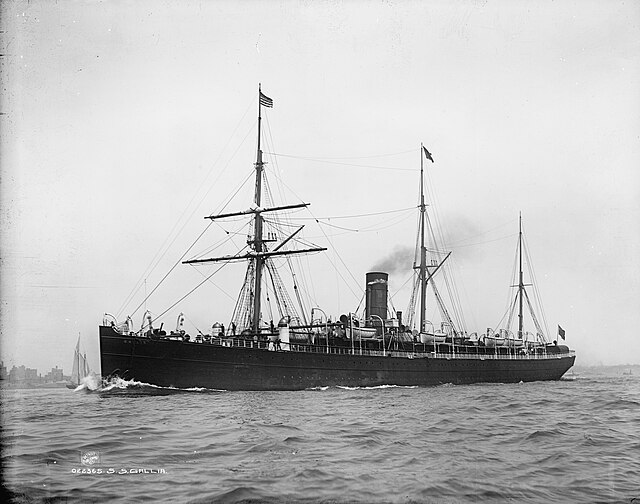
The next twist in this story involved John’s two sons, John and Otley. Together they left Liverpool on 12 November 1881 on the ship Gallia (see following image). On arrival in New York on 25 November 1881, they were described as farmers bound for Canada. While John made a life for himself in Ontario, Canada, Otley returned to Wistow where he married Elizabeth Lacy (1861-1938), on 30 June 1883, in Wistow parish church. Unfortunately, Otley was an unsuccessful farmer and was declared bankrupt in 1895 (York Herald 3 May 1895, p3). Otley was buried in St Peter and St Paul, Drax churchyard on 6 June 1937.
John and Otley’s eldest sister Mary, a widow, emigrated to Canada with her children Ellen (Helen), Louise and John together with Ellen’s husband Edward Bridgeman. They left Liverpool on 11 January 1894 on the ship Mongolian, bound for Halifax, Nova Scotia. It seems likely that Mary’s son Otley Palframan Turner preceded them to Canada, but a passenger list record has so far not been found for him. Mary died on 7 September 1916 in Toronto, Canada and was buried in Mount Pleasant cemetery. York, Ontario. When her brother John died on 26 June 1924 he was buried in Prospect cemetery, another Toronto Trust Cemetery, in a grave owned by his wife Frances Wheeler (1858-1938).
Finally
I would like to know more about the people mentioned in this blog post. Do contact me if you have any further information which you are willing to share with me.
Continuing the theme of convicted individuals in my family, I came across Jacob, my 4th great uncle. He was baptised on 14 August 1808 in Torpoint, Cornwall to parents Jacob Burt (1781-1873), a rope maker, and Elizabeth Small (1782-1845).
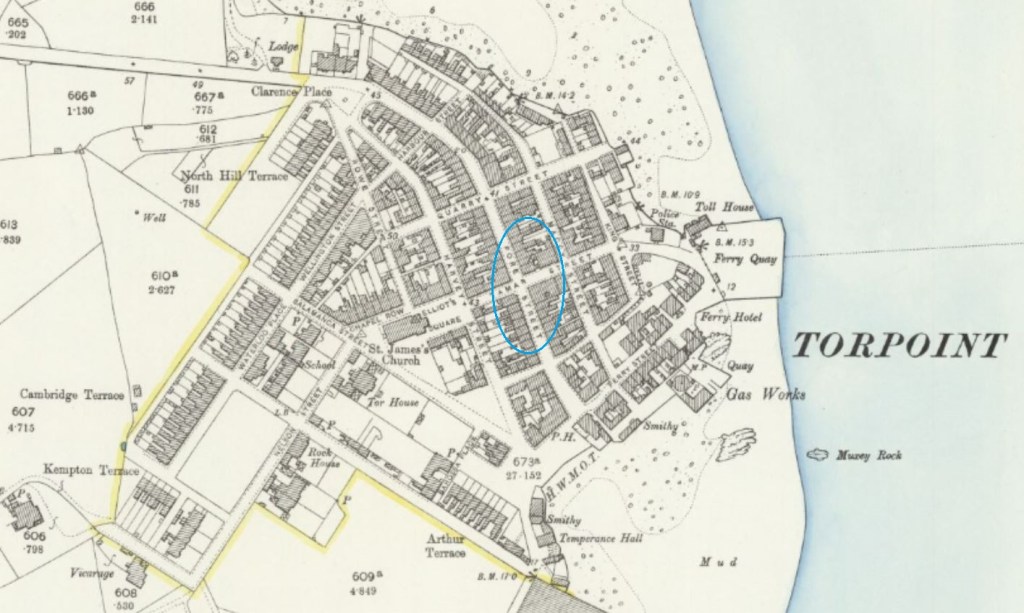
Jacob married Dolly (sometimes called Dora) Pearce on 24 June 1832 in St Andrews’ church in Plymouth. They had four sons, one of whom died in infancy. Jacob seems to have done well as a tailor and by the 1861 census the family were living in Fore Street, Torpoint (see the map OS Devon CXXIII.6 published 1894). Jacob was described as master tailor employing one man and one boy; both were living with the family.
A record from 1866 shows that the families fortunes had changed. The transcription of a record for Jacob, found in a collection of records from Bodmin gaol, provided the following information:
Jacob was aged 58, married and had three children. His birth year was given as about 1808 and his abode/birth place was Antony.
He was admitted to and discharged from Bodmin Gaol in 1866.
Jacob was a tailor and while in gaol his employment was tailoring.
The notes on the record say that he was ‘late Secretary of the Torpoint Philanthropic Friendly Society, in possession of £17 10s 81/2d’. Unfortunately, there was no further information about what led him to be there and I didn’t find anything else about the case in local newspapers. Perhaps it was a case of suspected embezzlement or similar?
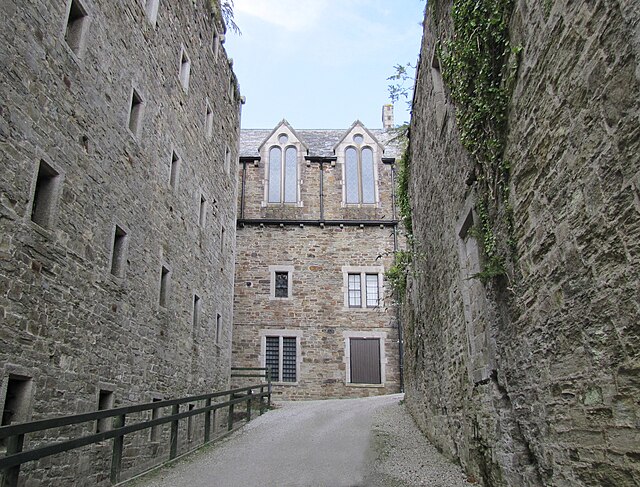
Bodmin Gaol, on the edge of Bodmin Moor, was originally built in 1779. It was used largely as a debtors prison until 1869, when imprisonment for debt was abolished. Prisoners were paid for their work on the products they produced which had been sold by the governor.
Bodmin Jail, Bodmin, Cornwall, England
The notes on Jacob’s gaol record also included information about letters he had sent and received while in gaol. He had written to his wife Dora at 40 Fore St, Torpoint, which helpfully confirmed his address. Jacob had written to, and received a letter from, Mr John Nodder, PO Torpoint. John was recorded as a sub-master and shoemaker, living at 63 Fore Street, Torpoint, in the 1871 census. The third letter mentioned in the notes was from his son J Burt of Teignmouth.
After his release from Bodmin Gaol Jacob returned to Torpoint. In the 1871 census Jacob and his wife Dora were living at 40 Fore Street, Torpoint, as what looked to be one of three households at the same address, including his father Jacob who was by now a pensioner.
Jacob died on 26 December 1878 of bronchitis, aged 71 years. His youngest surviving son, Jacob (1841-1913), from Lostwithiel, reported his father’s death. Jacob’s wife Dora seems to have gone to live with her son Jacob and his family as her death on 1 November 1881, was reported in the West Briton and Cornwall Advertiser dated 3 Nov 1881.
Finally
I would like to know more about the people mentioned in this blog post. Do contact me if you have any further information which you are willing to share.
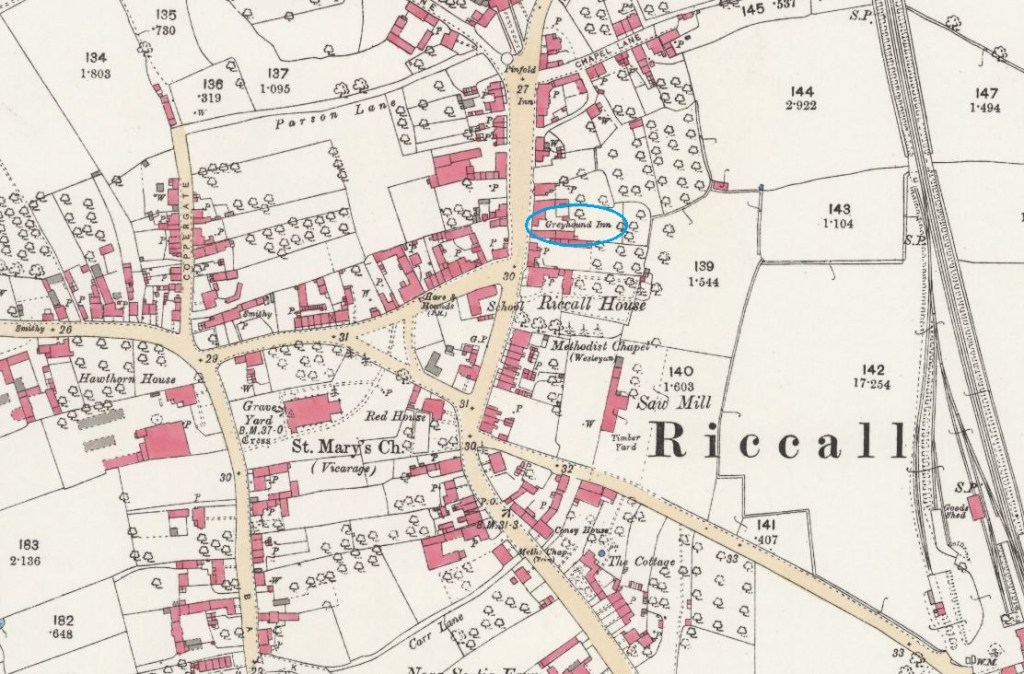
Guy Silversides (1784-1861), the publican at the Greyhound Inn in Riccall, was convicted on 2 March 1824 at the East Riding of Yorkshire Quarter Sessions. His offence, ‘against the conditions of recognizance for the license of an ale house’, resulted in a fine of one guinea with costs of 10 shillings and two pence. The following map shows the location of the Greyhound Inn in Riccall (Ordnance Survey Yorkshire CCVI.II date 1891).
The record from the Quarter Sessions (QSF/463/F/1) provided an insight into the case. A key witness was John Harper junior, an apprentice to Guy. (Guy was also a shoemaker.) John reported that on the evening of the offence, 20 January 1824, four people had played cards in the inn for money. They were his master Guy Silversides, Varley of Cawood, Edward Hawkins, Dowson and Jonathan Romans of Riccall. John saw Jonathan Romans cheating. He suggested that the house was a meeting place for prostitutes and used for gaming. It seems that his master, Guy, had entered his room the following morning, between 5 and 6 am, and ‘struck me twice upon the head’.
Guy, in his defence, asked that the magistrates consider that this was his first offence. It seems that a fellow card player, Jonathan Romans (1791-1858,) had previously been convicted at the Quarter Sessions for using dogs to destroy game in the nearby village of Escrick. His conviction on 17 February 1824 had resulted in a fine of £20 (QSF/463/F/20). Jonathan was described as a farmer from Riccall. A key witness in his trial was the Escrick gamekeeper John Smith. Other witnesses were George Kirk a labourer from Riccall, John Harper of Riccall and Susanna Wellman, a servant of Guy Silversides. Jonathan remained unmarried until his death in the Selby Union Workhouse on 31 January 1858. He was aged 68 and his cause of death was recorded as ‘decay’.
Returning to Guy, my 4th great grandfather; together with his wife Mary Tomlinson (1796-1866), the couple had twelve children. It isn’t clear when Guy gave up the Greyhound Inn. However, in White’s 1840 directory, Guy was recorded as a shoemaker and not the publican at the Greyhound Inn. He continued as a shoemaker in Riccall until at least the 1861 census. Guy died on 11 July 1861 and was buried in St Mary’s Churchyard, Riccall on 14 July 1861.
Finally:
I would like to know more about the people mentioned in this blog post. Do contact me if you have any further information which you are willing to share.
Quarter Session Records: QSF/463/F/1 and QSF/463/F/20. East Riding Archives.
White, William. (1840) History, Gazetteer and Directory of the East and North Ridings of Yorkshire. Sheffield: Robert Leader. pp. 334-5. https://www.ancestry.co.uk/ : accessed June 2025.
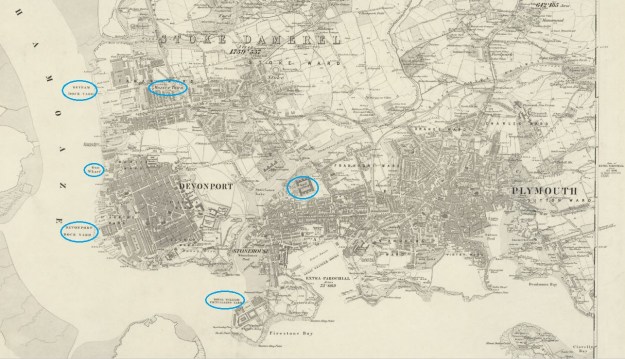
Joseph is linked to my Ellis ancestors through his sister Elizabeth Small Burt (1812-1894) and her husband George Brown (1811-1897), who are my three times great grandparents. Their daughter Elizabeth Small Brown (1844-1916) married my two times great grandfather Francis Ellis (1839-1925) in Portsea, Hampshire, where he was serving in the Coastguard service. The following OS map has been annotated with a number of locations where George and Elizabeth lived with their family in the 19th century.
Joseph, according to his naval record, was born on 14 January 1828 in Torpoint, Cornwall to parents Jacob Burt (1781-1873) and Elizabeth Small (1782-1845). In the 1841 census the family are living in Antony in Cornwall and Jacob is a ropemaker. At the age of 22 Joseph joined the navy on 23 October 1849 and was described as a cooper. This was just over a year after he had married his wife Emma Betty in Q2 1848 in East Stonehouse, Devon. Their daughter Emma Jane Burt (1848-1925) was born not long after in Devonport.
Joseph’s naval service record paints a picture of his physical features. He was 5ft 5in tall with light brown hair, a fair complexion and light hazel eyes with no distinguishing marks. It also gives an interesting insight into his career in the Royal Navy. From 23 October 1849 until 4 June 1852, Joseph served on HMS Conflict, a wooden sloop, based in south east America until it returned to Portsmouth. He then served on HMS Hogue, an unarmoured wooden screw vessel, from 1 September 1852 until 23 May 1856. Initially it was a guard ship in Devonport, before it went to the Baltic in 1854 during the Russian war. It was reported in the Times of 6 March 1854 that it was one of several ships which had been victualled at Spithead (near Portsmouth) for six months foreign service.
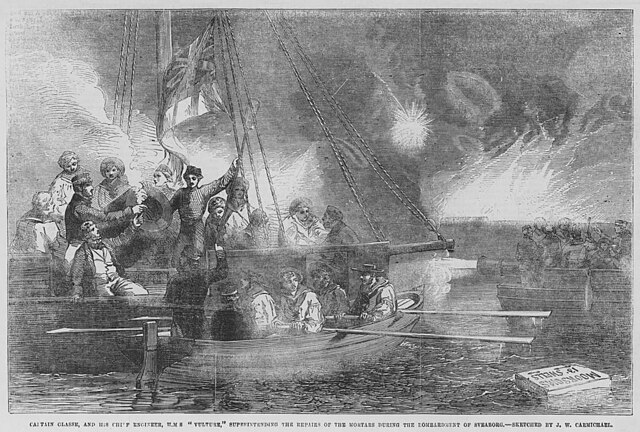
On 24 May 1856 Joseph joined HMS Vulture. It was damaged at the Bombardment of Sveaborg and the illustration is a sketch by James Wilson Carmichael of Captain Glasse and his Chief Engineer supervising its repairs. While Joseph served on HMS Vulture it saw service in the Mediterranean and frequently spent time in Malta and Gibraltar, as well as places like Serpents’ Island in the Black Sea, Sevastopol and then the Bosphorus. The last three places were reported by an officer on HMS Vulture in a letter reproduced in the Glasgow Courier, 27 November 1856, p4.
When HMS Vulture returned to Spithead in 1860 it was inspected and then steamed into Portsmouth. Joseph would have been one of the crew who subsequently boarded the Pigmy steamer bound for Devonport and the chance to be reunited with his family (report in the Naval and Military Gazette and Weekly Chronicle of the Service, 7 April 1860, p3.)
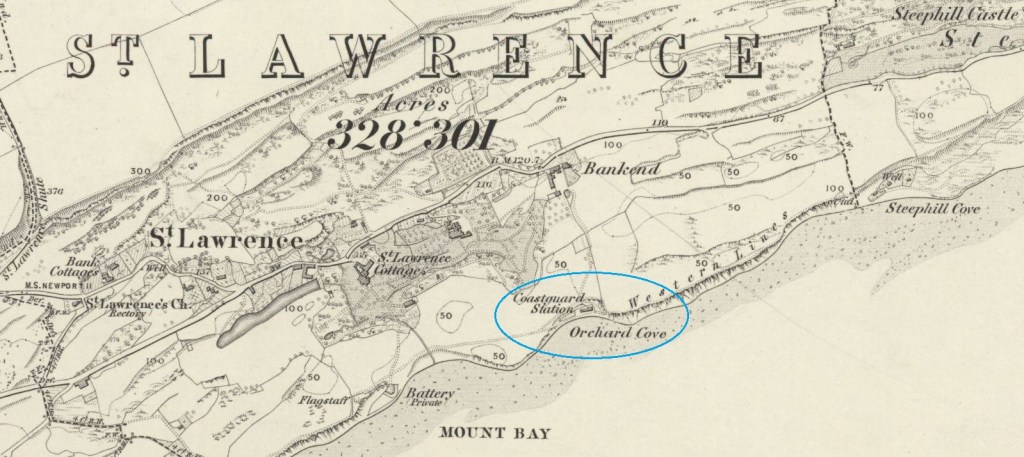
Joseph’s last ship, before he joined the coastguard service, was HMS Impregnable, from 6 April 1860 to 22 May 1860. His first posting as a coastguard was as a boatman and in 1861, he is living with his wife and daughter in Victoria Terrace, Ventnor and described as a coastguard and retired cooper. The coastguard station was to the west of Ventnor as shown on the following OS map (Hampshire and Isle of Wight Sheet C, published 1866). It no longer exists.
Joseph’s record of his coastguard service updates his physical appearance. He is still 5ft 5in tall and with a fair complexion. However, his hair is now described as brown and his eyes grey and he has scars on his right knee and right elbow. On 27 April 1868, while still at Ventnor coastguard station, Joseph was promoted to commissioned boatman; a position he held until 30 April 1873. He was appointed chief boatman on 1 May 1873 and on 6 May 1873 he moved to the coastguard station at Ryde.
Joseph moved back to Ventnor coastguard station on 16 June 1874 was promoted to chief boatman in charge on 7 June 1877. His next move, as chief boatman in charge, was to Crowlink, Sussex on 20 June 1877. He stayed there a couple of years before moving to Cuckmere Haven, Sussex on 5 October 1879.
Joseph was granted a pension on 19 December 1882 and by the 1891 census had returned to the Isle of Wight, where he lived at Bettesworth Rd, Ryde until he died on 5 July 1913. He left effects to the value of £359 1s 7d to his widow Emma. Emma (1826-1915) died at the age of 88 on 15 December 1915. She left effects to the value of £192 15s 6d to her daughter Emma Jane.
Do let me know if you have any stories about them which you are willing to share with me.
Carmichael, James Wilson. Captain Glasse, and his Chief Engineer, H.M.S. “Vulture,” superintending the Repairs of the Mortars during the Bombardment of Sveaborg. Illustration for The Illustrated London News, 5 April 1856. James Wilson Carmichael, Public domain, via Wikimedia Commons.
I am continuing my occasional research into more distant members of my family. Currently I am working on a project for the Family and Community History Research Society looking into the experience of patients in County Pauper Lunatic Asylums during the period 1861-1901. While researching my Silversides cousins I came across Guy, my third cousin four times removed, working as an attendant in Stanley Royd Hospital, Wakefield in the 1911 census. Stanley Royd was the first West Riding county pauper lunatic asylum built in 1818. Guy didn’t remain working there long but turned out to be interesting for another reason; he emigrated to Canada not long after the 1911 census was taken.
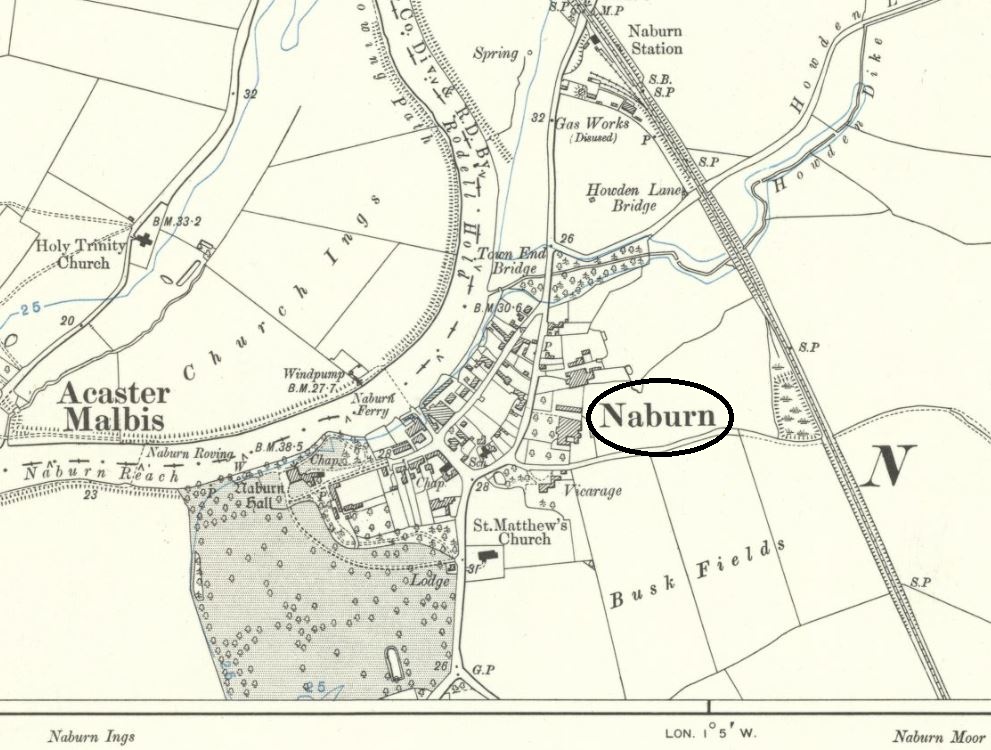
Guy was the youngest son of William Silversides (1842-1916) and Elizabeth Habbishaw (1842-1927). He was born in Naburn near York (see OS Yorkshire sheet CXCI.NW published 1910 map) and was said to be 18 and a gardener when he enlisted in the Northumberland Fusiliers on 27 February 1900. Guy was 5ft 5in tall, weighed 124lbs, with brown hair, blue eyes and a fresh complexion. His three older brothers, George, Robert and John had enlisted in the army before him and two of his sisters’ married men who served in WWI.
Guy’s military record indicated he had served as a bandsman in the West Indies and then South Africa where he arrived on 23 July 1902. The Treaty of Vereeniging, which ended the Second Boer War, had been signed on 31 May 1902. Guy remained in South Africa until 4 March 1907. As a sergeant bandsman he was posted to the army reserve on 7 March 1908. While serving in the army he gained his St John’s ambulance certificate for first aid to the injured. Perhaps this enabled him to gain a position at Stanley Royd as an attendant. Guy was working there when the 1911 census was taken on 2 April. Not long afterwards his military record showed that on 2 June 1911 he was permitted to go to Canada.
Emigration to Canada
Guy left Liverpool for Canada on 7 July 1911 as a passenger on the steamship Victorian, Allan Steamship Line, bound for Montreal, Quebec, Canada. He arrived on 14 July 1911 and was described as an attendant with the intention of farming. His entry on the passenger list was stamped “British Bonus Allowed”. Commission was paid to UK steamship booking agents, by the Canadian government’s Immigration Branch, for suitable immigrants who bought a ticket to sail. Guy as the passenger did not receive a bonus.
The next record found for Guy was his marriage to Edythe M Kimber (or Kember) in 1913 in Edmonton, Alberta. Edythe, a nurse, had left Liverpool on 21 February 1913 bound for New Brunswick, on the Hesperian, Allan Steamship Line.
On 8 January 1915 Guy enlisted in the 101st Canadian Overseas Expeditionary Force Band Corp. He was described as an attendant living at 9725, 96a St, Edmonton South, with his wife Edythe. His previous service with the Northumberland Fusiliers was noted.
Guy departed for England on 8 January 1915 and by 9 October 1915 he was a corporal in the 49th Battalion of the Canadian Infantry on his way to Boulogne, France. While he was serving in the army his personnel records showed that he was granted leave on the following dates:
20 August 1917 – 2 September 1917.
15 February 1918 – 3 March 1918.
25 January 1919 – 8 February 1919.
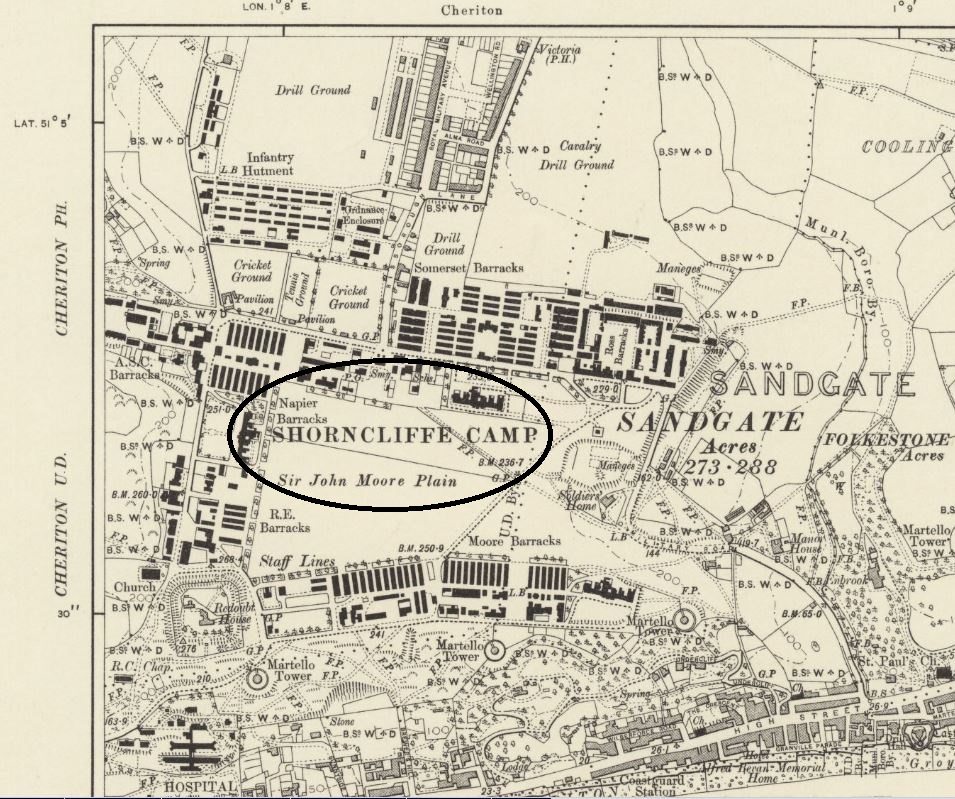
Guy’s personnel record also recorded separation payments to his wife Edythe. She returned to England on 2 August 1915 and gave her intended address as 43 Pentonville Rd, London. The record of her payments showed that she didn’t remain there for the duration of WWI. Edythe spent some time at 2 Darby Terrace, Horn Street, close to Shorncliffe camp used as a base for the Canadian forces (see OS Kent sheet LXXV.SW published 1908map). This was also where Guy’s brother John was base and his wife and family were at 2 Darby Terrace. Edythe’s final address was in Naburn, possibly with other members of Guy’s family. Perhaps he was able to visit her when he returned on leave from France.
After the end of WWI Guy and Edythe both returned to Canada on separate ships. Edythe arrived back at St John’s, New Brunswick on 25 April 1919 on the ship Corsican while Guy returned to Canada on 2 May 1919. After this date no records have been found which included either or both of them, notably the 1921 census. At some point Guy moved to Vancouver where he married his second wife, Elsie Davenport (1902-1970), on 23 May 1931. They were recorded together in the 1931 Canadian census when Guy’s occupation was recorded as a postman, who was not working. It is not clear what happened to his first wife Edythe. They may have divorced and it is possible Edythe remained in Alberta and remarried there in 1924.
Guy and Elsie continued to live in Vancouver where they were recorded on lists of voters:
1945 – Guy, a mail carrier, and Elsie living at 2784 Adanac St, Vancouver East.
1949 – Guy, retired, and Elsie living at 2784 Adanac St, Vancouver East.
1962 – Guy, retired, and Elsie living at 2784 Adanac St, Vancouver East.
Guy died on 12 May 1964 in Vancouver, British Columbia, Canada. His burial record stated that he had been in Canada for 45 years and Vancouver for 41 years. It also included information from his British Columbia marriage record and that he was a bachelor when he married Elsie. His first marriage to Edythe was mentioned and she was his next of kin in his Canadian Expeditionary Force personnel file. If he had been in Vancouver for 41 years then that suggests he moved there about 1921, possibly two years after he returned to Canada from serving in WWI.
Finally
I would like to know more about all the people mentioned in this blog post, and in particular, Guy who emigrated to Canada. Do contact me if you have any further information which you are willing to share.
Many of my ancestors worked on the land either as husbandmen or agricultural/field labourers, so when I find someone with a different occupation, I am always keen to write about them. The butler in my family was John Silversides ((1846-1833), my second cousin five times removed. He was born in Naburn, Yorkshire to parents Robert Silversides (1809-1898) and Hannah Waites (1815-1894). Robert was a farm labourer born in nearby Riccall and Hannah was from Kelfield.
The village of Naburn is located on the River Ouse about 4 miles south of the city of York. In the 19th century it was described by Lewis in his topographical directory as consisting of “2720 acres of rich land, two-thirds arable and the remainder meadow”. Just one of Robert and Hannah’s sons, William, remained a farm labourer in Naburn. Not only did John take up a different occupation but so did his brothers Thomas and Matthias. Thomas became a police officer; he died at the age of 91, a retired inspector of police, in Malton. Matthias worked on the railways in York.
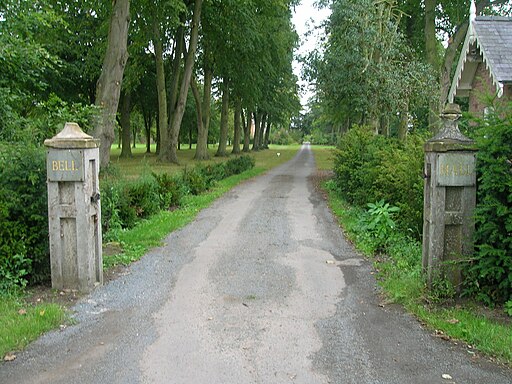
John was first recorded as a domestic servant, butler, at Bell Hall, Naburn in 1871 where he worked for the Baines family; they had inherited the estate in the 18th century. He was still working as a butler there when he married Eliza Palfreeman (born about 1849) on 26 May 1873 in St Mary Bishophill Senior church in York. Prior to her marriage Eliza was working as a parlour maid in Bootham in York.
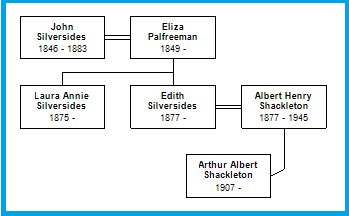
John and Eliza went on to have two daughters: Laura Annie Silversides born 4 August 1875 in Wheldrake and Edith Silversides born 20 January 1877 in Naburn. In both cases John was described as a butler (domestic servant); he was also the person who registered Laura’s birth. His father Robert registered Edith’s birth, which suggested that Eliza was living with him and his wife when she gave birth.
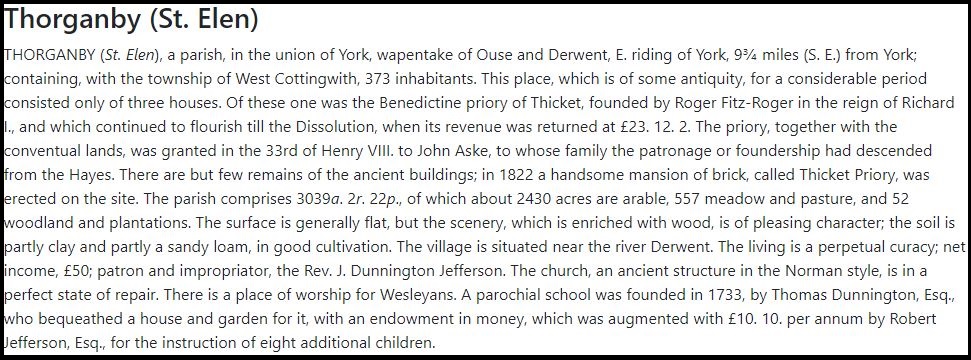
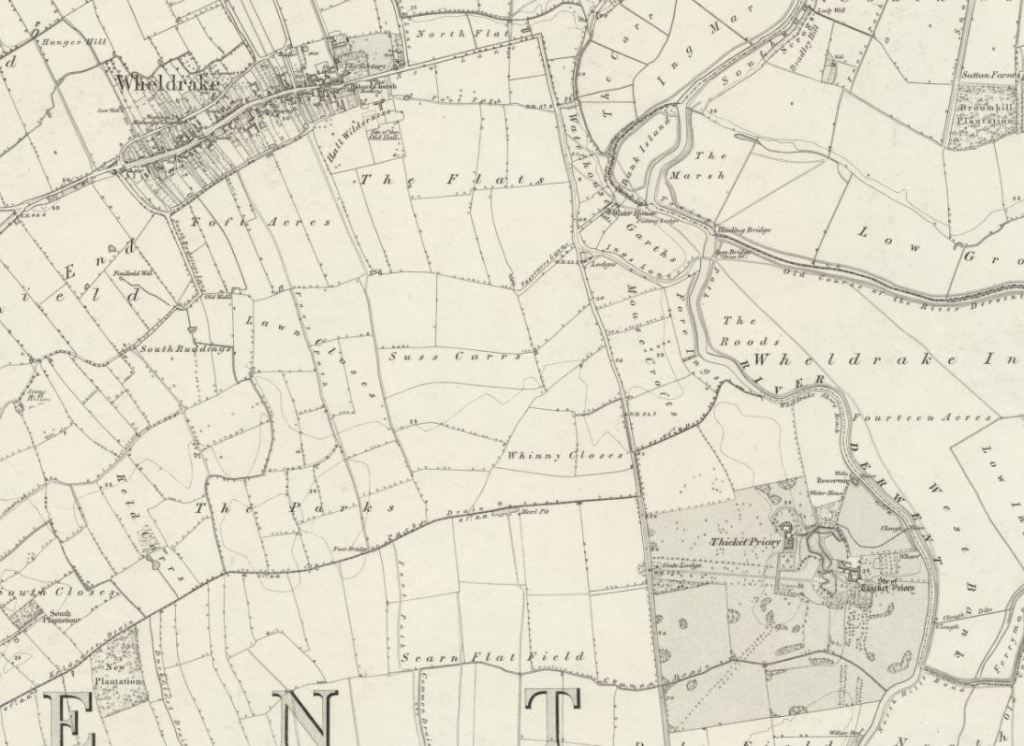
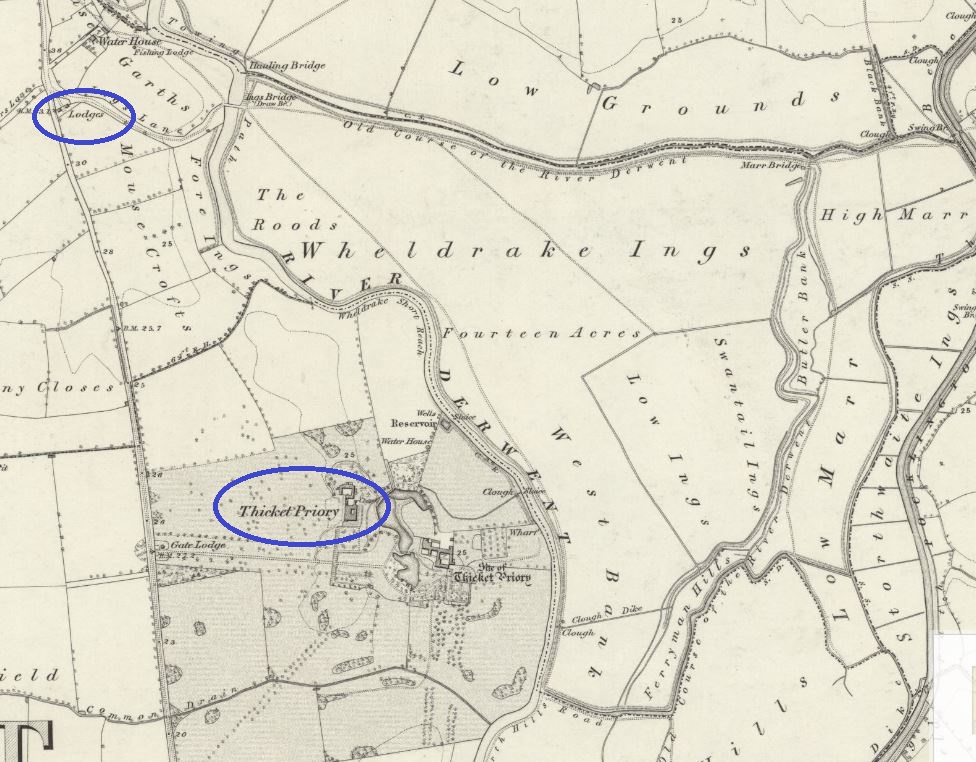
In the 1881 census the family were living together in “Jefferson Lodge” in Wheldrake, close to the boundary with the nearby village of Thorganby. The census record is blurred but it seems likely that this dwelling was on the northern side of Thicket Priory, owned by the Dunnnington-Jefferson family in the 19th century. They were probably John’s employers. Lewis’ 1848 topographical directory described Thicket Hall in his entry for Thorganby.
The following extracts from the OS map for Yorkshire sheet 192, dated 1854, show the position of the lodge and Thicket Priory.
The 1881 census is the last record which I’ve found for the family as a whole. John died on 5 August 1883 in 35 Cleveland St, St Mary Bishophill, York of pernicious anaemia. His death was reported by Isabella Lewins, the wife of a railway guard. John’s brother Matthias, a railway worker, had married his second wife on 10 February 1883, giving his address as Cleveland St. It seems likely that John died at his brother’s house. What isn’t clear was where his wife Eliza was when he died. By 1891 their two daughters Laura and Edith were pupils at St Stephen’s Orphanage, Trinity Lane, York. I’m planning a visit to the Borthwick Institute in York to find out more about their time there. So far, I haven’t been able to find out what happened to their mother Eliza. Do let me know if you have any stories about the family which you are willing to share with me.
A while ago I wrote a blog post about Lucy Silversides (1840-1887), born Lucy Rhodes, an ancestor of mine who died within two weeks of her admission to Broadgate Hospital, the East Riding County pauper lunatic asylum in Walkington near Beverley. I found information about Lucy’s stay in the hospital’s case book number 5 held by the East Riding archives. Lucy had been admitted from the Selby Union on 1 March 1887. It is known that in 1881 she was living with her husband John, a labourer, and six children in Dam End, Riccall, Yorkshire
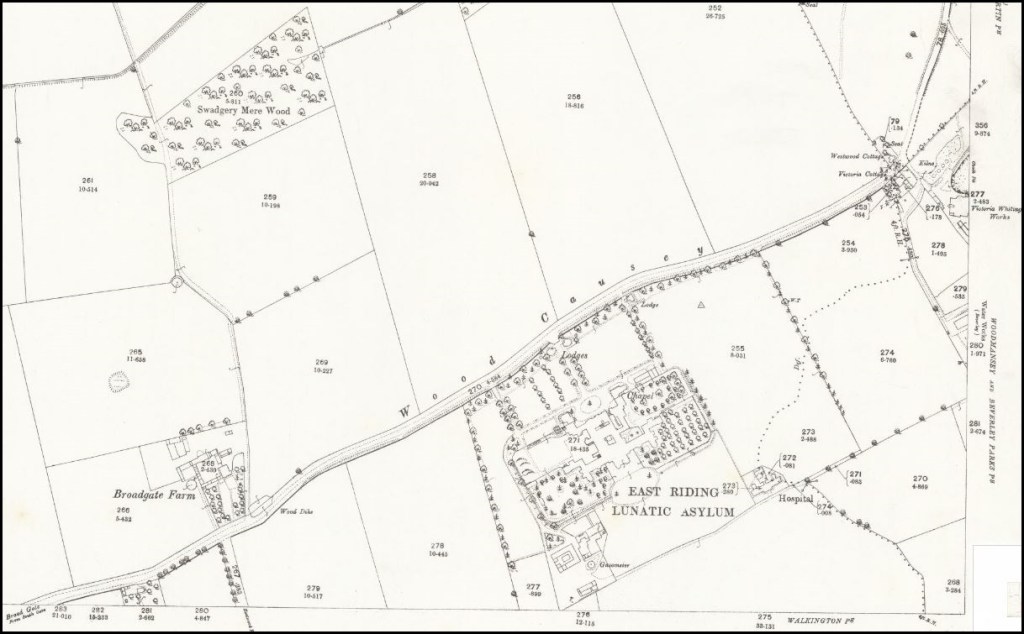
Broadgate opened on 25 October 1871 on part of Broadgate farm and was demolished in 1989. The following OS Yorkshire CCX.II map, dated 1893, shows the location of the asylum to the north east of the village of Walkington, just off the B1230 road.
The hospital case book mentioned that Lucy’s first mental health attack had lasted for eight months, although it did not say where she was when this occurred. Perhaps she had spent some time in the workhouse in Selby before being admitted to Broadgate? The book went onto describe Lucy as being aged 50, married and that she was Church of England. Lucy’s physical condition was described as tall, poorly nourished and dirty. With regards to her mental health, she was of a nervous temperament, dangerous and with her form of insanity described as mania. She was said to be excited and that “the patient talks to herself”. The case book explained that on 4 March “her conversation was silly and voluble”. By 11 March Lucy was “physically in a very bad state and appears to be getting weaker daily…she is nervous and excited and most difficult to manage in short nothing can be done with her…she won’t eat.” It went onto say that “the diet for the most part consists of butter, eggs milk mixture with brandy”. Lucy had diarrhoea. She died on 13 March 1887 at 8.50pm in the presence of nurse Phebe Allan. Her cause of death was Phthisis, now more commonly known as pulmonary tuberculosis. An autopsy was conducted and the record certified by the asylum Medical Superintendent Dr Murdoch Donald Macleod. After her death Lucy was buried in St Mary’s churchyard, Riccall.
When Lucy died in 1887, the medical superintendent of the asylum was Dr Murdoch Donald Macleod. Deaths in County Pauper lunatic asylums were reported in the asylum annual reports and the reports themselves often covered in local newspapers. At the moment the East Riding archives are closed to visitors so I wondered if the local newspapers had information relating to the asylum in 1887. A summary of 16th annual report for the asylum (for the year 1887) was published in the Beverley Recorder on 4 February 1888. Dr Macleod reported that “during the year 56 patients were admitted, and 51 discharged, while 13 men and 16 women died”. Lucy was one of those women. Dr Macleod held the view that those patients “admitted from this district usually suffer from varieties of insanity which as a rule do not present hopeful prospects of care”. He was reported as saying that:
“In many of the more isolated villages of the Riding there appears to be a considerable amount of hereditary tendency, not so much to actual insanity as to an ill-balanced ill-developed nervous system, producing individuals who are never very bright, and who, when subject to the strain of some exciting cause, develop habits and tendencies which necessitate them being placed under care.”
In Lucy’s case she came from a more populous village and the agricultural depression mentioned later in the report by Dr Macleod was more likely to have been a contributing factor to her physical and mental health than a lack of intelligence. Lucy and her husband John (1822-1888) came from different villages in the Riding.
Turning next to a project I am involved with, the FACHRS (Family and Community Research Society) asylums project, I have been looking at local newspaper reports and found them a useful source particularly when tracing the changes in medical superintendents during the project study period 1861-1901.
Broadgate hospital was built to serve patients from the East Riding of Yorkshire when the North and East Ridings asylum in Clifton, York became over crowded. It opened in 1871 and closed in 1989. In its first 10 years of operation it had the following three medical superintendents:
Dr Niel Grey Mercer (1841-1877) – Dr Mercer was a Scot who had trained in Edinburgh where he gained MD and LM qualifications. With his appointment in 1871 he was the first medical superintendent for Broadgate. He had previously been the Senior Assistant Medical Officer at the Lancaster County asylum. A report of his sudden death from illness on 1 January 1877, at the age of 36, was reported in the Beverley Guardian of 6 January 1877.
Dr Richard Greene (1844-1927) – Dr Greene was born in the USA and trained in Edinburgh where he gained LRCP, LM and LRCS qualifications and LSA in London. The Hull Packet of 19 July 1878 reported that he had been offered a more lucrative appointment in Northampton. He may have “poached” some of his staff as some were recorded as moving to Northampton in 27 August 1878 edition of the Yorkshire Post. Dr Greene continued to practise at Northampton for the remainder of his career. He was awarded a pension according to the Northampton Mercury of 25 February 1898.
Dr Edmund Bancks Whitcombe (1843-1911) – Dr Whitcombe was born in Shropshire and gained his LSA in Birmingham and his MRCS in England. The Hull News of 24 August 1878 reported that he had just started work at Broadgate hospital. Dr Whitcombe’s move to the Birmingham City asylum was reported in the York Herald of 3 January 1882 together with details of his successor Dr Macleod. In 1881, while in Birmingham, Dr Whitcombe advocated changes to the system of care for lunatics and proposed the need to trial a separate hospital system (Birmingham Mail 15 March 1888). He died in post in Birmingham in 1911.
So, it seems that two out of the first three medical superintendents at Broadgate went onto having careers lasting more than 20 years in the asylums they moved to. Perhaps they saw Broadgate as an interim appointment until they found where they wanted to be.
The fourth medical superintendent at Broadgate, Dr Murdoch Donald Macleod, was a Scot born in 1852. He gained his MB and LRCS in Edinburgh. Before his appointment he had been the Assistant Medical Officer at the Cumberland and Westmorland asylum. While at Broadgate he involved himself with the local community; on one occasion he arranged a series of first aid classes for the ladies of Beverley (Beverley and East Riding Recorder 7 May 1887). According to his obituary in the Beverley Independent (7 March 1908) Dr Macleod retired due to ill-health on 30 June 1906 and had subsequently become a physical wreck. He left a widow, three sons and two daughters.
A series of local newspapers proved invaluable in tracing the changes of medical superintendents at Broadgate hospital. I will leave you with one final thought. With the demise of local newspapers in many parts of the country will future family historians be able to carry out this kind of detective work.

 Joan Reid Genealogy

_(13487018653).jpg)