A Fracas at a Wedding

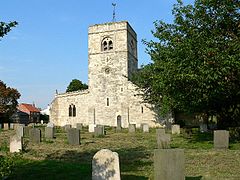
Newspaper reports of crime is something I’ve been looking into recently to develop some presentational material and as part of the research I carry out as a volunteer for my local museum. I am lucky to have some unusual surnames in my paternal ancestry and a newspaper report with the heading “A Fracas at a Wedding” recently caught my eye. The case was held at the Escrick petty sessions and concerned seven defendants who were summoned to the court for causing damage to the door of  a man called John Silversides (1824-1890), my first cousin six times removed. (The following map shows the location of the R C church where the wedding took place.)
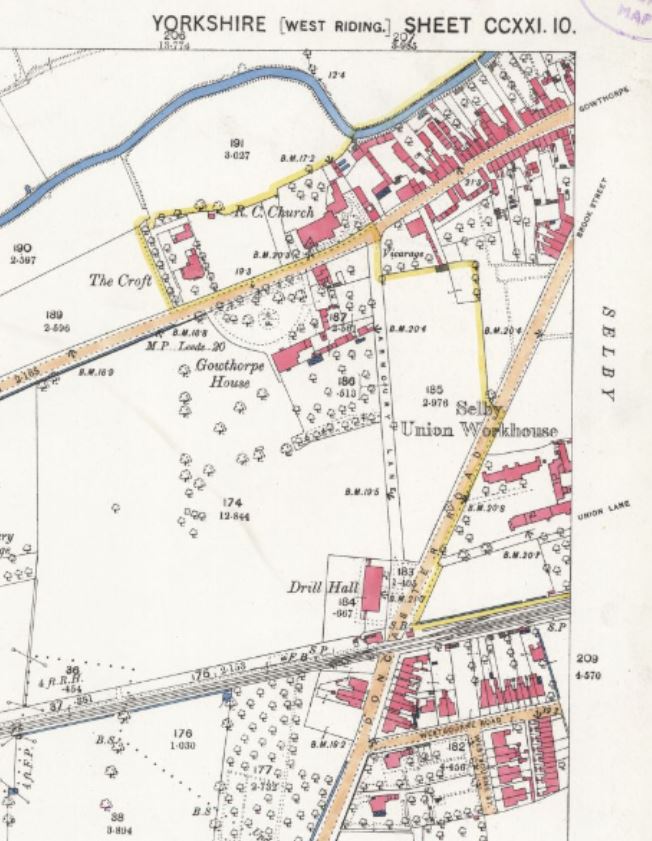
It seems that John’s daughter Jane (1857-1935), had married Patrick Murray (born 1859) on 12 May 1877, the day of the incident, in St Mary’s Roman Catholic chapel in nearby Selby and gone back to her father’s house in Riccall for a party. The defendants were:

  • Labourers – Henry Leach Cass, Charles Hare, George Marsden, Joseph Whitehead, William Wood and John Terry.
  • Fisherman – Thomas Kirk.

They were all summoned for damaging a door at the Silversides house and in addition the first three in the above list were said to have assaulted Jane and the last four for assaulting Patrick. The fracas seems to have occurred after Joseph Whitehead’s wife called at the house sometime between 10 and 11pm and Jane refused to let her stay in the house. There was then a quarrel between the two women, a crowd gathered and Jane returned inside. All seven defendants then broke the door down and Jane’s father john, who was said to be drunk, was then knocked down. Jane and Patrick armed themselves with a poker and tongs to rescue John and the paper then reports that “a regular melee ensued”. It seems that the witnesses called for both sides gave conflicting accounts and the summonses for assault were dismissed by the bench. All seven defendants were fined 5 shillings and costs for the damage to the door.

After their marriage Patrick appeared in more newspaper reports of the Selby Petty Sessions. In the Selby Times 28 February 1878 he was fined 10 shillings and 24 shillings costs for assaulting Ann Cox and in the same newspaper 1 October 1880 he and Terence Rush were bound over to keep the peace for six months for fighting on the highway. They were each fined £5 with costs.  

Patrick was not with his wife Jane and their nine-month-old daughter Mary in the 1881 census. They were with Jane’s parents in Coppergate, Riccall. Jane and Patrick then seemed to have moved to Hull where they had two more children. By the 1891 census Jane is back in Riccall, living with Walter Thomas Kirk as his wife in Church St, together with her mother and two surviving children from her marriage with Patrick. So far, I haven’t found a marriage for Jane and Walter. She certainly used the surname Kirk; it was Jane Kirk, sister, who reported the death of her brother Guy in 1920.   

I am still trying to trace what happened to Patrick Murray. It looks like he might have returned to work in Hull as a dock labourer. If this is the correct person then he seems to have continued his criminal ways. The 5 July 1920 edition of the Hull Daily Mail relates the case of Patrick Murray, living at 95 Hodgson St, who had 67 previous convictions. If you have any stories about the family which you are willing to share with me then do get in touch.

Note: the map used in this blog has been reproduced with the permission of the National Library of Scotland under the following creative commons licence https://creativecommons.org/licenses/by-nc-sa/4.0/ and sourced from the NLS maps site https://maps.nls.uk/.

Bibliography:

Births, marriages and deaths. https://www.ancestry.co.uk/ : accessed February 2024.

Census records. https://www.ancestry.co.uk/ : accessed February 2024.

Howdenshire Gazette. https://www.findmypast.co.uk/ : accessed February 2024.

Hull Daily Mail. https://www.findmypast.co.uk/ : accessed February 2024.

OS Map. https://maps.nls.uk/ : accessed February 2024.

Selby Times. https://www.findmypast.co.uk/ : accessed February 2024.

Yorkshire baptisms, marriages and burials. https://www.findmypast.co.uk/ : accessed February 2024.
A Seasonal Tale

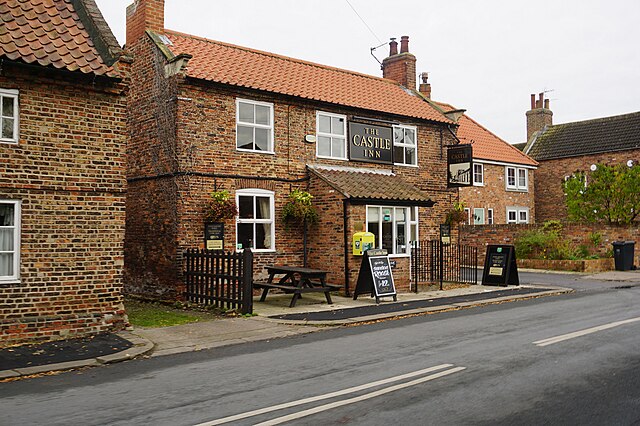
Christmas Day 2022 saw me eating Christmas lunch with members of my family at the Castle Inn in Cawood, North Yorkshire. Little did I know when I started to untangle two ancestors called Guy Silversides, both born in the nearby village of Riccall within a few years of each other in the 1840s, that I would find a connection between my family and the Castle Inn.

Castle Inn, Wistowgate, Cawood

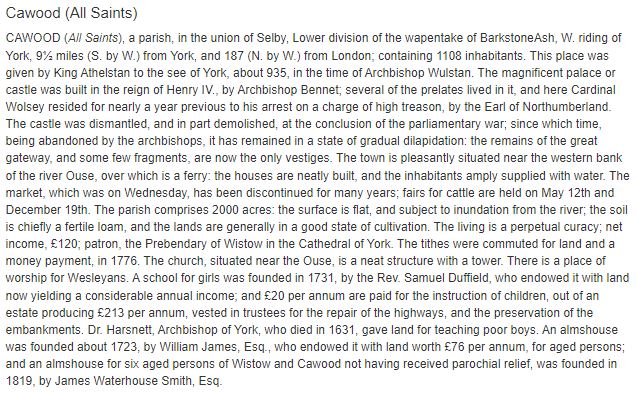
Cawood is a village situated on the river Ouse. A prominent feature is Cawood Castle, described in Lewis’ 1848 topographical directory as follows:

Cawood as described in 1848

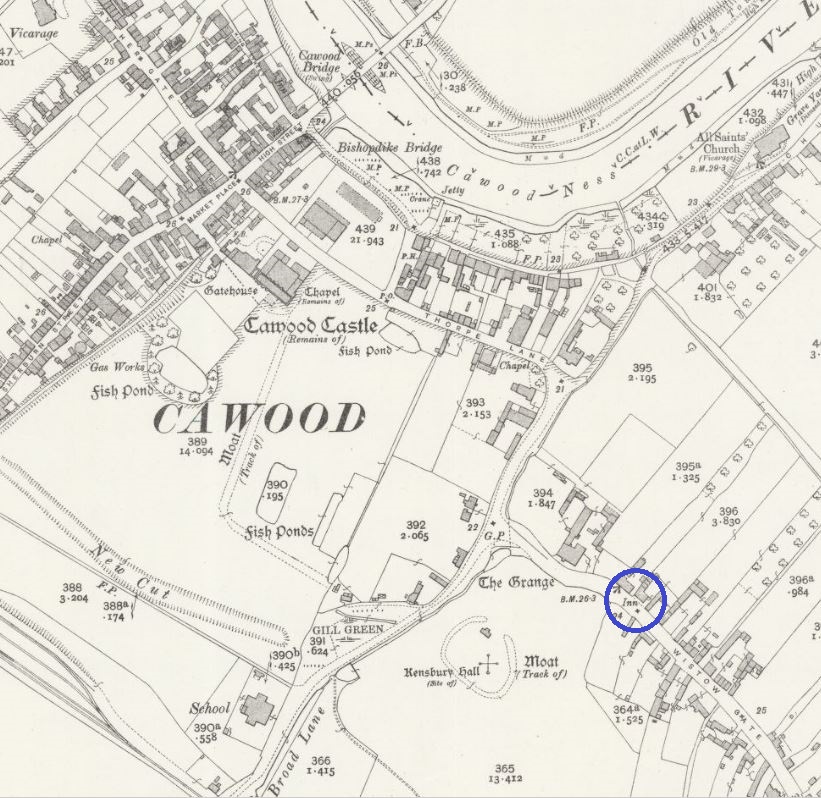
Trade directories on the Genuki website show that the innkeeper for the Castle Inn in 1822 and 1829 was William Benson. The following OS Yorkshire CCVI.9, dated 1906, shows the location of the inn in Wistowgate:

I’ve used this map because a report of the transfer of the license of the Castle Inn from Elizabeth Prankett to my second cousin three times removed, George William Silversides (1872-1857), was reported in the Selby Times, 17 March 1905.

George was baptised on 3 November 1872 in Drax to parents Guy Silversides (1846-1932) and Ann Marshall (1847-1921). By 1881 the family were living in Hirst Courtney. George’s father was an agricultural labourer who featured in a report of the Selby Petty Sessions (Yorkshire Gazette,  3 August 1888) when he accused Edward Precious of common assault. Both were living in Hirst Courtney at the time. A witness, Lawrence Baxter, stated that “the defendant struck Silversides under great provocation” and that “he said something about killing sheep”. Guy agreed that Edward Precious hadn’t killed a sheep: Guy was recorded as using the most filthy language. The case was dismissed.

George had some brushes with the law during his tenancy of the Castle Inn. He too appeared before the Selby Petty Sessions (Selby Times, 29 September 1905) where he was sued by Mr Morris Milner, the assistant overseer for Cawood, for £2/1/0 for the poor rate and 11/10 for the cemetery rate. In his defence George thought he had already paid what was due as he had only taken on the Castle Inn in February 1905. The bench confirmed that the rates were owing and ordered George to pay them with costs.

In another case George appeared before the Selby Petty Sessions for selling beer to a drunken man. The man in question, Thomas Elcock, was convicted at the January sessions and fined 10 shillings with costs of 13/6 (Selby Times, 19 January 1906). The case against George for selling beer to a drunken man had been held over to the February session. It seems George wasn’t in the Inn at the time the beer was sold by his servant; he was working in his market garden. Witnesses for the prosecution and defence were called and George was fined £1 with £1/12/6 costs (Selby Times, 2 February 1906).

George and his second wife Alice Varley (1878-1957) continued to live at the Castle Inn until the tenancy was taken over by their son William (1910-1972). George died on 11 July 1957 in York City hospital. He was described as a retired innkeeper and farmer. His death was reported by his son William, the innkeeper at the Castle Inn, Cawood. When William died on 27 November 1972 his probate record reported that he was the innkeeper at the Castle Inn, Cawood, indicating that the family had been innkeepers there for upwards of 65 years. What happened next, I’m not sure about, so if you have any stories about the family which you are willing to share with me then do get in touch.

Note: the map used in this blog has been reproduced with the permission of the National Library of Scotland under the following creative commons licence https://creativecommons.org/licenses/by-nc-sa/4.0/ and sourced from the NLS maps site https://maps.nls.uk/.

Bibliography:

Births, marriages and deaths. https://www.ancestry.co.uk/ : accessed December 2023.

Castle Inn, Wistowgate, Cawood by Ian S, CC BY-SA 2.0 <https://creativecommons.org/licenses/by-sa/2.0&gt;, via Wikimedia Commons : accessed December 2023.

Cawood. https://www.genuki.org.uk/big/eng/YKS/WRY/Cawood : accessed December 2023.

Census records. https://www.ancestry.co.uk/ : accessed December 2023.

England & Wales, National Probate Calendar (Index of Wills and Administrations), 1858-1995. https://www.ancestry.co.uk/ : accessed December 2023.

Lewis, Samuel ed. (1848) A Topological Directory of England. London: Lewis. https://www.british-history.ac.uk/topographical-dict/england : accessed December 2023.

OS Map. https://maps.nls.uk/ : accessed December 2023.

Selby Times. https://www.findmypast.co.uk/ : accessed December 2023.

Slater’s Commercial Directory of Durham, Northumberland & Yorkshire. (1855) https://specialcollections.le.ac.uk/digital/collection/p16445coll4 : accessed December 2023.

Yorkshire baptisms, marriages and burials. https://www.findmypast.co.uk/ : accessed December 2023. Yorkshire Gazette. https://www.findmypast.co.uk/ : accessed December 2023.

All About That Place – Escrick

To celebrate the 10th anniversary of the Society for One-Place studies there is a unique event currently taking place (22nd September to 1st October), run by the Society of Genealogists, the Society for One-Place Studies, Genealogy Stories, and the British Association for Local History. Day 8 is food and shopping and I have a talk about my home village, Escrick, which was known as an agricultural village well into the 20th century. You can view my talk on YouTube.

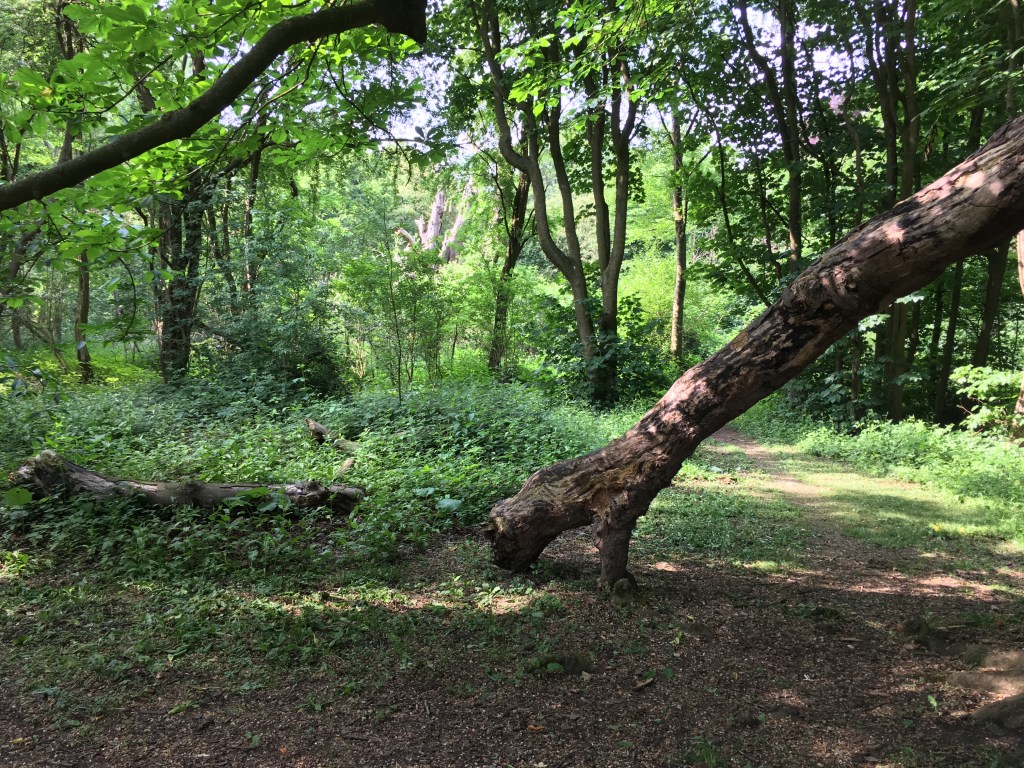
The following image is from Gassy wood where I played as a child.

Gassy wood where I played as a child

It’s not too late to find out more by going to the Society of One-Place Studies events page. Do keep an eye on the Society of Genealogists on YouTube as its likely that some of the content will be available after the event has finished.

George Brown (1811-1879) – 3rd great grandfather

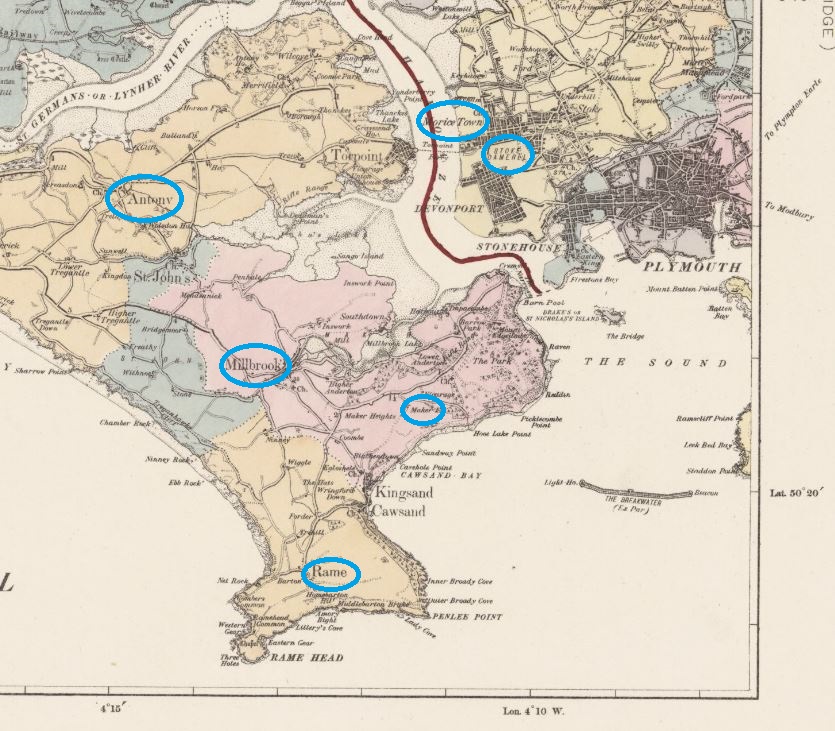
I have recently become interested in my Cornish/Devon ancestors; a group I’d largely neglected as they have the surname Brown. There is now a page for them on my website and over time I intend to write blog posts about various members of the family. This post is about George, my 3rd great grandfather, who was born in Cornwall to parents Ambrose Brown (1787-1862) and Thomasin Friendship. He was baptised on 24 February 1811 in Maker, Cornwall. The following OS map (OS sheet 348 Plymouth d ca. 1892) has been annotated with a number of locations where he lived with his family in the 19th century.

George married Elizabeth Small Burt (1812-1894) on 21 March 1832 in Stoke Damerel, Devon. George and Elizabeth had at least six children although not all of them reached their teens. A combination of baptism, birth, census and death records revealed a number of locations where the family lived, as well as George’s occupation:

  • 25 July 1833 – daughter Thomasin Elizabeth Brown baptised in the Wesleyan chapel, Morice St, Devonport. George and Elizabeth were both named on the record; George was a ropemaker from Millbrook, Cornwall.
  • 5 April 1835 – daughter Eliza Jane Brown baptised in Millbrook, Cornwall. George and Elizabeth were from Maker, Cornwall.
  • 2 April 1838 – son George William Burt Brown born at 12 Portland Place in the parish of Stoke Damerel; father George a ropemaker. Son George died on 6 June 1839 of disease of the brain. The family were living at 26 Garden St in the parish of Stoke Damerel. Father George was described as a ropemaker in Her Majesty’s dockyard.
  • October 1840 – son George William Brown born at 26 Garden St in the parish of Stoke Damerel. Father George a ropemaker.
  • 6 June 1841 census – George, a ropemaker, Elizabeth and three children living in Garden St, Devonport.
  • 6 March 1842 marks the death of son George William Brown of inflammation. The family were living at 32 Navy Row, Morice Town and father George was described as a ropemaker.
  • 30 October 1842 – son John Edwin Small Brown born at 32 Navy Row, Morice Town. Father George a ropemaker.
  • 30 December 1844 – daughter Elizabeth Small Brown born at 7 York Place, Stoke Damerel. Father George a ropemaker in the Devonport dockyard.
  • 30 March 1851 census – George, Elizabeth and four children living in Harvey St, Antony, Cornwall with George described as a ropemaker.

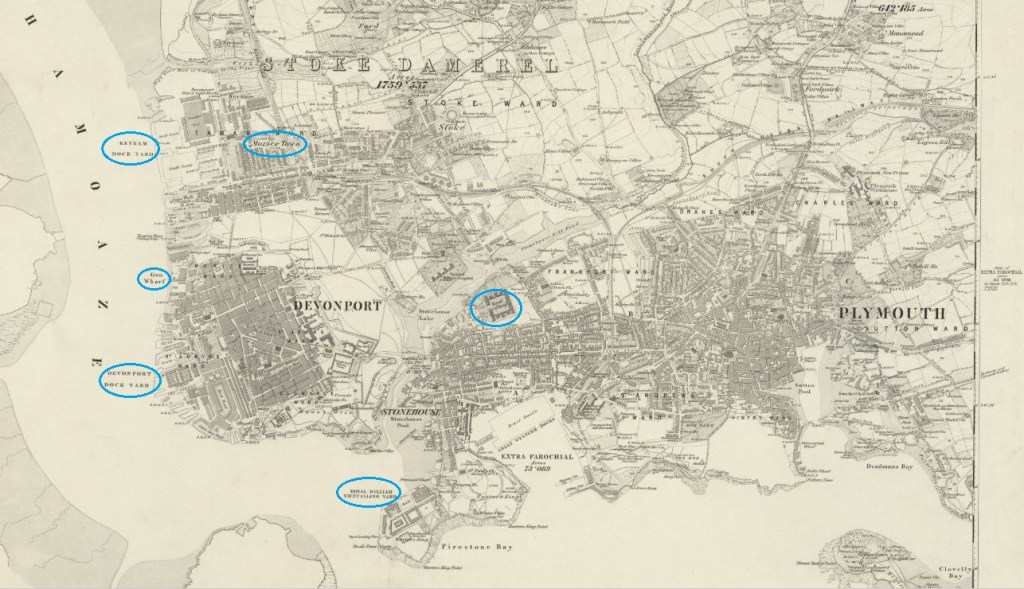
Until at least 1851 George worked in the Devonport dockyard, probably in the East Rope house. It was completely open plan and comprised 57 bays with cellars and three stories. Ropemaking involved taking hemp fibres and twisting them into strands and then twisting the strands into ropes. This was achieved by using a machine to rotate the hemp fibres as the men walked backwards along a ropewalk while releasing their supply of hemp. (The following OS map Devonshire sheet CXXXIII date 1867 shows the location of the dockyard as well as other places linked to the Brown family).

By the 1861 census George, Elizabeth, daughter Elizabeth and grandson William Turner (1854-1922) were living at 39 Princes St, Portsea, Hampshire, where George was described as a sawyer. This is no doubt where Elizabeth met and married my 2nd great grandfather Francis Ellis (1839-1925).

In the 1871 census George and Elizabeth had moved back to Cornwall. They were living in St Andrew St or Back St in Maker and George was a ropemaker pensioner. George died on 14 August 1879 at St Andrews St, Millbrook Maker. He had been suffering from Phthisis Pulmonalis (tuberculosis) for four years and exhaustion for six months. It is possible that the 1861 census record of George’s occupation is incorrect as, when his death was registered by his daughter Elizabeth, he was described as formerly a ropemaker at HM Dockyard Portsmouth.

Do let me know if you have any stories about them which you are willing to share with me.

Note: the maps used in this blog has been reproduced with the permission of the National Library of Scotland under the following creative commons licence https://creativecommons.org/licenses/by-nc-sa/4.0/ and sourced from the NLS maps site https://maps.nls.uk/.

Bibliography:

Bennett, George. (2017) Dockyard, Naval Base and Town: The Social and Political Dynamics of Plymouth 1800-1950. http://hdl.handle.net/10026.1/10135 : accessed June 2023.

Births, marriages and deaths. https://www.ancestry.co.uk/ : accessed June 2023.

Census records. https://www.ancestry.co.uk/ : accessed June 2023.

Cornwall On-line Parish Clerks. https://www.opc-cornwall.org/ : accessed June 2023.

Devonport naval dockyard. https://navaldockyards.org/devonport-dockyard/ : accessed June 2023.

East Rope House, Devonport. http://www.olddevonport.uk/Royal%20Dockyard-South%20Yard-East%20Rope%20House%20S%20132.htm : accessed June 2023.

England and Wales, Non-Conformist and Non-Parochial Registers. https://www.ancestry.co.uk/ : accessed June 2023.

Lewis, Samuel ed. (1848) A Topological Directory of England. London: Lewis. https://www.british-history.ac.uk/topographical-dict/england : accessed June 2023.

Maker. https://www.genuki.org.uk/big/eng/CON/Maker : accessed June 2023.

OS Maps. https://maps.nls.uk/ : accessed June 2023.

Probate records. https://www.ancestry.co.uk/ : accessed June 2023.

Rame. https://www.genuki.org.uk/big/eng/CON/Rame : accessed June 2023.

Stoke Damerel. https://www.genuki.org.uk/big/eng/DEV/StokeDamerel : accessed June 2023.

Lucy Silversides (1840-1887)

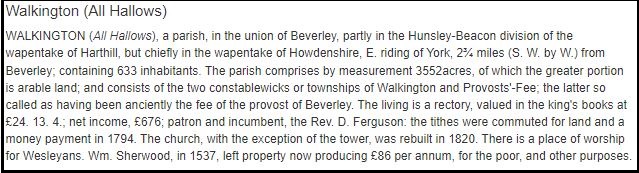
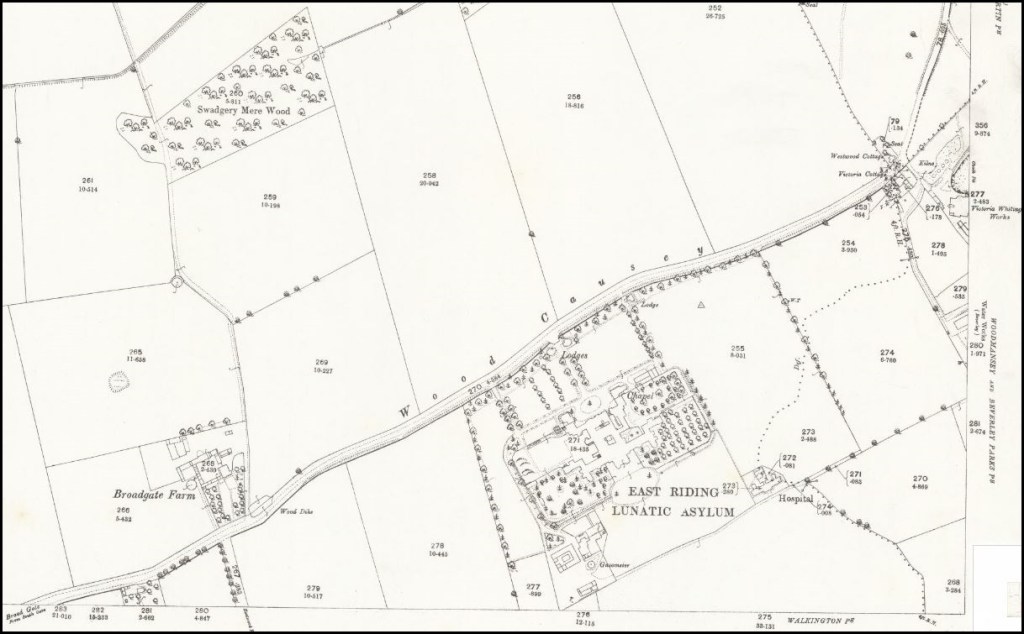
Whilst visiting the East Riding archives at Beverley, I carried out a search of the East Riding of Yorkshire County pauper lunatic asylum case books (NH6/64/20) to see if there were any records for any of my ancestors who might have been admitted to it. The asylum was called Broadgate Hospital and located in Walkington near Beverley. The land it was built on was part of Broadgate farm; it was opened on 25 October 1871 and has since been demolished. Walkington was described by Lewis in 1848 as follows:

The following OS Yorkshire CCX.II map, dated 1893, shows the location of the asylum to the north east of the village of Walkington, just off the B1230 road.

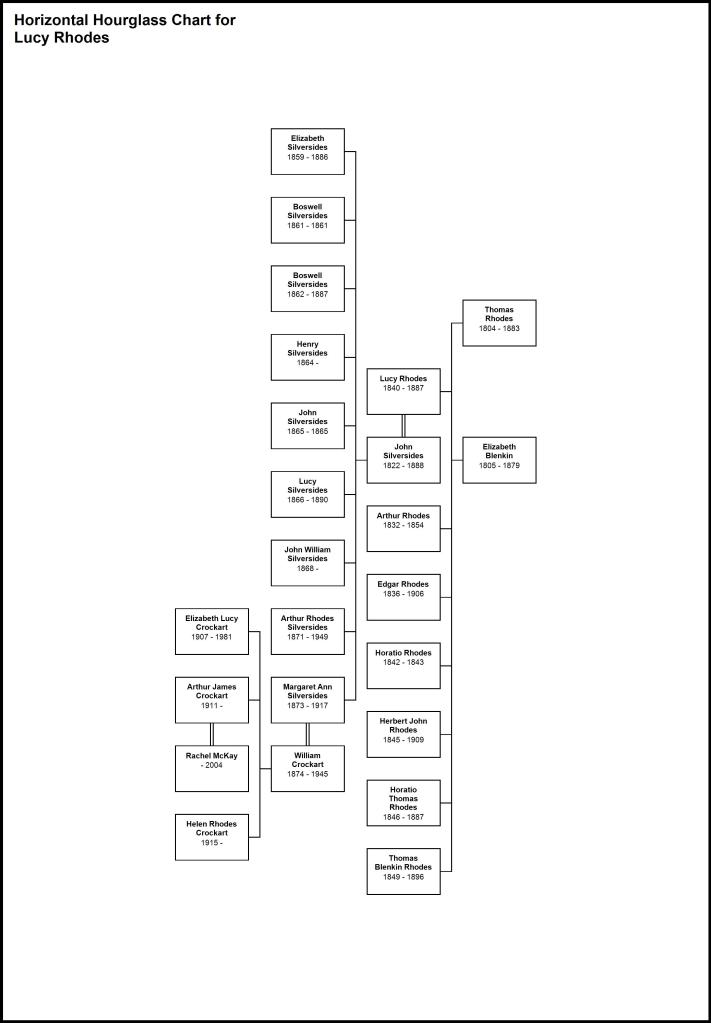
The East Riding archives hold a series of case books for Broadgate hospital and my ancestor Lucy Silversides featured in the women’s case book number 5. Lucy was the wife of John Silversides (1822-1888), my second cousin five times removed. She was born Lucy Rhodes in 1840 in Patrington, Yorkshire to parents Thomas Rhodes (1804-1883) and Elizabeth Blenkin (1805-1879). By the time Lucy’s brother Arthur died in 1854, the family were living in Osgodby, a few miles from Riccall where John Silversides lived. Lucy married John in St Mary’s church, Riccall on 11 November 1858; Lucy was 18 and John 36.

In the 1861 census John, Lucy and their daughter Elizabeth (1859-1886) were living in Riccall where John was described as a farmer of 100 acres employing two labourers. John and Lucy had nine children: six boys and three girls. Two of their sons died in infancy, three children in their twenties, two sons have been difficult to trace and just one of their children definitely married: Margaret Ann Silversides (1873-1917). In 1891 their son Arthur Rhodes Silversides (1871-1949) was a footman at The Villa in Escrick; a property where I once owned an apartment. By 1901 he had become a butler; when he died on 11 January 1949 in York, he left effects to the value of £1,784 8s 9d. The following chart shows John, Lucy and their family.

Arthur’s mother Lucy faired rather differently. By the 1881 census John, Lucy and six of their children (Elizabeth, Boswell, Henry, John, Arthur and Margaret) were living in Dam End in Riccall. Their daughter Lucy was living with her aunt and uncle. By now John was aged 59 and described as an agricultural labourer, as were their sons Boswell and Henry. Boswell and Henry were recorded as joining the police in Leeds in 1885. Daughter Elizabeth died in 1886 and sons John and Arthur and daughter Margaret were elsewhere in 1891. Perhaps by the time Lucy was admitted to the Broadgate hospital in 1887 she had been affected by significant changes in her family life.

Lucy was admitted to Broadgate from the Selby Union on 1 March 1887. The case book mentioned that her first mental health attack had lasted for eight months. It is interesting to note that she entered the asylum from the Selby Union. She was described as being aged 50, married and her religion was Church of England. With regards to her mental health, she was of a nervous temperament, dangerous and with her form of insanity described as mania. She was said to be excited and “the patient talks to herself”.

Her physical condition was described as tall, poorly nourished and dirty. The case book then goes onto outline her mental and physical state after her admission. On 4 March “her conversation was silly and voluble”. By 11 March Lucy was “physically in a very bad state and appears to be getting weaker daily…she is nervous and excited and most difficult to manage in short nothing can be done with her…she won’t eat.” It went onto say that “the diet for the most part consists of butter, eggs milk mixture with brandy”. Lucy had diarrhoea.

Lucy died on 13 March 1887 at 8.50pm in the presence of nurse Phebe Allan. Her cause of death was Phthisis. An autopsy was carried out and the record certified by the asylum Medical Superintendent Dr Murdoch Donald McLeod. After her death Lucy was buried in St Mary’s churchyard, Riccall. Her husband John died just over a year later on 16 March 1888. He too was buried in the churchyard. After his death the cottage he was living and his household furniture were sold at auction by Thomas Walker Auctioneers, according to the York Herald dated 14 April 1888. Perhaps by then none of his children were around to take an interest in his furniture.

So far, I’ve been unable to trace what happened to two of John and Lucy’s sons: Henry  Silversides (born 1864) and John William Silversides (born 1868). Do let me know if you have any stories about the family which you are willing to share with me.

Note: the map used in this blog has been reproduced with the permission of the National Library of Scotland under the following creative commons licence https://creativecommons.org/licenses/by-nc-sa/4.0/ and sourced from the NLS maps site https://maps.nls.uk/.

Bibliography:

Births, marriages and deaths. https://www.ancestry.co.uk/ : accessed May 2023.

Broadgate asylum. https://www.countyasylums.co.uk/broadgate-beverly/ : accessed May 2023.

Broadgate hospital case books. NH/6/64/20, pp 131-132.

Census records. https://www.ancestry.co.uk/ : accessed May 2023.

Lewis, Samuel ed. (1848) A Topological Directory of England. London: Lewis. https://www.british-history.ac.uk/topographical-dict/england : accessed May 2023.

OS Map. https://maps.nls.uk/ : accessed May 2023.

Probate records. https://www.ancestry.co.uk/ : accessed May 2023.

Riccall. https://www.genuki.org.uk/big/eng/YKS/ERY/Riccall : accessed May 2023.

West Yorkshire, England Police Records, 1833-1914. https://www.ancestry.co.uk/ : accessed May 2023.

Yorkshire baptisms, marriages and burials. https://www.findmypast.co.uk/ : accessed May 2023.

Hannah Silversides 1796-1845

During a recent visit to the East Riding of Yorkshire archives at Beverley, I decided to review a number of documents I’d identified in their online catalogue which I thought might be relevant to my own family history.

I came across a bastardy order (QSU1/40/50 ) dated 1 July 1839 which named William Rooke as the putative father of a female child born to Mother Hannah Silversides. The Selby Guardians of the Poor had an interest in bringing the case as the child had been born in the parish of Riccall and as such the child was chargeable to the parish.

William Rooke was ordered to pay a sum, not exceeding one shilling per week, to the overseers of the poor of the parish of Riccall, for maintenance of the child. The order included the requirement that the sum should be paid until the child attained the age of 7 years.

I decided to find out more about Hannah to see if she was related to the Silversides in my family tree and thus to myself. My research revealed that Hannah, whose maiden name was Mitchel, was the second wife of Robert Silversides (1768-1829), my 5th great grand uncle. Robert and Hannah were married in St Mary’s Church, Riccall on 27th September 1821 by banns. Robert was described as a farmer and widower and Hannah a spinster. Robert signed the marriage record but Hannah signed using her mark. One of the witnesses was Guy Silversides, Robert’s brother, although quite a few male members of the family have the first name Guy.

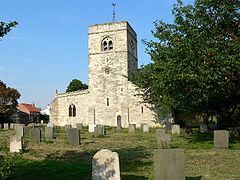
St Mary's Church, Riccall

Robert and Hannah had a son John baptised in the same church on 11 July 1824. Just five years later, Robert was buried in St Mary’s churchyard on 20 February 1829 when he was described as a labourer. With his first wife Sarah Riley (1772-1815) he had had at least seven children, four boys and three girls. Perhaps his fortunes had changed and Hannah experienced difficulties after his death. It looks like her son John was working in Bossall in the North Riding of Yorkshire when he married his wife Jane Wilson on 17 February 1845.

Returning now though to William Rooke and the bastardy notice. It does seem that he may well have been the father of Hannah’s second child Ann Silversides who was baptised on 24 November 1839 in St Mary’s Church, Riccall. Her baptism records her as the illegitimate child of Hannah Silversides, widow. Both Hannah and Ann were recorded in the 1841 census in Wheel Hall, Riccall with Hannah described as a labourer. Wheel Hall was originally a manor house but was replaced in the 18th century by a farmhouse.

Hannah died in 1845 and was buried in St Mary’s Churchyard on 5 May 1845. What happened to her daughter Ann is not clear, nor is the identity of her father. There was a William Rooke recorded in the 1841 census at Riccall Hall who was an agricultural labourer born about 1816.  No further information on him in Riccall has been found. If you any information on either of Ann Silversides or William Rooke do, please contact me.

Saturdays with my Gran

It is not often that I sit down to write a piece without a plan on how I intend to develop it or a set offacts, data or references I intend to use. Today is different though. I want to use this piece of writing to honour my gran Glenda as she is someone who played an important role in supporting me in her own quiet way at a time in my childhood which was confusing and difficult to navigate.

I’m not sure exactly when I started to regularly visit her on a Saturday afternoon but it was probably around the time my great grandmother died, when I was 13. I had passed my eleven plus and moved from a village school to one in York where I was one of a number of scholarship girls. Then when my great grandmother died it triggered the start of a mental health struggle for my mother.

I knew I could visit my gran on a Saturday afternoon and sit in a quiet place to read a book, chat with her or watch her black and white TV. There would only have been two channels at that time and Saturday afternoons were usually reserved for sport. I know that when I went home it would probably be to see my family watching the wrestling. Big Daddy and Giant Haystacks were firm favourites in our house.

Unfortunately, I don’t remember much of the conversations I had with my gran and I certainly didn’t take the opportunity to ask her about her siblings and parents. Something as a keen family historian I know find rather frustrating. At the time I did know that she was one of ten children, many of whom I came into regular contact with.

Gran’s first names were Glenda Florence Edith. All her siblings had multiple names. Her father Francis had been coachman, later motor car driver, to the Lawley family and her mother Violet Kate had been born to a Yorkshire father and a mother of Irish descent whose family had come to York in the mid-19th century to escape the famine in Ireland. 

What I do remember about my gran was that there was always a quiet sadness about her. I knew that she had lost her husband in World War Two and had been left to bring up her two daughters on her own. After he died, she moved back to the village to be near her family and worked locally. When I was a child, she was the caretaker for our local primary school so I probably would had seen her at work.

She was an important presence in my life as I was growing up. I continued to visit her on Saturday’s until she became too ill to see people. She died not long after I took my ‘O’ levels and I will always be grateful for the quiet space she provided me when I was studying.

Her death was reported in the local Parish Magazine where she was described as:

“Mrs E had been a widow for many years. She was a quiet, friendly person, who usually did not enjoy good health, but did not wish to inconvenience anyone. Many will remember her as Caretaker of the Primary School, which she looked after so conscientiously for seventeen years, and there will be several former babies who wore her finely knitted garments, which were sold at the garden fete every year. She passed away peacefully with no pain, nursed by her daughter. We shall miss her familiar figure walking from East View to the Post Office and having a friendly word from her. We offer our sympathy to her daughters, and her sisters living in the village and to other members of her large family.”

James Harvey Bean MD (1858-1910)

James is my second cousin four time removed on the Ellis side of my family. He was born on 10 February 1858 in Roxbury, Suffolk, Massachusetts, USA. James’ parents were James Bean (1822-1899) and Harriet Harvey (1821-1876). James and Harriet had nine children, five of whom were born in Yorkshire, England and the remaining four in USA.

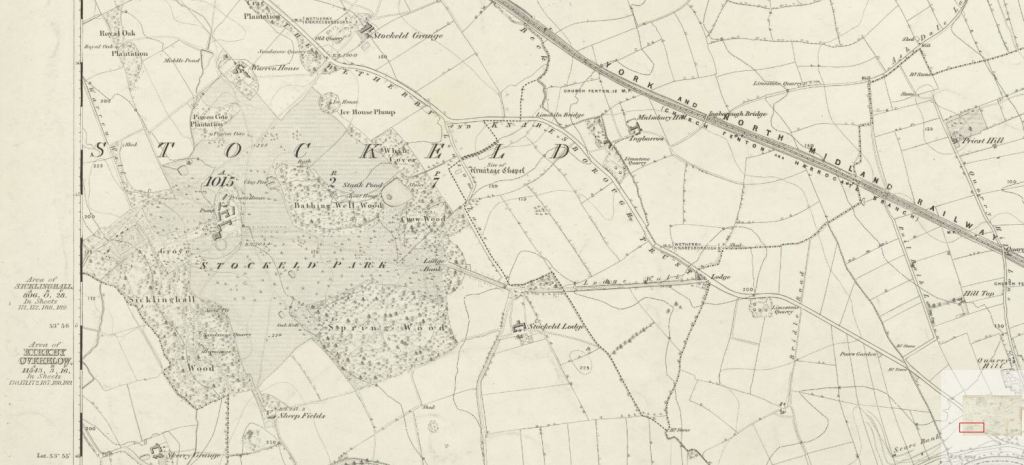
Prior to their emigration to the USA, James was a gardener living at the Garden House, Spofforth, Yorkshire and working on the Stockeld Park Estate. The following map (OS Yorkshire sheet 172 date 1850) shows the extent of Stockeld and its location near the York and North Midland railway line.

James, Harriet and their children Mary, Elizabeth, William and Charlotte left Liverpool on the ship Mariner, and arrived in the port of Boston on 12 May 1854.  The family settled in Roxbury where James continued to work as a gardener and I have previously written about his life in USA .

James Harvey Bean was the first of James and Harriet’s children to be born in USA. He trained as a physician at the Jefferson Medical College at the Thomas Jefferson University in Philadelphia. James married Nellie Priestley (1863-1953) on 15 January 1883 and by 1900 they were living in Bannock, Pocatello, Idaho.

James and Nellie didn’t have children and James died on 8 June 1910 in Los Angeles, California, apparently of uremia, caused by irreversible damage to the kidneys. He was buried in Mountain View Cemetery, Pocatello, Bannock County, Idaho.

After his death Nellie applied to the Idaho court for probate as the sole beneficiary and executor under his will which he had signed on 13 February 1895.  It seems that during his lifetime James had acquired a number of lots of land in Pocatello and created the South East Securities Corporation which Nellie took over after his death. Issues relating to the ownership of property in Weber County and Salt Lake, Utah were resolved by the Utah court in 1911, and the court decreed that this property also become the property of Nellie.

Nellie did not remarry and was considered a pioneer in Pocatello. On 16 June 1938 she was deemed in contempt of court for failing to sign over bonds to pay a labour debt and was jailed. She remained in jail even though friends had agreed to pay the debt (The Post Register 4 August 1938).  Nellie died aged 90, on 2 January 1953, at her home 208 West Clark, Pocatello. She was buried in the family plot in Mountain View cemetery and left an estate worth $6853.

Note: the map used in this blog has been reproduced with the permission of the National Library of Scotland under the following creative commons licence https://creativecommons.org/licenses/by-nc-sa/4.0/ and sourced from the NLS maps site https://maps.nls.uk/.

Bibliography:

Births, marriages and deaths. https://www.ancestry.co.uk/ : accessed December 2022.

California Death Index, 1905-1939.  https://www.ancestry.co.uk/ : accessed December 2022.

Directory of Deceased American Physicians, 1804-1929. https://www.ancestry.co.uk/ : accessed December 2022.

English Census Records. https://www.ancestry.co.uk/ : accessed December 2022.

Idaho, US Death Records, 1890-1969. https://www.ancestry.co.uk/ : accessed December 2022.

Idaho, US Wills and Probate Records, 1857-1989. https://www.ancestry.co.uk/ : accessed December 2022.

Massachusetts Town and Vital Records, 1620-1988. https://www.ancestry.co.uk/ : accessed December 2022.

Massachusetts US State Census. https://www.ancestry.co.uk/ : accessed December 2022.

OS Maps. https://maps.nls.uk/ : accessed December 2022.

Passenger Records. https://www.ancestry.co.uk/ : accessed December 2022.

Stockeld Park. https://stockeldpark.co.uk/blog/the-stockeld-story-history-of-stockeld-park/ : accessed December 2022.

United States Federal Census. https://www.ancestry.co.uk/ : accessed December 2022.

US, City Directories, 1822-1995. https://www.ancestry.co.uk/ : accessed December 2022.

US Find a Grave Index, 1600s to Current. https://www.ancestry.co.uk/ : accessed December 2022.

US Newspapers.com Obituary Index, 1800s to Current. https://www.ancestry.co.uk/ : accessed December 2022.

Utah, US Wills and Probate Records, 1800-1985. https://www.ancestry.co.uk/ : accessed December 2022.

Stranger things have happened

As a keen family historian, I spend a lot of time researching off-shoots and branches of mine and my husband’s family trees. From time to time my eye is caught by a record which opens a whole new area for me to research.

Such a thing happened when I was following the record trail for Jane Bean (1817-1887) my first cousin five times removed. Jane was baptised on 23 January 1817 in Acklam in the East Riding of Yorkshire. She was the daughter of William, a nurseryman and his wife Ann. In the 1823 Baines directory the family were living in nearby Leavening.

Jane married George Grey, a tailor, in York, in 1840 and they had four children. By 1851 three of them were living with Jane’s parents in Leavening and no census records for either George or Jane could be found.

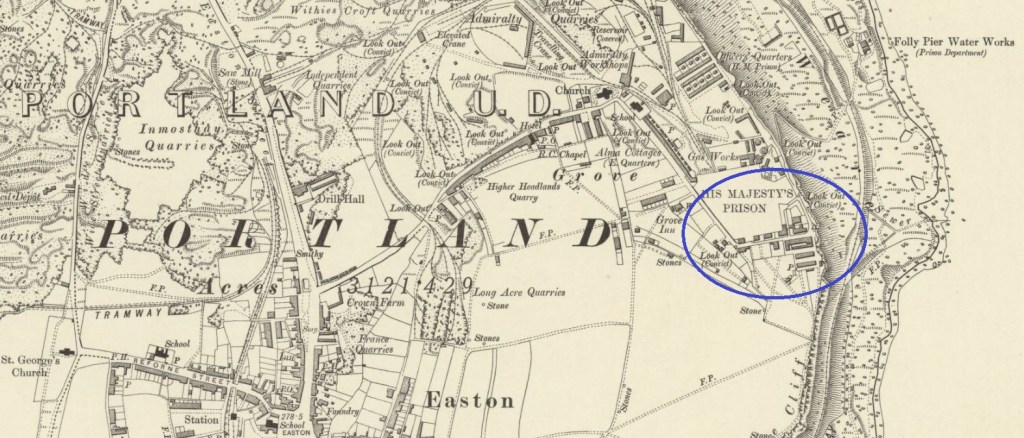
I wondered what had happened to George and Jane and was surprised to find her next in the 1861 census in Dorset, some considerable distance from Yorkshire. There she was described as the wife of James Cameron (1813-1882). The couple were recorded as living in Clifton Road, Grove, Isle of Portland, Dorset where James was an assistant warder in the prison service at the nearby Grove prison. Other warders from the prison were also living in Clifton Rd. Two of Jane’s daughters, Mary Ann (and her husband John) and Georgiana (1845-1914), were living with James and Jane. Mary Ann (1841-1931) had married John Carrick Rennie (1831-1914), a prison warder, on 17 May 1860. The witnesses to their marriage were her sister Georgiana and William Parkin. The certificate gives Mary Ann’s fathers name as George Grey, a tailor, but does not indicate if he was alive or dead. John and Mary had moved to Brixton by 1871, where John was a prison officer in Wormwood Scrubs. (The following OS map dated 1903 is Dorset LVIII.SE.)

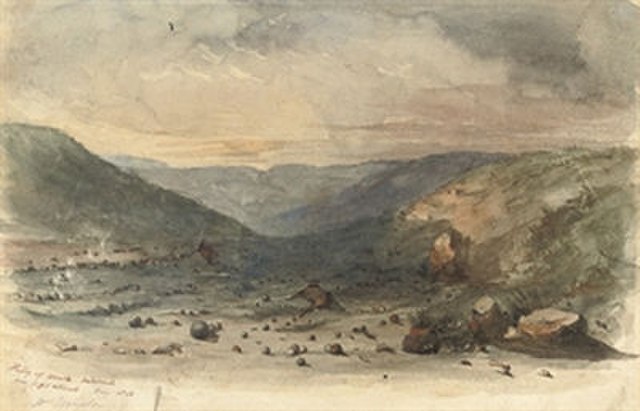
How Jane and James met is not clear, nor is when her first husband George Grey died. What is interesting about James is that he was in receipt of an army pension. His military records suggest that he was born on 13 October 1813 in New South Wales, Australia. James had enlisted in the British Army in the East Indies on 20th October 1826 at the age of 13. He served in the 13th Light Dragoons and participated in the Crimean War (1854-1856). As a private he was a survivor of the Charge of the Light Brigade which took place during the battle of Balaclava on 25 October 1854. It is said to be one of the most “infamous blunders” in military history, according to the National Army Museum. (The following painting of the Charge of the Light Brigade dated 2 Jan 1855 is by Henry Brabazon Utmston.)

James was wounded in the battle and eventually ended up in Scutari hospital where he spent from 31 October 1854 to 27 March 1855 recovering, before being sent home. He was promoted to corporal on 1 September 1855 and then sent to the Royal Hospital Kilmainham where he was declared unfit for service due to his chronic rheumatism 15 December 1855. James was discharged from the army on 17 October 1856 with no trade and his declared destination as London. James’ pension records provide potential clues as to where he went next. When he first received his army pension, he was in the London North district; by July 1857 he had moved to the Salisbury district, according to his Royal Hospital Chelsea records.

By the 1871 census James and Jane had moved to Lancashire and by 1881 were living in Salford with Jane’s daughter Georgiana and her family. James died on 11 December 1882 and buried in the Weaste cemetery in Salford. His death notice in the Manchester Evening News edition of 15 December 1882 was headlined “Death of a Balaclava Hero”. Perhaps almost 30 years later views on the Charge of the Light Brigade had begun to change to acknowledge those who had survived that most infamous military blunder?

So, it was something of a surprise that I had a link, through my first cousin five times removed to a survivor of the Charge of the Light Brigade.

Note: the map used in this blog has been reproduced with the permission of the National Library of Scotland under the following creative commons licence https://creativecommons.org/licenses/by-nc-sa/4.0/ and sourced from the NLS maps site https://maps.nls.uk/.

Bibliography

Battle of Balaclava. https://www.nam.ac.uk/explore/battle-balaklava : accessed December 2022.

Baines 1823 directory. https://www.genuki.org.uk/big/eng/YKS/ERY/Acklam/Acklam23Dry : accessed December 2022.

British Army Service Records. Collection: Royal Hospital Chelsea: Admission Books, Registers and Papers 1702-1876. https://www.findmypast.co.uk : accessed December 2022.

Census records. https://ancestry.co.uk : accessed December 2022.

England & Wales Civil Registration Death Index, 1837-1915. https://ancestry.co.uk : accessed December 2022.

Grove Prison Museum. https://www.dorsetmuseums.co.uk/grove-prison-museum : accessed December 2022.

Ireland, Royal Hospital Kilmainham Pensioner Discharge Documents, 1724-1924. https://ancestry.co.uk : accessed December 2022.

Lives of the Light Brigade. http://www.chargeofthelightbrigade.com/allmen/allmenC/allmenC_13LD/cameron_j_412_13LD.html : accessed December 2022.

Manchester Evening News. https://www.findmypast.co.uk : accessed December 2022.

OS Maps. https://maps.nls.uk/ : December 2022.

UK and Ireland Find A Grave Index, 1300s to Current. https://ancestry.co.uk : accessed December 2022.

UK and Ireland newspapers.com Obituary Index, 1800s to Current. https://ancestry.co.uk : accessed December 2022.

UK, Royal Hospital Chelsea Pensioner Soldier Service Records, 1760-1920. https://ancestry.co.uk : accessed December 2022.

Urmston, Henry Brabazon. (1855) The Charge of the Light Brigade. https://commons.wikimedia.org/wiki/Main_Page : accessed December 2022.

Yorkshire baptisms. https://www.findmypast.co.uk : accessed December 2022.

Yorkshire marriages. https://www.findmypast.co.uk : accessed December 2022.