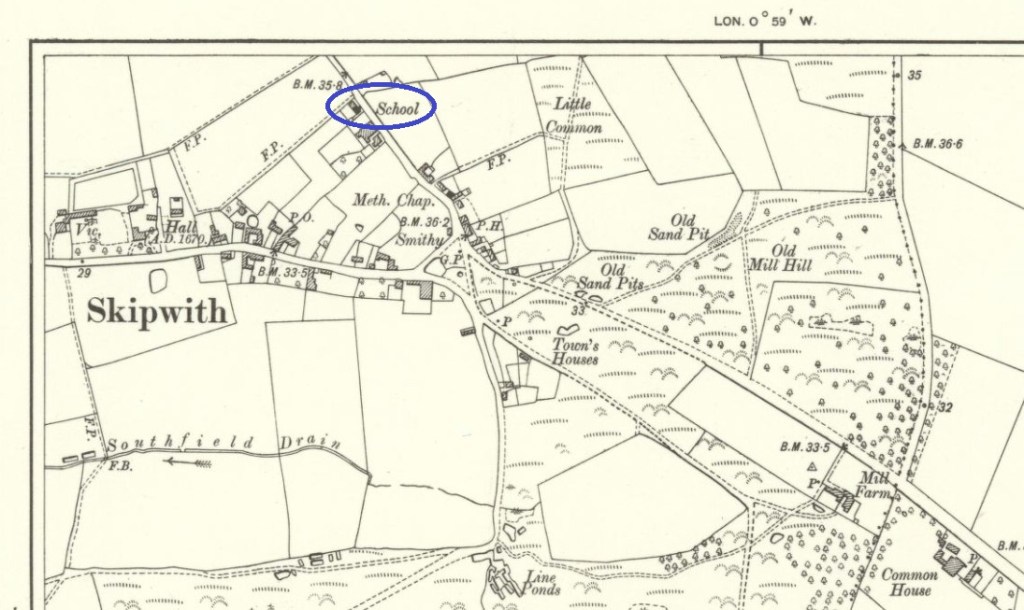
I’ve been writing about my family for some time now and decided to go back and look at the siblings of my grandparents. I came across John, the eldest brother of my granny Charlotte. He was born in Cliffe, Yorkshire on 12 March 1892 to my great grandparents William Ireland Barrett (1859-1942) and Charlotte Mary Burton (1870-1942). By the 1901 census the family had moved to Skipwith and John was a student at the Skipwith National School, having previously been educated in South Duffield. (See the following Ordnance Survey map for Yorkshire CCII.SW published in 1910.)
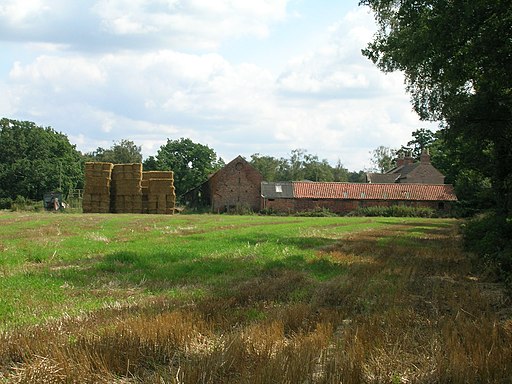
By the 1911 census John was working as a waggoner on Manor Farm, Skipwith: the farm run by his grandparents Thomas Burton (1842-1912) and Sarah Palframan (1844-1920). His grandfather Thomas died the following year, and Sarah took over the running of the farm. As World War I approached she continued to run Manor Farm. Sarah was a tenant of the Escrick Estate who owned the farm. In a letter she received from them on 27 August 1917 changes were made to the acreage of her farm. Sarah’s continued tenancy of the farm was conditional on her ‘keeping as much stock as you can to get manure as much more food must be produced on your farm if you wish to remain on it’. The following photograph is a more recent picture of Manor Farm.
Manor Farm, Skipwith – 2011 photograph. (See bibliography for acknowledgement.)
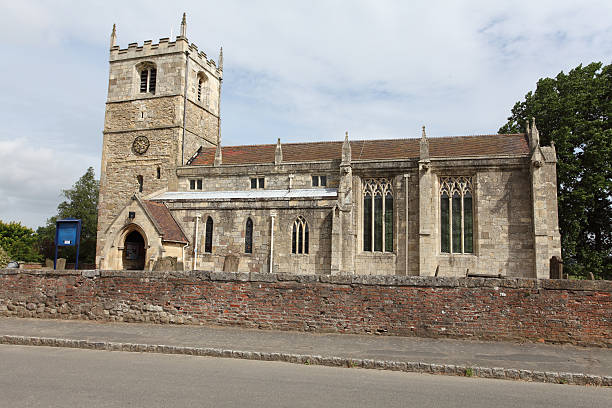
Meanwhile John had married Emily Marshall (1895-1962) on 8 December 1915 in St Helen’s Church, Skipwith. He was described as a farmer from Skipwith, and his father William the same. Emily was from nearby Hemingbrough, and her father Joshua Townsend Marshall was a farmer. There were three witnesses: Leonard Maud, William Alfred Barrett and Amelia Marshall; all relatives of John and Emily.
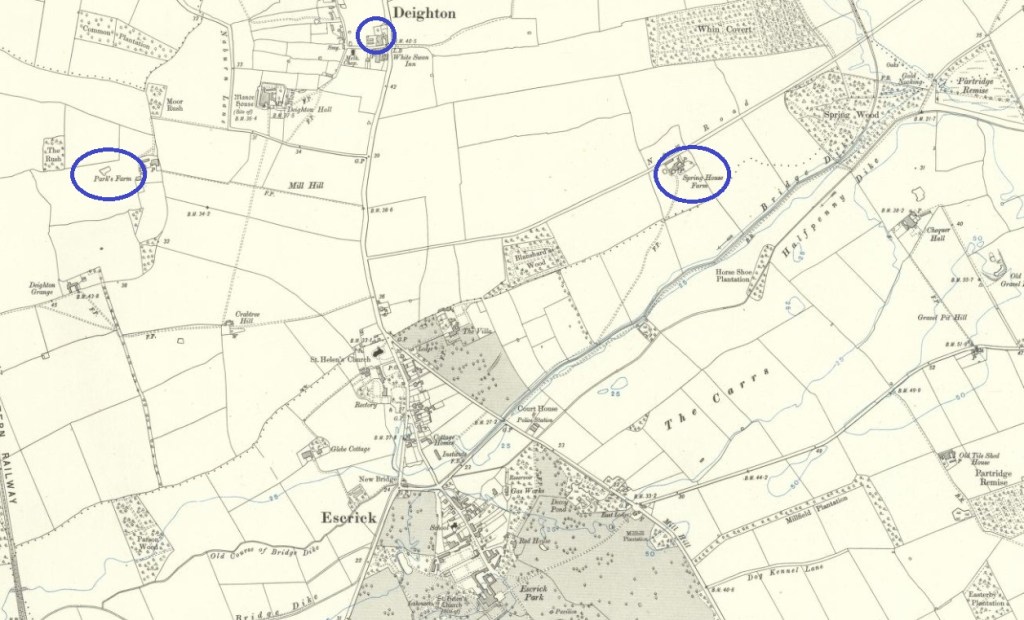
John and Emily went on to have a family and so far, I have found three daughters and four sons. By 1921 John was a farmer at Little Skipwith, Yorkshire. However, in 1939 John was a farm foreman living with Emily at Swan Farm, near Deighton with sons Thomas (1918-1984) and John (1933-1937). Their son Joseph (1920-1988) was a general farm labourer at a nearby farm called Parks Farm and son William (1917-1984) was a cowman working for his grandfather at Manor Farm, Skipwith. The following map shows the location of Swan and Parks farms near Deighton and Spring House Farm where John died in a cottage linked to the farm on 8 February 1978 aged 85. John left effects worth £1,768 in his will.
What surprised me when I researched John and his family was that they lived near the village of Escrick where I lived when I was a child. I don’t remember meeting them. I do think I visited Manor Farm with my father, although I just remember cold stone floors and being given a home baked scone. I would like to know more about the family members mentioned in this blog post. Do contact me if you have any further information which you are willing to share with me.
England and Wales, National Probate Calendar (Index of Wills and Administrations), 1858-1966. https://www.ancestry.co.uk/ : accessed November 2025.
Escrick Estate Letter 1917. Papers of the Forbes Adam/Thompson/Lawley (Barons Wenlock) Family of Escrick, 1387-1988. Collection ref U DDFA. http://catalogue.hullhistorycentre.org.uk/ : accessed November 2025.
National School Admission Registers & Logbooks 1870-1914.
I am continuing my occasional research into more distant members of my family. Currently I am working on a project for the Family and Community History Research Society looking into the experience of patients in County Pauper Lunatic Asylums during the period 1861-1901. While researching my Silversides cousins I came across Guy, my third cousin four times removed, working as an attendant in Stanley Royd Hospital, Wakefield in the 1911 census. Stanley Royd was the first West Riding county pauper lunatic asylum built in 1818. Guy didn’t remain working there long but turned out to be interesting for another reason; he emigrated to Canada not long after the 1911 census was taken.
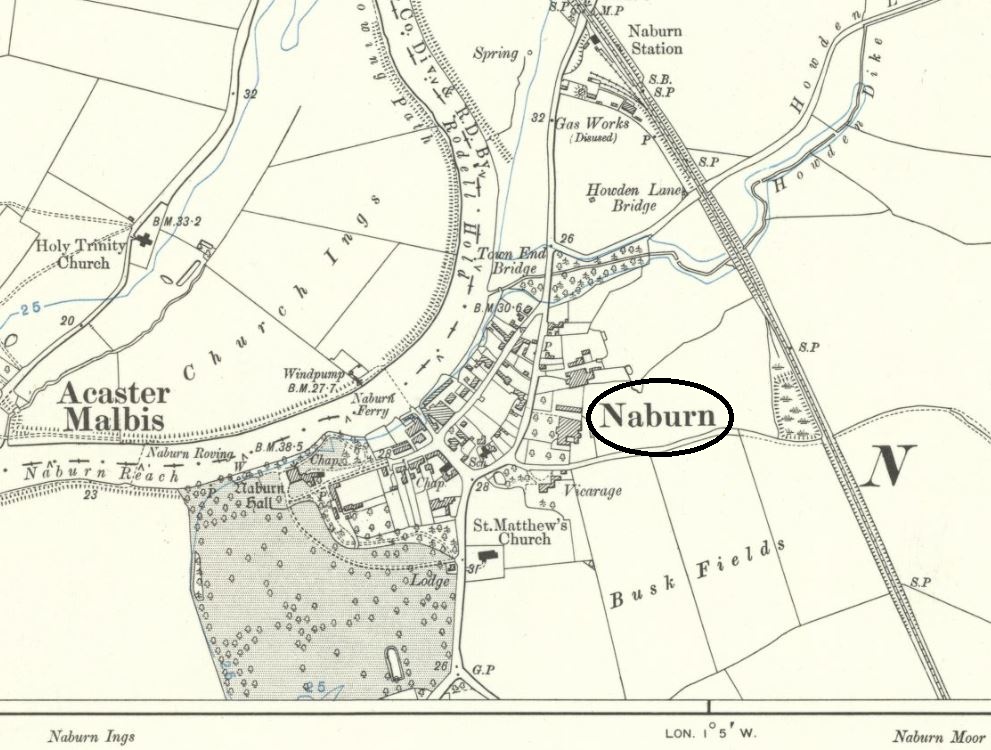
Guy was the youngest son of William Silversides (1842-1916) and Elizabeth Habbishaw (1842-1927). He was born in Naburn near York (see OS Yorkshire sheet CXCI.NW published 1910 map) and was said to be 18 and a gardener when he enlisted in the Northumberland Fusiliers on 27 February 1900. Guy was 5ft 5in tall, weighed 124lbs, with brown hair, blue eyes and a fresh complexion. His three older brothers, George, Robert and John had enlisted in the army before him and two of his sisters’ married men who served in WWI.
Guy’s military record indicated he had served as a bandsman in the West Indies and then South Africa where he arrived on 23 July 1902. The Treaty of Vereeniging, which ended the Second Boer War, had been signed on 31 May 1902. Guy remained in South Africa until 4 March 1907. As a sergeant bandsman he was posted to the army reserve on 7 March 1908. While serving in the army he gained his St John’s ambulance certificate for first aid to the injured. Perhaps this enabled him to gain a position at Stanley Royd as an attendant. Guy was working there when the 1911 census was taken on 2 April. Not long afterwards his military record showed that on 2 June 1911 he was permitted to go to Canada.
Emigration to Canada
Guy left Liverpool for Canada on 7 July 1911 as a passenger on the steamship Victorian, Allan Steamship Line, bound for Montreal, Quebec, Canada. He arrived on 14 July 1911 and was described as an attendant with the intention of farming. His entry on the passenger list was stamped “British Bonus Allowed”. Commission was paid to UK steamship booking agents, by the Canadian government’s Immigration Branch, for suitable immigrants who bought a ticket to sail. Guy as the passenger did not receive a bonus.
The next record found for Guy was his marriage to Edythe M Kimber (or Kember) in 1913 in Edmonton, Alberta. Edythe, a nurse, had left Liverpool on 21 February 1913 bound for New Brunswick, on the Hesperian, Allan Steamship Line.
On 8 January 1915 Guy enlisted in the 101st Canadian Overseas Expeditionary Force Band Corp. He was described as an attendant living at 9725, 96a St, Edmonton South, with his wife Edythe. His previous service with the Northumberland Fusiliers was noted.
Guy departed for England on 8 January 1915 and by 9 October 1915 he was a corporal in the 49th Battalion of the Canadian Infantry on his way to Boulogne, France. While he was serving in the army his personnel records showed that he was granted leave on the following dates:
20 August 1917 – 2 September 1917.
15 February 1918 – 3 March 1918.
25 January 1919 – 8 February 1919.
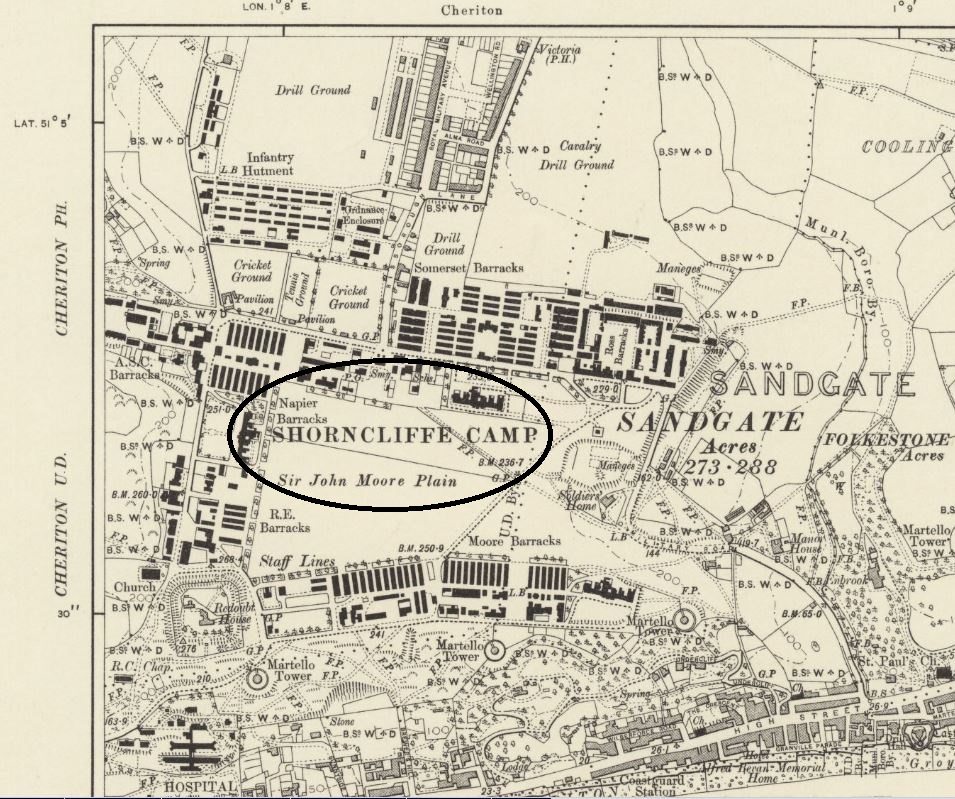
Guy’s personnel record also recorded separation payments to his wife Edythe. She returned to England on 2 August 1915 and gave her intended address as 43 Pentonville Rd, London. The record of her payments showed that she didn’t remain there for the duration of WWI. Edythe spent some time at 2 Darby Terrace, Horn Street, close to Shorncliffe camp used as a base for the Canadian forces (see OS Kent sheet LXXV.SW published 1908map). This was also where Guy’s brother John was base and his wife and family were at 2 Darby Terrace. Edythe’s final address was in Naburn, possibly with other members of Guy’s family. Perhaps he was able to visit her when he returned on leave from France.
After the end of WWI Guy and Edythe both returned to Canada on separate ships. Edythe arrived back at St John’s, New Brunswick on 25 April 1919 on the ship Corsican while Guy returned to Canada on 2 May 1919. After this date no records have been found which included either or both of them, notably the 1921 census. At some point Guy moved to Vancouver where he married his second wife, Elsie Davenport (1902-1970), on 23 May 1931. They were recorded together in the 1931 Canadian census when Guy’s occupation was recorded as a postman, who was not working. It is not clear what happened to his first wife Edythe. They may have divorced and it is possible Edythe remained in Alberta and remarried there in 1924.
Guy and Elsie continued to live in Vancouver where they were recorded on lists of voters:
1945 – Guy, a mail carrier, and Elsie living at 2784 Adanac St, Vancouver East.
1949 – Guy, retired, and Elsie living at 2784 Adanac St, Vancouver East.
1962 – Guy, retired, and Elsie living at 2784 Adanac St, Vancouver East.
Guy died on 12 May 1964 in Vancouver, British Columbia, Canada. His burial record stated that he had been in Canada for 45 years and Vancouver for 41 years. It also included information from his British Columbia marriage record and that he was a bachelor when he married Elsie. His first marriage to Edythe was mentioned and she was his next of kin in his Canadian Expeditionary Force personnel file. If he had been in Vancouver for 41 years then that suggests he moved there about 1921, possibly two years after he returned to Canada from serving in WWI.
Finally
I would like to know more about all the people mentioned in this blog post, and in particular, Guy who emigrated to Canada. Do contact me if you have any further information which you are willing to share.
Many of my ancestors worked on the land either as husbandmen or agricultural/field labourers, so when I find someone with a different occupation, I am always keen to write about them. The butler in my family was John Silversides ((1846-1833), my second cousin five times removed. He was born in Naburn, Yorkshire to parents Robert Silversides (1809-1898) and Hannah Waites (1815-1894). Robert was a farm labourer born in nearby Riccall and Hannah was from Kelfield.
The village of Naburn is located on the River Ouse about 4 miles south of the city of York. In the 19th century it was described by Lewis in his topographical directory as consisting of “2720 acres of rich land, two-thirds arable and the remainder meadow”. Just one of Robert and Hannah’s sons, William, remained a farm labourer in Naburn. Not only did John take up a different occupation but so did his brothers Thomas and Matthias. Thomas became a police officer; he died at the age of 91, a retired inspector of police, in Malton. Matthias worked on the railways in York.
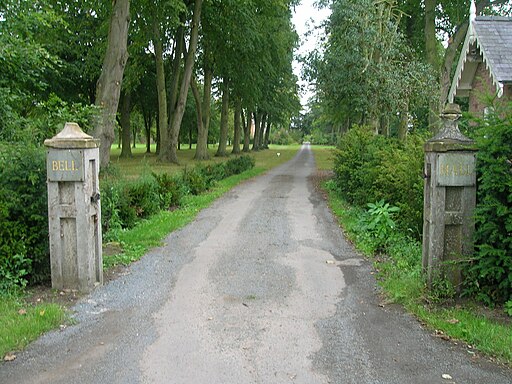
John was first recorded as a domestic servant, butler, at Bell Hall, Naburn in 1871 where he worked for the Baines family; they had inherited the estate in the 18th century. He was still working as a butler there when he married Eliza Palfreeman (born about 1849) on 26 May 1873 in St Mary Bishophill Senior church in York. Prior to her marriage Eliza was working as a parlour maid in Bootham in York.
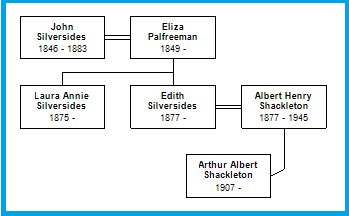
John and Eliza went on to have two daughters: Laura Annie Silversides born 4 August 1875 in Wheldrake and Edith Silversides born 20 January 1877 in Naburn. In both cases John was described as a butler (domestic servant); he was also the person who registered Laura’s birth. His father Robert registered Edith’s birth, which suggested that Eliza was living with him and his wife when she gave birth.
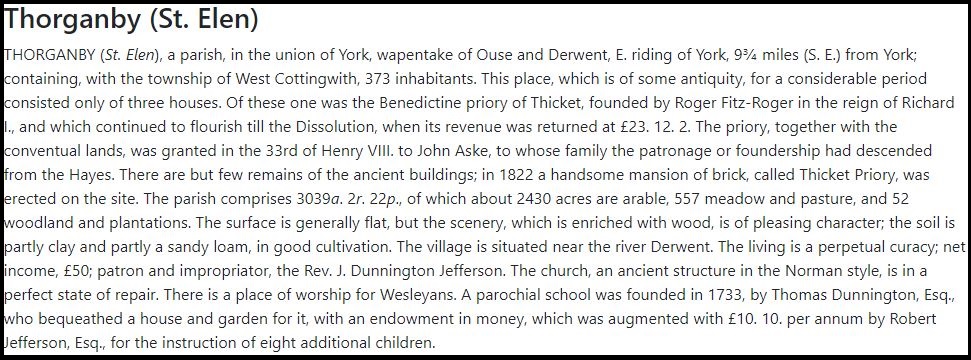
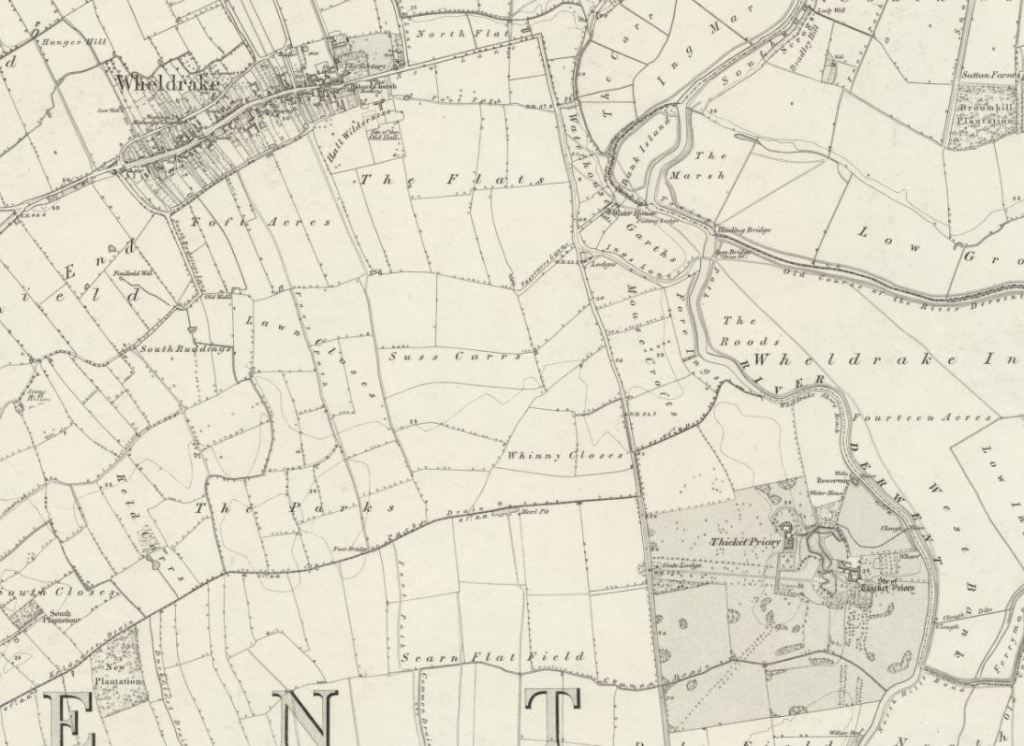
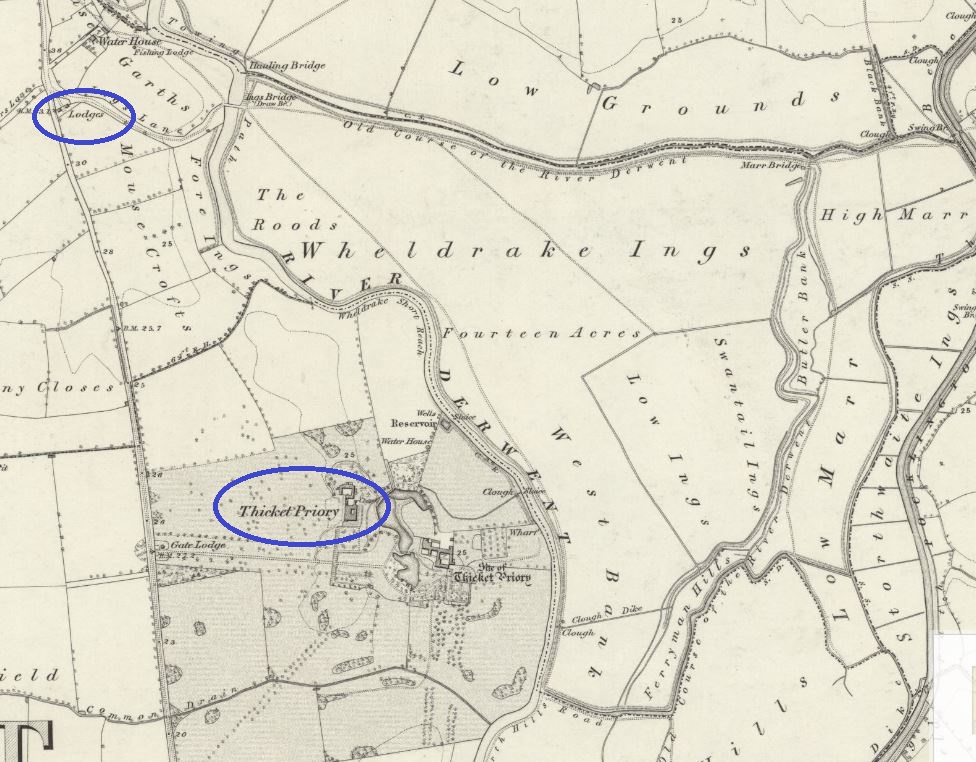
In the 1881 census the family were living together in “Jefferson Lodge” in Wheldrake, close to the boundary with the nearby village of Thorganby. The census record is blurred but it seems likely that this dwelling was on the northern side of Thicket Priory, owned by the Dunnnington-Jefferson family in the 19th century. They were probably John’s employers. Lewis’ 1848 topographical directory described Thicket Hall in his entry for Thorganby.
The following extracts from the OS map for Yorkshire sheet 192, dated 1854, show the position of the lodge and Thicket Priory.
The 1881 census is the last record which I’ve found for the family as a whole. John died on 5 August 1883 in 35 Cleveland St, St Mary Bishophill, York of pernicious anaemia. His death was reported by Isabella Lewins, the wife of a railway guard. John’s brother Matthias, a railway worker, had married his second wife on 10 February 1883, giving his address as Cleveland St. It seems likely that John died at his brother’s house. What isn’t clear was where his wife Eliza was when he died. By 1891 their two daughters Laura and Edith were pupils at St Stephen’s Orphanage, Trinity Lane, York. I’m planning a visit to the Borthwick Institute in York to find out more about their time there. So far, I haven’t been able to find out what happened to their mother Eliza. Do let me know if you have any stories about the family which you are willing to share with me.
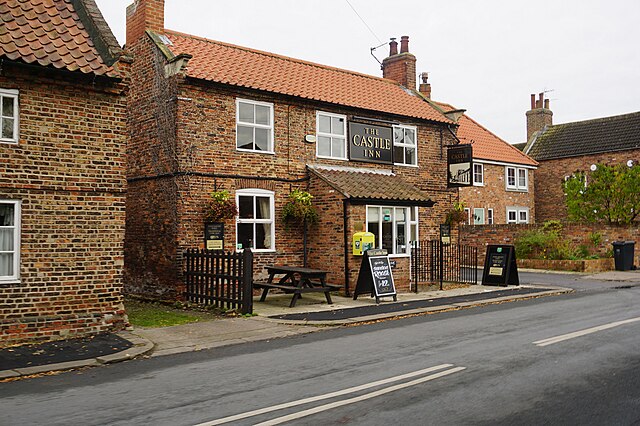
Christmas Day 2022 saw me eating Christmas lunch with members of my family at the Castle Inn in Cawood, North Yorkshire. Little did I know when I started to untangle two ancestors called Guy Silversides, both born in the nearby village of Riccall within a few years of each other in the 1840s, that I would find a connection between my family and the Castle Inn.
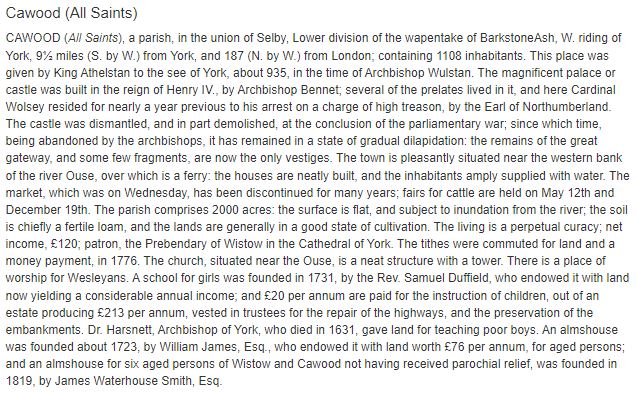
Cawood is a village situated on the river Ouse. A prominent feature is Cawood Castle, described in Lewis’ 1848 topographical directory as follows:
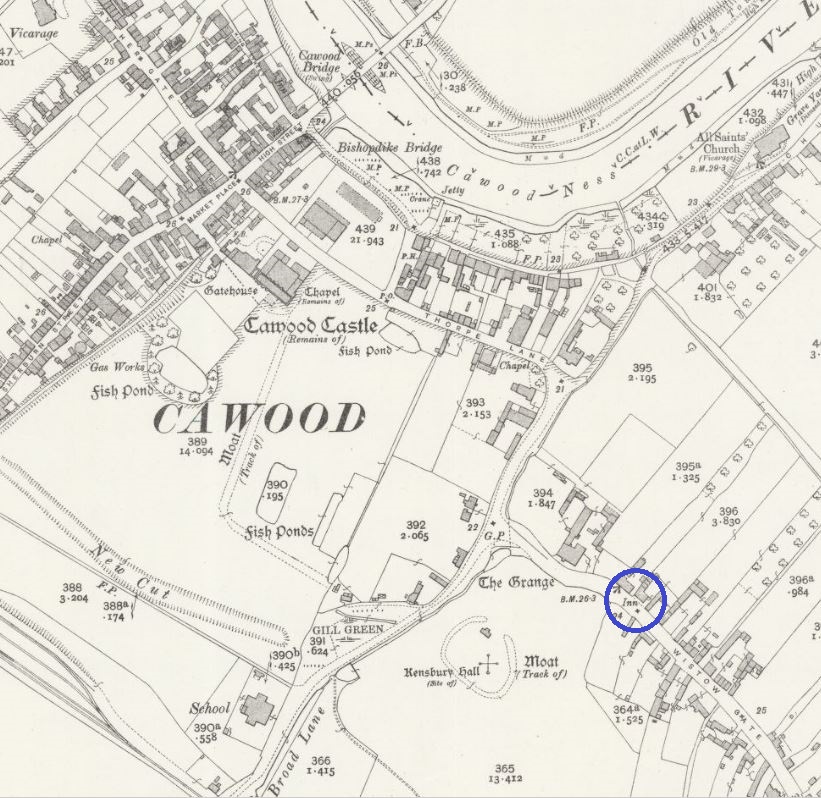
Trade directories on the Genuki website show that the innkeeper for the Castle Inn in 1822 and 1829 was William Benson. The following OS Yorkshire CCVI.9, dated 1906, shows the location of the inn in Wistowgate:
I’ve used this map because a report of the transfer of the license of the Castle Inn from Elizabeth Prankett to my second cousin three times removed, George William Silversides (1872-1857), was reported in the Selby Times, 17 March 1905.
George was baptised on 3 November 1872 in Drax to parents Guy Silversides (1846-1932) and Ann Marshall (1847-1921). By 1881 the family were living in Hirst Courtney. George’s father was an agricultural labourer who featured in a report of the Selby Petty Sessions (Yorkshire Gazette, 3 August 1888) when he accused Edward Precious of common assault. Both were living in Hirst Courtney at the time. A witness, Lawrence Baxter, stated that “the defendant struck Silversides under great provocation” and that “he said something about killing sheep”. Guy agreed that Edward Precious hadn’t killed a sheep: Guy was recorded as using the most filthy language. The case was dismissed.
George had some brushes with the law during his tenancy of the Castle Inn. He too appeared before the Selby Petty Sessions (Selby Times, 29 September 1905) where he was sued by Mr Morris Milner, the assistant overseer for Cawood, for £2/1/0 for the poor rate and 11/10 for the cemetery rate. In his defence George thought he had already paid what was due as he had only taken on the Castle Inn in February 1905. The bench confirmed that the rates were owing and ordered George to pay them with costs.
In another case George appeared before the Selby Petty Sessions for selling beer to a drunken man. The man in question, Thomas Elcock, was convicted at the January sessions and fined 10 shillings with costs of 13/6 (Selby Times, 19 January 1906). The case against George for selling beer to a drunken man had been held over to the February session. It seems George wasn’t in the Inn at the time the beer was sold by his servant; he was working in his market garden. Witnesses for the prosecution and defence were called and George was fined £1 with £1/12/6 costs (Selby Times, 2 February 1906).
George and his second wife Alice Varley (1878-1957) continued to live at the Castle Inn until the tenancy was taken over by their son William (1910-1972). George died on 11 July 1957 in York City hospital. He was described as a retired innkeeper and farmer. His death was reported by his son William, the innkeeper at the Castle Inn, Cawood. When William died on 27 November 1972 his probate record reported that he was the innkeeper at the Castle Inn, Cawood, indicating that the family had been innkeepers there for upwards of 65 years. What happened next, I’m not sure about, so if you have any stories about the family which you are willing to share with me then do get in touch.
James is my first cousin five times removed and I decided to write about him because his father was a nurseryman/ market gardener like mine. James and his family also emigrated to the USA in the mid-19th century.
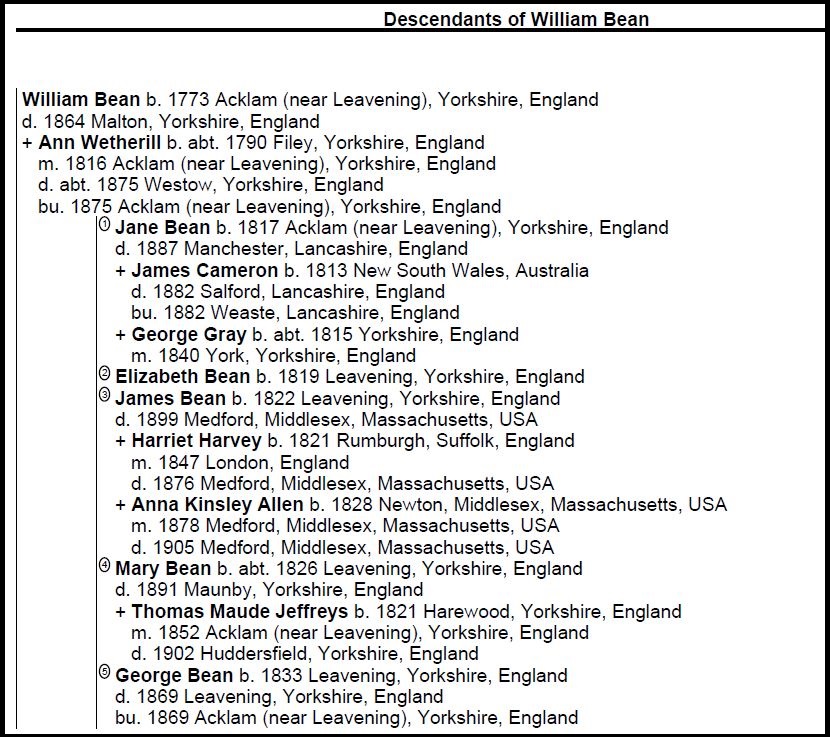
James was the eldest son of William Bean (1773-1864) and Ann Wetherill’s (1790-1875) five children. They had married on 31 October 1816 in Acklam parish church and settled in nearby Leavening; both places are in what was the North Riding of Yorkshire. The following outline descendant chart shows their immediate family:
Outline descendant chart for William Bean and Ann Wetherill
William and Ann continued to live in Leavening; in the 1841 census William was recorded as a nurseryman. Lewis’ topographical directory of 1848 described Leavening as follows:
Leavening from Lewis’ 1848 topographical directory of England
Two of William and Ann’s children moved away from Yorkshire. Their eldest daughter Jane (1817-1887) had moved to York by 1840, when she married her first husband George Gray (born 1815). By 1871 she was living in Chorlton cum Hardy, Lancashire with her second husband, James Cameron (1813-1882), who was described as a “survivor of the Charge of the Light Brigade”, and a private in the 13th Light Dragoons, on his Find A Grave record.
James was their second child to leave Leavening. He married Harriet Harvey (1821-1876) in St Botolph’s Church, Bishopgate, London on 11 April 1847, when James was described as being from Featherstone in Yorkshire. Their first child Mary was born in Featherstone in 1848. By 1851 James was a gardener at Stockeld Hall, near Spofforth, in the West Riding of Yorkshire.
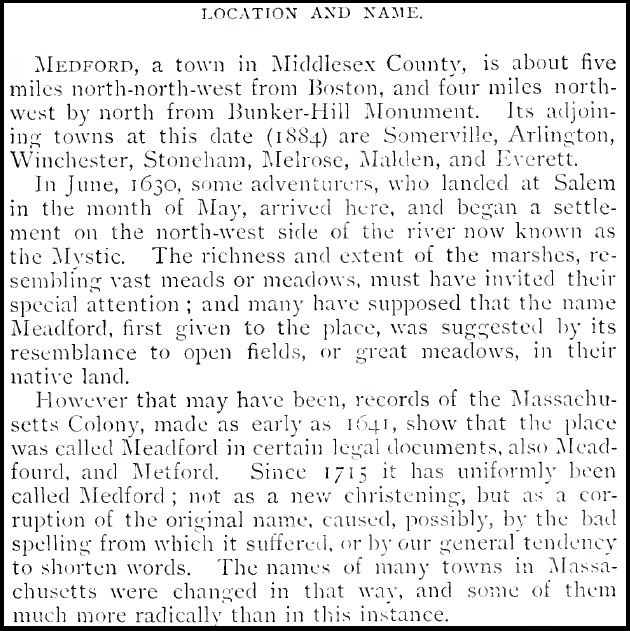
James, Harriet and children Mary, Elizabeth, William and Charlotte, left Liverpool on the ship Mariner and arrived in Boston on 12 May 1854. James’ naturalization certificate recorded his arrival date as 13 May 1854; perhaps the date they actually left the ship. On the passenger list James described himself as a gardener. Initially the family were found in the 1855 Massachusetts State Census in Roxbury, near Boston, where James was a gardener. The family had moved to Medford, Massachusetts by 1859. Medford was described in a local history as follows:
Usher, page 13
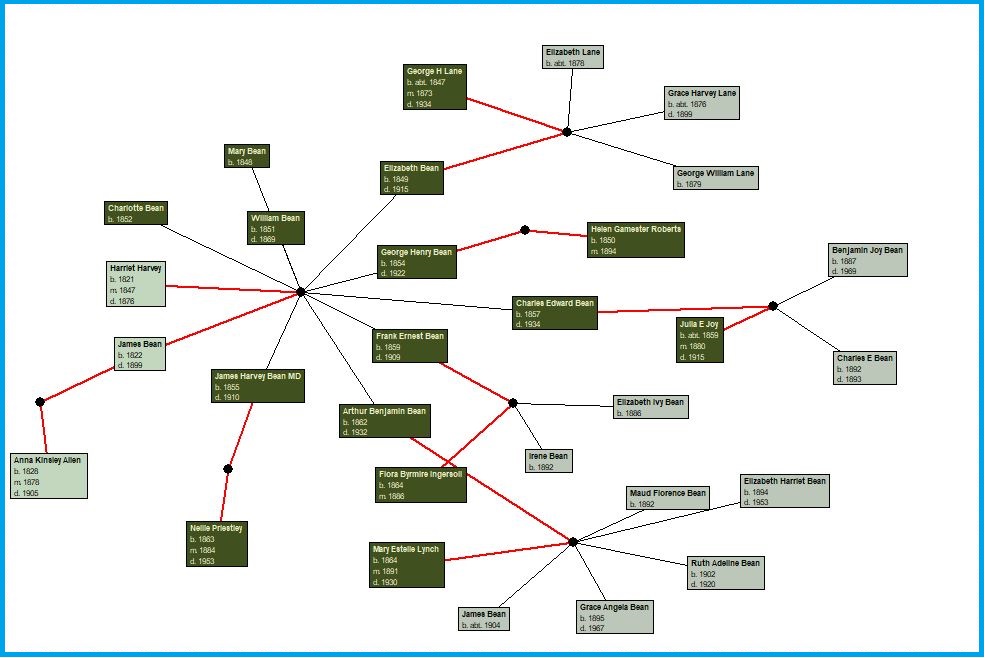
James and Harriet had nine children before she died on 29 March 1876. The following chart shows their family, as well as James’ second wife Anna Kinsley Allan (1828-1905), who he married on 20 November 1878.
Dandelion chart for James Bean
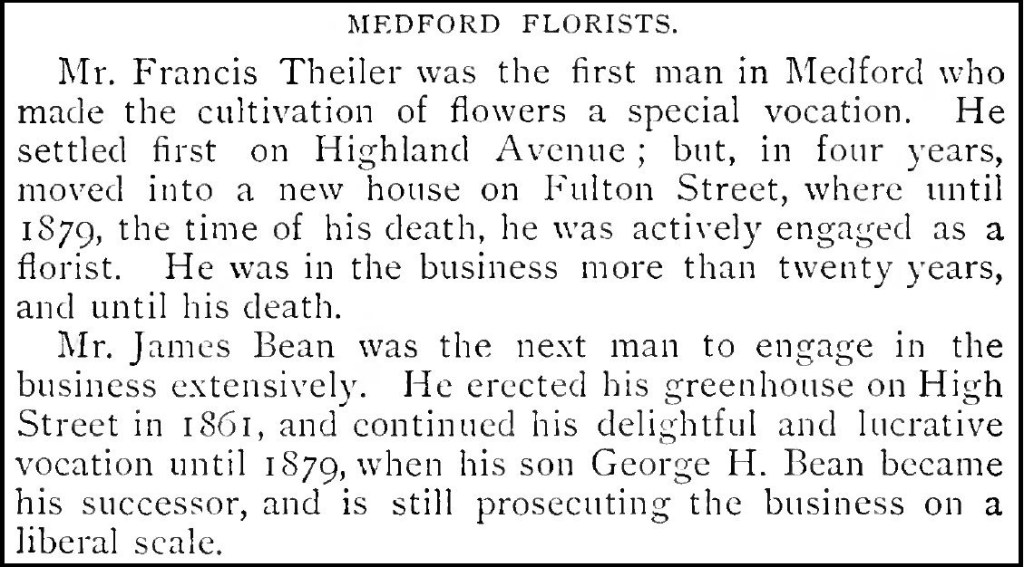
The book of the history of Medford also provided information on what James did when he settled there. The following extract describes how he set up in business as a florist which, he then passed onto his second son, George Henry Bean (1854-1922):
Usher, page 437
After he passed the business onto his son George, James became a coal dealer. It was recorded as his occupation on his death record, when he died on 19 June 1899. It seems that his daughter Charlotte (born 1852) continued in the business for some time after his death.
I am interested in knowing more about James and his descendants. Do contact me if you have any further information which you are willing to share with me.
Usher, James. (1886) History of the Town of Medford, Middlesex County, Massachusetts. Boston: Rand, Avery and Co. https://archive.org/ : accessed February 2022.
I’ve previously written about Annie, my 2nd cousin three times removed, in two posts on my blog: two actors and an accidental drowning and George Curryer’s will. George married Annie on 10 June 1890 in Folkestone, Kent. He gave his occupation as an actor and his condition on their marriage certificate was recorded as a widower; however, Annie was George’s second wife.
After their marriage, George and Annie, and their two-month-old daughter Madge (1891-1940), were next found in the 1891 census living in Scarborough with Annie’s mother Maria and her second husband James Davison (b. 1852). George’s occupation was recorded as an actor. Maria and George went on to have a son Henry (1893-1920). However, after 1891, George and Annie, do not appear together in any further census records. The admission records of Acomb National School do though provide some further clues as to their whereabouts:
Madge Morley Curryer
Henry Edwards Curryer
Date admitted to Acomb school
26/04/1897
19/03/1900
Birth date
27/01/1891
11/09/93
Parent
George 4 Whitehall Cottages, Acomb
Annie 4 Whitehall Cottages, Acomb
Previous school
All Saints, Scarborough
Private school
Date left
10/01/1905
12/04/1900
Date admitted
07/01/1901
Date left
22/02/1901
Date admitted
27/08/1901
Date left
04/10/1901
It seems that by April 1897 George, Annie and their two children were at least using 4 Whitehall Cottages, Acomb as their address for the purpose of Madge’s and then Henry’s education. However, when Henry entered the school in March 1900, his parent was recorded as his mother Annie. An entry in the “Professional Cards” section of The Stage (7 March 1895) also provided useful information:
“MR. GEORGE EDWARDS, Lead or Character. MADGE MORLEY, Juvenile Lead, Light Comedy. Liberty. 48, Tenison-st., Lambeth, S.E.”
It looks like George’s stage name was George Edwards and Annie’s was Madge Morley. However, they had probably gone their separate ways by 8 July 1897 when Annie’s Professional Card in The Stage read as follows:
“MISS MADGE MORLEY, Disengaged Autumn. Comedy or Drama. “The pathos instilled into the part of Marie, a blind girl, by Madge Morley makes her at once a favourite and enlists the sympathy of the audience.” Northern Guardian, June 22nd 1897. Address, 4 Whitehall Cottages, Acomb, York.”
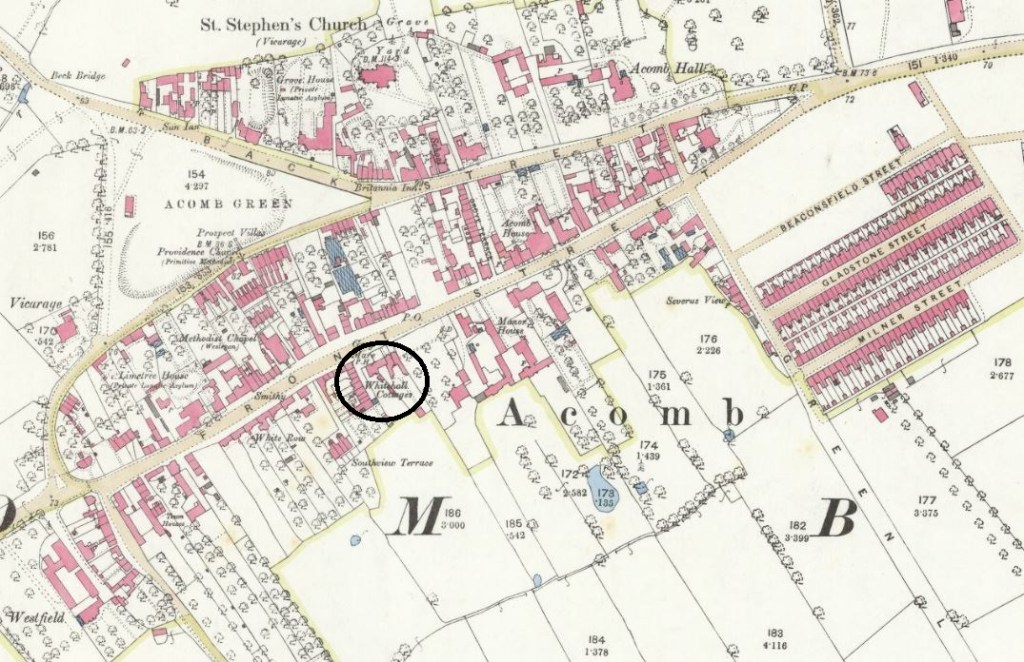
Returning to their son Henry’s education records, he finally left Acomb School at the age of eight on 4 October 1901. In the 1901 census Henry was with his father George, living with George’s brother William, at 62 Vicarage Rd, Tottenham. Annie (as Madge Morley) was at 1 Tidy St, Brighton, where she was described as a married actress. Their daughter Madge was at 4 Whitehall Cottages, Acomb with Frederic and Sarah Brown and described as their niece. She was their great niece, as Annie’s mother was Maria, Sarah’s sister. The following map shows the location of the cottages in Acomb.
OS Yorkshire CLXXIV.9 date 1892
By 1911 George had moved to 142 Gladstone Buildings, Willow St, Finsbury where he subsequently died on 17 December 1925. His son Henry joined the Royal Marines on 13 May 1911 and daughter Madge was working as a governess in a children’s home in Walthamstow, Essex in the 1911 census. Annie was recorded as “Madge Morley”, born 1876 in Aldershot, single, an actress, and visitor at Flat 3, 112A Brixton Hill, London in 1911. The head of the household was John Sanders.
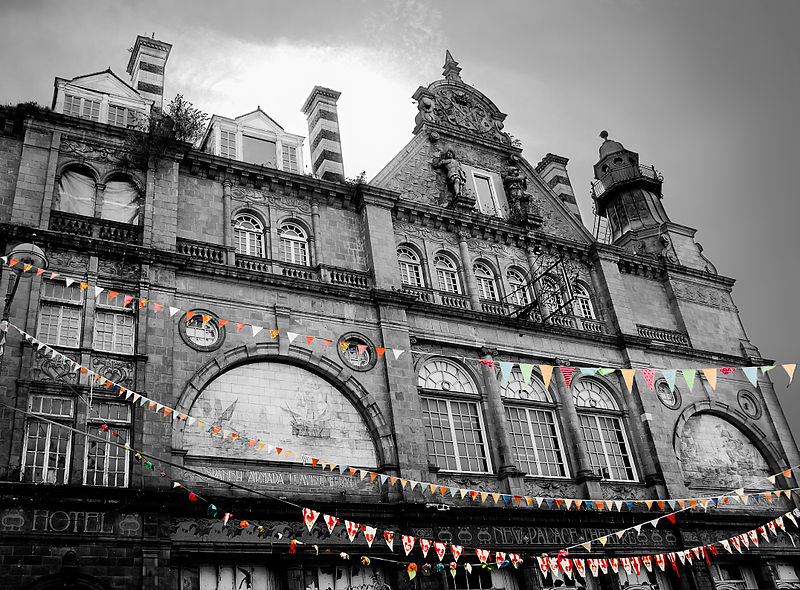
Annie continued to live in London when she wasn’t touring in music halls and theatres. She appeared at the York Empire in May 1912 (Musical Hall and Theatre Review, 2 May 1912), a venue specialising in variety performances. The Western Evening Herald of 10 June 1918 contained an advert for “Miss Madge Morley and company – a farcical absurdity entitled AFTER THE RACES” at the Palace Plymouth, now a disused theatre.
Former Palace Theatre, Union St, Plymouth by miagarrett – unchanged
In the 1920 London Electoral Registers Annie’s address was 128 Brixton Hill. This was the address recorded for her, as her son Henry’s next of kin, when he died by accidental drowning on 9 March 1920 in South Africa. A further search of The Stage for later entries for Annie, with the stage name Madge Morley, found an entry in the death’s column of the 12 September 1929 issue:
“John Sanders – died 28 August 1929, age 48, after a short illness. Deeply mourned by his wife, Madge Morley.”
Another look at Annie’s 1920 Electoral Register entry showed that John Sanders was also living at 128 Brixton Hill. In addition, there were further entries in The Stage (for example, 27 January 1921 and 20 October 1921) posted by Madge Morley seeking work. In all cases her address was 128 Brixton Hill. Eventually I found a marriage between Annie Curryer and John Sanders on 24 December 1925. She had waited just a week after George’s death before marrying John. The couple were married by license in the Lambeth Registry Office. John was a bachelor and commercial traveller (textiles) living at 128 Brixton Hill. Annie was described as a widow with no rank or profession and her address was 12 Fairmount Rd, Brixton Hill.
After her second husband John’s death on 28 August 1929, Annie continued to advertise for work in The Stage Professional Cards column. Her entry on 24 April 1930 suggested that she was disengaged and seeking special parts, with her address given as 128 Brixton Hill. By this time, she would have been about 60 and was possibly coming to the end of her career on the stage. So far, I’ve been unable to find out what happened to Annie after her second husband died. Do contact me if you have any further information which you are willing to share with me.
While researching my family history I have come across a number of unusual surnames and this blog post is the second in a series I plan to write about them. I’ve chosen Silversides for this post, in part because it is an interesting surname, and also because it leads to one of my many brick walls.
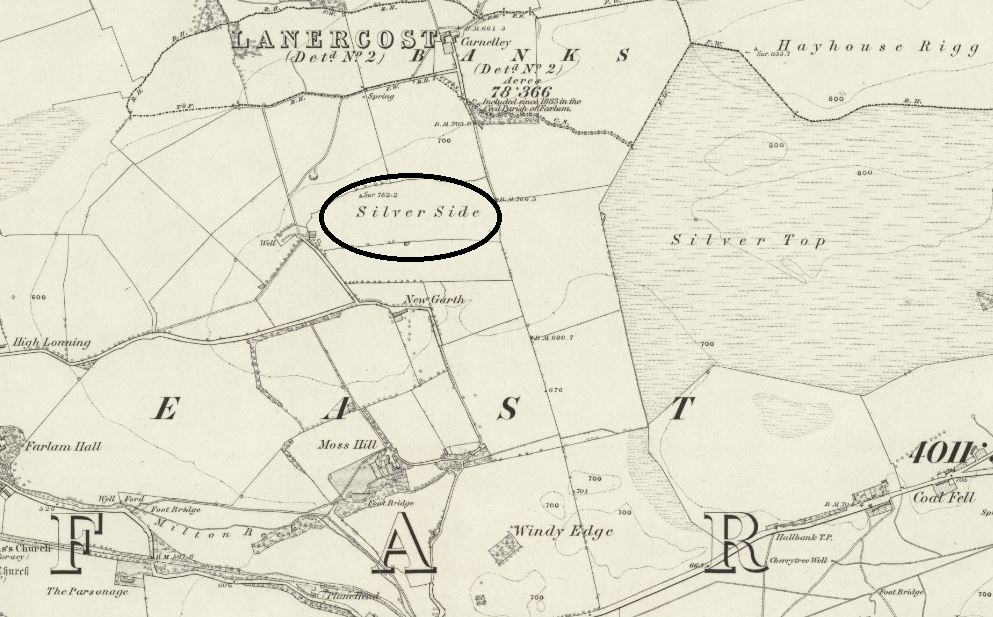
Origin of surname – according to the Oxford Dictionary of Family Names in Britain and Ireland, Silversides has two possible derivations. Firstly, it’s the plural of Silverside, thought to be a nickname from Middle English: silver plus side (of the body or head). Other names to compare it with are Siluermouth (silver mouth) and Silvertop (silver hair). An alternative is that it is a locative name from Silver Side in Farlam in Cumbria which was recorded in 1485. The following OS Cumberland XVIII map dated 1868 shows its location:
In the case of my own ancestors, I think it’s more likely that their surname, Silversides, is the plural of Silverside, a nickname from Middle English. The majority of family members I’ve found come from the East and West Ridings of Yorkshire. 209 Silversides were recorded in Great Britain in 1881.
My ancestral connections – William Silversides (1690-1756) is my seven times great grandfather on the Sarginson/Foster side of my family. According to an entry in FindaGrave he was baptised on 5 March 1690/91 in Nun Monkton, West Riding of Yorkshire and his father was named as William. Nun Monkton is 8 miles Northwest of York and 12 miles from Escrick in the East Riding of Yorkshire. Escrick where William married his wife Mary Brown (1691-1780) on 25 November 1725.
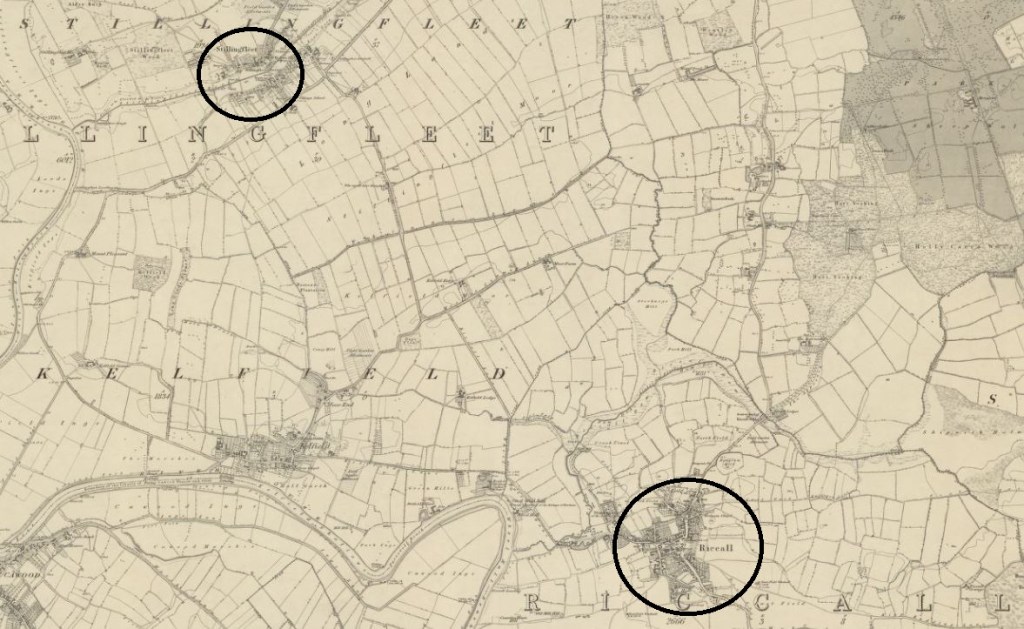
William and Mary had at least six children, five sons and one daughter. Their two eldest sons were born in Stillingfleet and the family then moved to Riccall. The following OS Yorkshire 206 map dated 1851 shows the villages of Stillingfleet and Riccall:
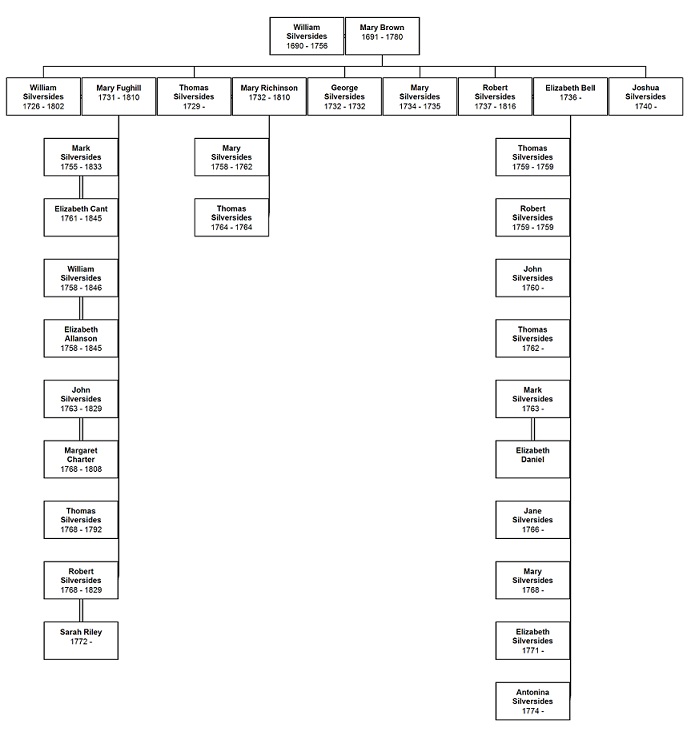
Some of the children’s baptism records give their father’s occupation as a labourer, most likely an agricultural labourer, as Escrick, Stillingfleet and Riccall are all villages within a few miles of each other in the Vale of York known for its agriculture. The following descendant chart shows William and Mary and two generations of their descendants:
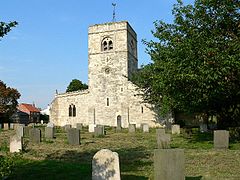
The family settled in Riccall. William was buried in St Mary’s Churchyard on 20 June 1756 and his wife Mary on 23 August 1780 when she was described as a widow aged 89 who had died of a fever.
William and Mary’s son William (1726-1802) was my six times great grandfather. He married Mary Fughill (1731-1810) and they had at least five sons. When William died his burial record gave his age as 77 and that he had been a farmer who had died of natural decay. So far, I haven’t found any land tax records for him to indicate from whom he leased land.
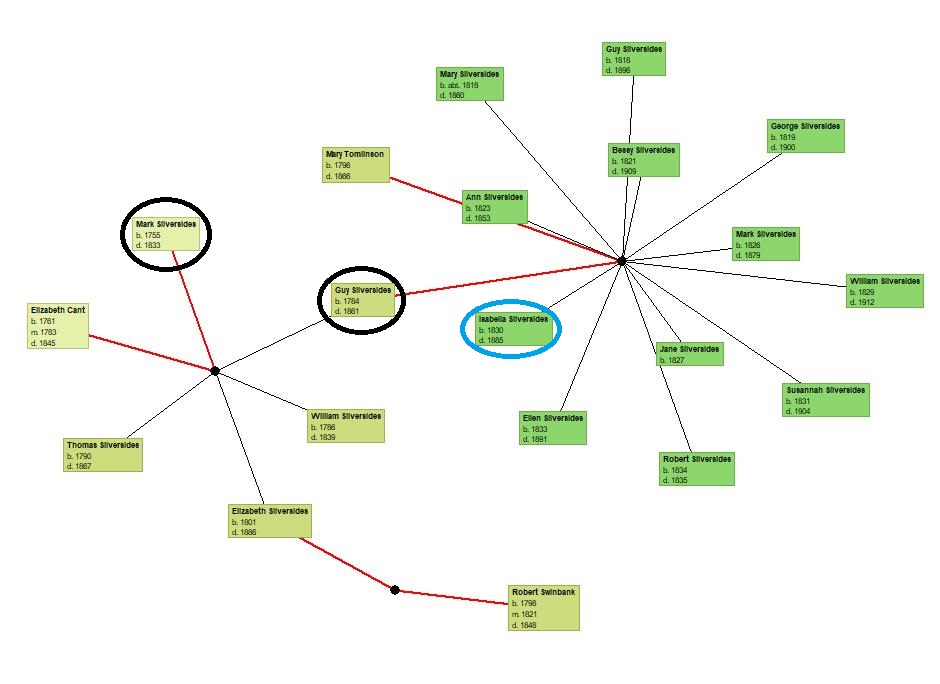
Mark Silversides (1755-1833) my five times great grandfather – Mark was William and Mary Fughill’s eldest son. He was baptised on 13 May 1755 in St Mary’s Church, Riccall and he married Elizabeth Cant (1761-1845) on 2 December 1783 in the same church. They had four sons and a daughter and the following dandelion chart shows Mark, Elizabeth and two generations of their descendants:
Mark and Elizabeth’s eldest son Guy (1784-1861) is my four times great grandfather. He married Mary Tomlinson (1796-1866) in St Mary’s Church on 13 March 1817 and together they had 12 children, five boys and seven daughters.
By 1822 Mark was the licensed victualler at the Greyhound Inn in Riccall according to the 1822 edition of Baines’ History and Directory of the North and East Ridings of Yorkshire. The pub was one of four in Riccall at that time and survives to this day. Baines also helpfully gave the population of Riccall as 599 and that Mark and Robert Silversides, Guy’s father and uncle, were farmers and yeomen in the village.
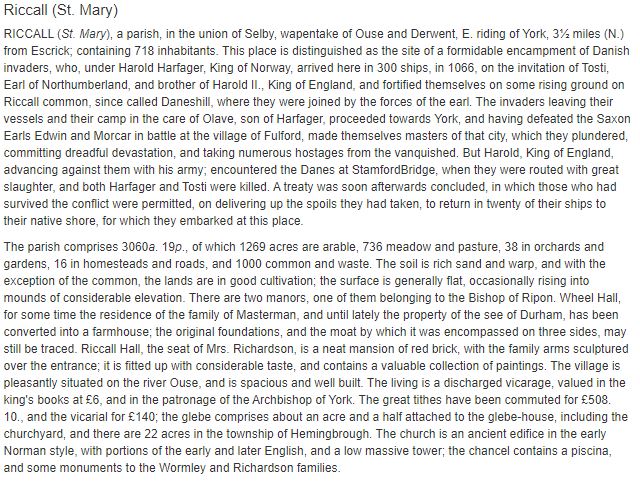
By the 1841 census Guy had become a shoemaker, a trade he continued until the 1861 census, the last he was recorded in. Riccall, in Lewis’s 1848 topographical directory, had a population of 718 as described in the following extract from it:
Guy died on 11 July 1861 and was buried in St Mary’s Churchyard on 14 July 1861.
Guy and Mary’s children – The dandelion chart in the previous section shows their 12 children. Their eldest son Guy became a tailor and moved to Appleton Roebuck, George a labourer was buried in Riccall, Mark became a shoemaker and was buried in Riccall, William is the subject of the next section and their youngest son Robert died in infancy.
Mary, Susannah and Ellen all married farmers. Bessy married a glass bottle packer and Jane a tanner. Ann married a brickyard labourer and moved to nearby Kelfield. Their fifth daughter Isabella (1830-1885), my three times great grandmother, married Thomas Foster (1825-1902), a brick and tile maker, on 4 March 1848. They settled in the nearby village of Kelfield.
Alleged army fraud – William Silversides (1829-1912) is my 1st cousin 4 times removed and the brother of my three times great grandmother Isabella. By the 1851 census William had moved to Ebenezer Place in the parish of York St George where he was living with his sister Jane and her husband Thomas Pickersgill. William’s occupation was butcher. He married his first wife Frances Walker (1814-1874) on 29 August 1853. They lived at no 33 Shambles, York in both the 1861 and 1871 censuses with William’s occupation a butcher.
William’s first wife, Frances, died in 1874 and he married his second wife Emma Jane Smith (1834-1900) two year later. They had one daughter, Ethel Beatrice Silversides (1879-1959), and in 1881 the family were living at The Priory, Grange Crescent, York. This property exists to this day and is now run as a small hotel. William’s occupation was recorded as an army contractor. Grange Crescent is near to the army barracks in the Fulford Road.
At some point William had gone into partnership with his first wife Frances’ brother Ambrose Walker (1821-1896) as farmers of Naburn Lodge Farm, Askham Bryan. Ambrose was also a butcher in the 1861 census but by 1881 he described himself as a forage contractor. The dissolution of William and Ambrose’s partnership for the farm, by mutual consent, was reported in the 23 February 1884 edition of the Yorkshire Gazette. In the same newspaper, notice was also given of the dissolution of a partnership between William, Ambrose and Ambrose’s nephew John Philips Walker (1855-1892) who were acting as army contractors in York. This seems to have taken place in advance of a case brought before York Crown Court in 1885 of alleged army fraud.
The alleged fraud case was reported in the 1 August 1885 edition of the Yorkshire Gazette. The case was before Mr Justice Mathew. William Silversides and Ambrose Walker, army contractors, and Thomas Christopher Lewis, butcher were indicted:
“that they did unlawfully conspire, combine, confederate and agree together, in the years 1883 and 1884, at the township of Gate Fulford, having contracted to supply 3100 tons of forage and straw, and also a certain quantity and quality of meat, did from time to time deliver less weight and inferior quality, and that they by falsely pretending they had delivered the said forage, straw and meat of the quantity and quality contracted for, did receive the contract price for the same, with intent to defraud Her Majesty’s Secretary of State for War; and in pursuance of the said conspiracy did pay certain sums of money to one John Anderson Banks, to bribe and induce him to permit the said breaches of contract to be made, with intent to defraud the said Secretary of State.” (Yorkshire Gazette 1 August 1885, page 1)
All three defendants entered a plea of not guilty and the case took place over three days. It seems that not all the defendants were indicted on every charge. John Anderson Banks mentioned in the charges was the Quartermaster of the 5th Dragoon Guards and was key to the provision of forage to the troops. This particular aspect related to tenders which had been won by William Silversides to provide forage during the period August 1882 to 1884. The prosecution asserted that short measures of oats had been supplied and that, although this had been noticed by the troops, it wasn’t until July 1884 that Troop Serjeant Major Saul found that the oats were short by 44lb that the matter was raised with Lieutenant Gore.
The charges against Ambrose and Thomas Christopher Lewis (who was married to his niece) were regarding the quantity and quality of meat supplied to the troops. It was also alleged that they paid bribes to Banks. Banks had been arrested when the regiment arrived in Manchester but had absconded and not been seen since.
A large number of witnesses for the prosecution appeared at the trial, including five Corporals and John Chipchase who was a journeyman butcher who had worked for Lewis. His view was that the meat supplied was often from diseased animals and “he would not have liked to eat the meat himself”. It seems that he had been let go by Lewis and that when he had previously worked for William Silversides as a butcher, the meat he served hsd been passed was by the health inspectors.
A similarly large number of witnesses appeared for the defendants attesting to their good character; these included a number of officers from the barracks. Both barristers for William and Ambrose closed their remarks to the jury with the assertion that the prosecution had not proved its case. Lewis’ counsel said that the money paid to Banks was the result of “betting transactions”.
There was then some to-ing and fro-ing between the jury foreman, the court and the judge. Eventually the defendants were found not guilty in both cases and were discharged.
After the case William spent some time as a hotel proprietor of the Sea Horse Hotel, Fawcett Street, York where he was recorded as living in 1891. The building is now grade II listed. He also seems to have continued his association with Ambrose as probate was granted to him when Ambrose died in 1896.
By 1901 William was a widower for the second time and living on his own means at The Priory, Fulford Road, York. He had moved to 1 Wilton Terrace, Fulford Road, York by 1911 and was described as a retired farmer and butcher. Probate was granted to his daughter Ethel.
Finally, the brick wall – I would like to know more about all the people mentioned in this blog post, and in particular, if there is any information about the parents of my seven times great grandfather William Silversides. I have found some possible family members who lived in Stillingfleet; however, the parish records are rather damaged making it problematic to determine family relationships. Do contact me if you have any further information which you are willing to share.
While researching my family history I have come across a number of unusual surnames and this blog post in the first in a series I plan to write about them. I’ve chosen Palframan for my initial post, in part because it is an interesting occupational surname, and also, because it leads to one of my many brick walls.
Origin of surname
According to the Oxford Dictionary of Family Names in Britain and Ireland, Palfreyman, plus its variants Palphreyman, Palfreman, Palfreeman, Palframan and Parfrement, is an occupational surname from the Middle English palefreiman; a man responsible for the palfrey’s or riding horses, alternatively a groom. In the 1881 census there were 645 occurrences of the name, mainly in the West Riding of Yorkshire and Derbyshire. Interestingly, Redmonds, in his book on Yorkshire surnames, describes another possible spelling variant, Palphramand, and describes the surname as reflecting the man in charge of the palfreys, or saddle horses. He also explained that in 1881 the surname Palframan was most prominent in Selby with Palframand in York and Palfreeman in York and Pocklington.
My ancestral connections
My ancestors mostly use the variant Palframan, although the records for my five times great grandfather, Michael (1722-1812), also include the variant Palfreyman. Michael died in Pontefract, West Riding of Yorkshire and his burial record gives his age as 90, suggesting he was born about 1722, and that he was a hatter. He was apprenticed to Joseph Rawnsley, a hatter, of Pontefract and his stamp duty was paid in 1740 for his apprenticeship. By 1753 Michael was master to an apprentice, Thomas Thresh, and his occupation given as a felt maker. Despite searching I’ve been unable to find his baptism and parents. I do have a working theory but need more evidence to prove a link. Michael’s 1740 apprenticeship record gave his father’s name as Michael.
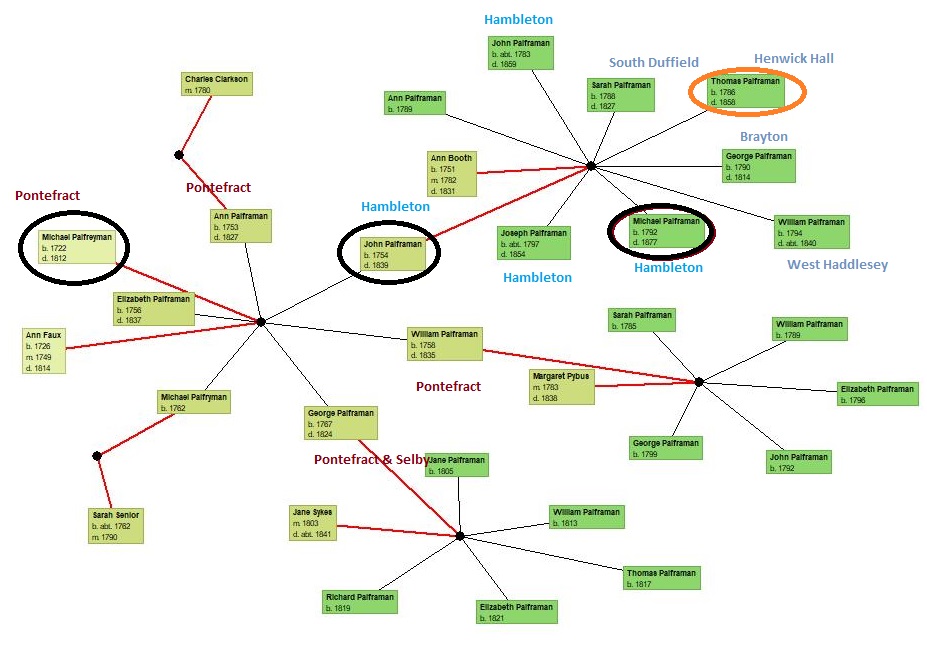
The following chart shows Michael and two generations of his descendants. The people circled in black are, reading from left to right, my five times great grandfather Michael, my four times great grandfather John (1754-1839) and my three times great grandfather Michael (1782-1877) who was the father of my two times great grandmother Sarah (1845-1920). Thomas Palframan, annotated in orange at the top of the chart, is the father of my first cousin four times removed, John (1817-1874), who moved to farm in Wistow, Yorkshire and whom more about later. The chart has also been annotated to show where in Yorkshire each family group lived.
Dandelion chart for the Palframan family
Hambleton is 9 miles (about 13 km) from Pontefract and I was intrigued as to why my four times great grandfather John (1754-1839) moved from Pontefract to Hambleton.
John Palframan (1754-1839)
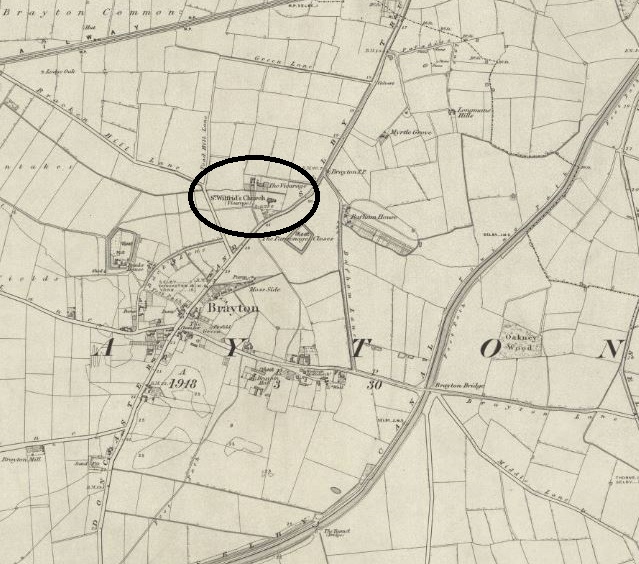
John was baptised on 19 August 1754 in St Giles and St Mary’s church, Pontefract. He married Ann Booth (1751-1831) in the same church on 12 December 1782. They had six sons and two daughters and were living in Hambleton by the time their second son Thomas (1756-1858) was baptised in St Wilfrid’s Church, Brayton. The following map shows the layout of Brayton in 1851; St Wilfrid’s church is marked with a circle.
OS Yorkshire 221 dated 1851
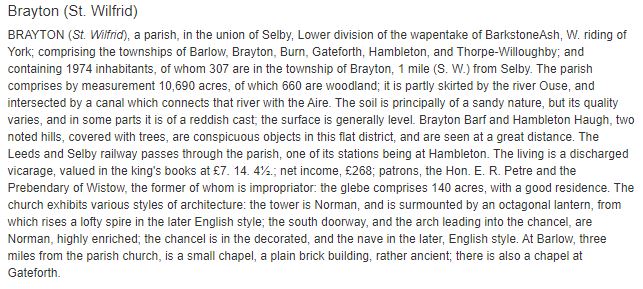
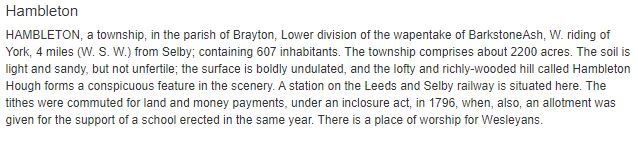
Brayton and Hambleton were largely agricultural areas as described in the following two extracts from Lewis’s topological directory of England dated 1848. At that time only Brayton had a parish church and this is where John and his wife continued to baptise their children.
Description of Brayton from Lewis’ Topographical Directory Description of Hambleton from Lewis’ Topographical Directory
Whilst living in Hambleton John was recorded as possessing an alehouse licence in 1803 and in 1810 he appeared in land tax records showing that he occupied land owned by the Vicar of Brayton and William Bew senior. By 1822 he still occupied land owned by William Bew and the Reverend Richard Paver. In the same land tax record his son John (1883-1859) was recorded as occupying land owned by the Hon. Edward Petre, who later became the Mayor of York in 1830.
John died in January 1839 and was buried on 13 January 1839 in Brayton parish church. The ceremony was conducted by the Vicar of Brayton, the Reverend Richard Paver, the owner of the land he occupied in Hambleton.
John and Ann’s fourth son, Michael Palframan (1792-1877), is my three times great grandfather. He married his first wife Sarah Slater (1797-1834), on 3 March 1823 in Brayton. They had seven children, four boys and three girls.
By 1832 Michael was also occupying a house and land owned by the Hon. Edward Petre and in the same year Michael appeared in the Poll Book for Hambleton as the occupier of a “farm above £50 per year”. His brother John and Joseph also appeared in the same Poll Book.
Soon after Michael’s first wife Sarah died, he married Martha Seymour (1813-1889), on 26 December 1835. They had nine children: five boys and four girls. I am descended from their daughter, Sarah (1845-1920), my two times great grandmother.
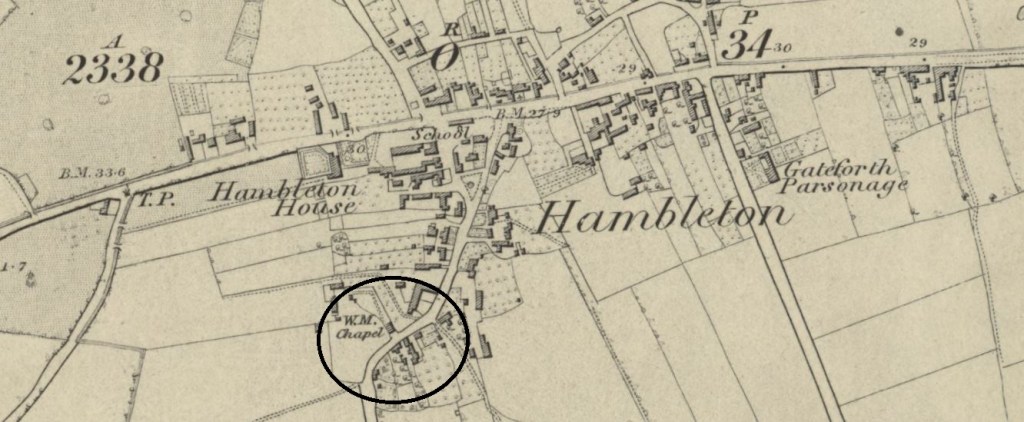
By the 1841 census Michael was described as a farmer in Hambleton. The following map shows the layout of Hambleton in 1850 with a circle around the Wesleyan Chapel.
OS Yorkshire 220 map dated 1850
By 1871 Michael farmed 96 acres and employed three labourers. He lived in Chapel Street, Hambleton. The approximate position of the street can be seen in the above map as the Wesleyan Chapel is located on it.
When Michael died on 25 February 1877 he was described as a farmer from Hambleton and his sons George and Michael, also farmers from Hambleton, were his executors. Michael left effects valued under £450.
Thomas Palframan (1786-1858) and John Palframan (1817-1874)
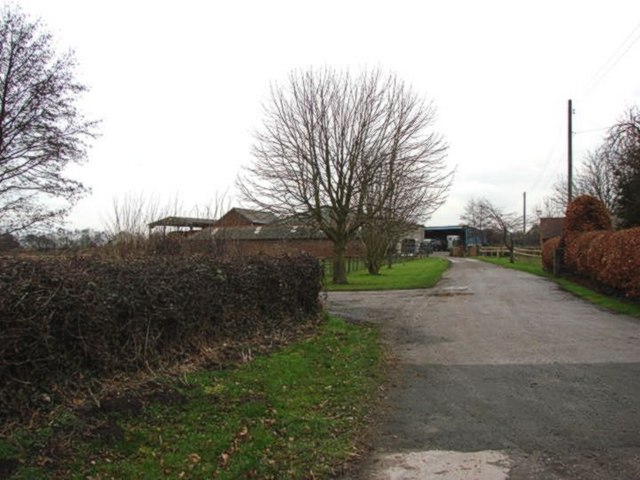
Thomas was the brother of my three times great grandfather, Michael; i.e., my 4th great uncle. He too became a farmer and by 1832 was farming at Henwick Hall, Burn where the Poll Book recorded him as a “Farmer £50 rent” per year. He continued to farm at Henwick Hall and the 1851 census recorded that he was a farmer of 164 acres employing two men. He was still living at Henwick Hall when he died on 17 March 1858 leaving effects under £600. The following is a modern photograph of Henwick Hall farm:
Modern photograph of Henwick Hall Farm by Bill Henderson/CC BY-SA 2.0
Thomas’ eldest son John (1817-1874) left Burn to farm in Wistow. He was recorded in the 1871 census as a farmer of 86 acres who employed two labourers at “Old Ouse”. John is buried with his wife Sarah Otley (1818-1872) in the churchyard of All Saints Church, Wistow. The majority of their children stayed in Yorkshire except their daughter Mary (1847-1916) and son John (1856-1924) who both emigrated to Ontario, Canada
Finally, the brick wall
I am intrigued as to how the son of a hatter from Pontefract came to move to a more rural area where he kept an alehouse, and also perhaps, became a small farmer. I would like to know more about all the people mentioned in this blog post, and in particular, if there is any information about the parents of my five times great grandfather Michael, the hatter/felt maker, from Pontefract. It seems his father was called Michael. Do contact me if you have any further information which you are willing to share.

 Joan Reid Genealogy

