I have previously written about Elias Sargeantson (1778-1812), my five times great grandfather who, was convicted of larceny at the East Riding of Yorkshire Quarter Sessions on 1 May 1810. Despite it probably being his first offence, he was sentenced to seven years transportation for stealing, as he was thought to be a member of the Snowden Dunhill gang. Elias didn’t make it to Australia. After his conviction he was moved to the prison hulk Laurel, moored in Portsmouth harbour. He died of hulk fever on the hospital ship on 11 April 1812.
The life of Snowden Dunhill has already been written about on the East Riding’s museum website and is worth a read. What is interesting to me is how he became connected to my five times great grandfather Elias. At the time of his conviction, he was probably living in Eastrington, just a few miles from Spaldington which is where Snowden and his family were living at the time.
In the early 19th century Snowden and his gang were known for stealing grain from farmers and that is certainly the crime Elias was convicted of in 1810. Snowden himself was convicted of larceny on 6 March 1813 to seven years transportation. He only seems to have got a far as the prison hulks moored at Woolwich. He was discharged from the prison hulk Bellerophon with a free pardon on 16 June 1819.
While he had been in the prison hulk most of his family had committed crimes, been caught and sentenced to transportation. More on this can be found on the East Riding Museum website. I was somewhat intrigued by this family and their possible connection to mine so I have put together the following outline family tree and would like to know more about the people mentioned in this blog post. Do contact me if you have any further information which you are willing to share with me.
Descendant chart for Snowden and Sarah
Bibliography:
Australian, Convict Transportation Registers – Other Fleets & Ships, 1791-1868.https://www.ancestry.co.uk/ : accessed July 2025.
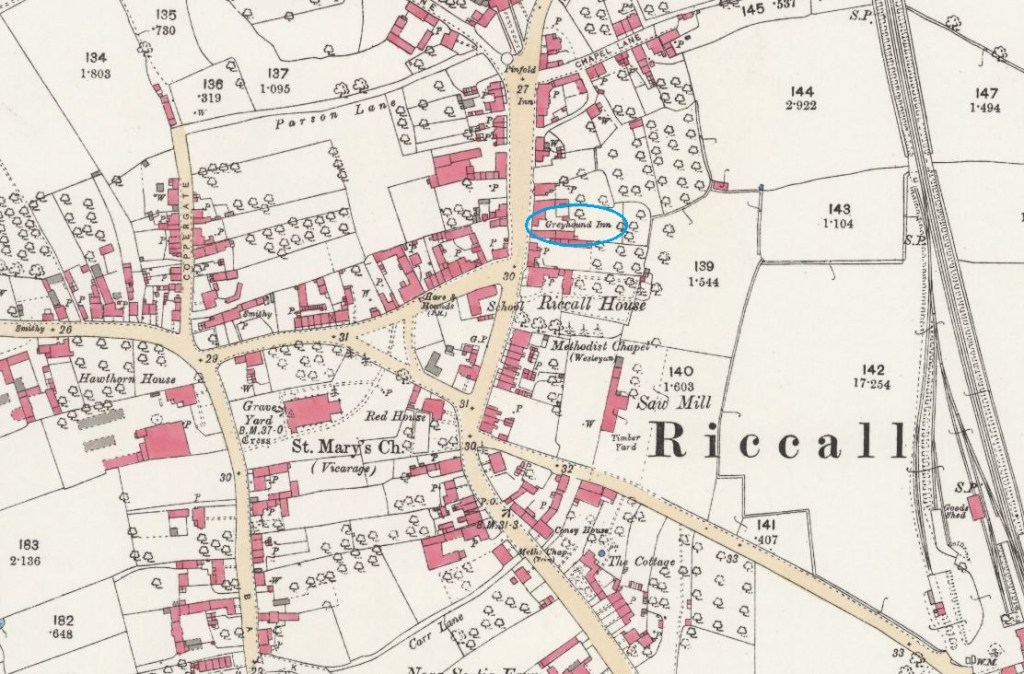
Guy Silversides (1784-1861), the publican at the Greyhound Inn in Riccall, was convicted on 2 March 1824 at the East Riding of Yorkshire Quarter Sessions. His offence, ‘against the conditions of recognizance for the license of an ale house’, resulted in a fine of one guinea with costs of 10 shillings and two pence. The following map shows the location of the Greyhound Inn in Riccall (Ordnance Survey Yorkshire CCVI.II date 1891).
The record from the Quarter Sessions (QSF/463/F/1) provided an insight into the case. A key witness was John Harper junior, an apprentice to Guy. (Guy was also a shoemaker.) John reported that on the evening of the offence, 20 January 1824, four people had played cards in the inn for money. They were his master Guy Silversides, Varley of Cawood, Edward Hawkins, Dowson and Jonathan Romans of Riccall. John saw Jonathan Romans cheating. He suggested that the house was a meeting place for prostitutes and used for gaming. It seems that his master, Guy, had entered his room the following morning, between 5 and 6 am, and ‘struck me twice upon the head’.
Guy, in his defence, asked that the magistrates consider that this was his first offence. It seems that a fellow card player, Jonathan Romans (1791-1858,) had previously been convicted at the Quarter Sessions for using dogs to destroy game in the nearby village of Escrick. His conviction on 17 February 1824 had resulted in a fine of £20 (QSF/463/F/20). Jonathan was described as a farmer from Riccall. A key witness in his trial was the Escrick gamekeeper John Smith. Other witnesses were George Kirk a labourer from Riccall, John Harper of Riccall and Susanna Wellman, a servant of Guy Silversides. Jonathan remained unmarried until his death in the Selby Union Workhouse on 31 January 1858. He was aged 68 and his cause of death was recorded as ‘decay’.
Returning to Guy, my 4th great grandfather; together with his wife Mary Tomlinson (1796-1866), the couple had twelve children. It isn’t clear when Guy gave up the Greyhound Inn. However, in White’s 1840 directory, Guy was recorded as a shoemaker and not the publican at the Greyhound Inn. He continued as a shoemaker in Riccall until at least the 1861 census. Guy died on 11 July 1861 and was buried in St Mary’s Churchyard, Riccall on 14 July 1861.
Finally:
I would like to know more about the people mentioned in this blog post. Do contact me if you have any further information which you are willing to share.
Quarter Session Records: QSF/463/F/1 and QSF/463/F/20. East Riding Archives.
White, William. (1840) History, Gazetteer and Directory of the East and North Ridings of Yorkshire. Sheffield: Robert Leader. pp. 334-5. https://www.ancestry.co.uk/ : accessed June 2025.
I am continuing my occasional research into more distant members of my family. Currently I am working on a project for the Family and Community History Research Society looking into the experience of patients in County Pauper Lunatic Asylums during the period 1861-1901. While researching my Silversides cousins I came across Guy, my third cousin four times removed, working as an attendant in Stanley Royd Hospital, Wakefield in the 1911 census. Stanley Royd was the first West Riding county pauper lunatic asylum built in 1818. Guy didn’t remain working there long but turned out to be interesting for another reason; he emigrated to Canada not long after the 1911 census was taken.
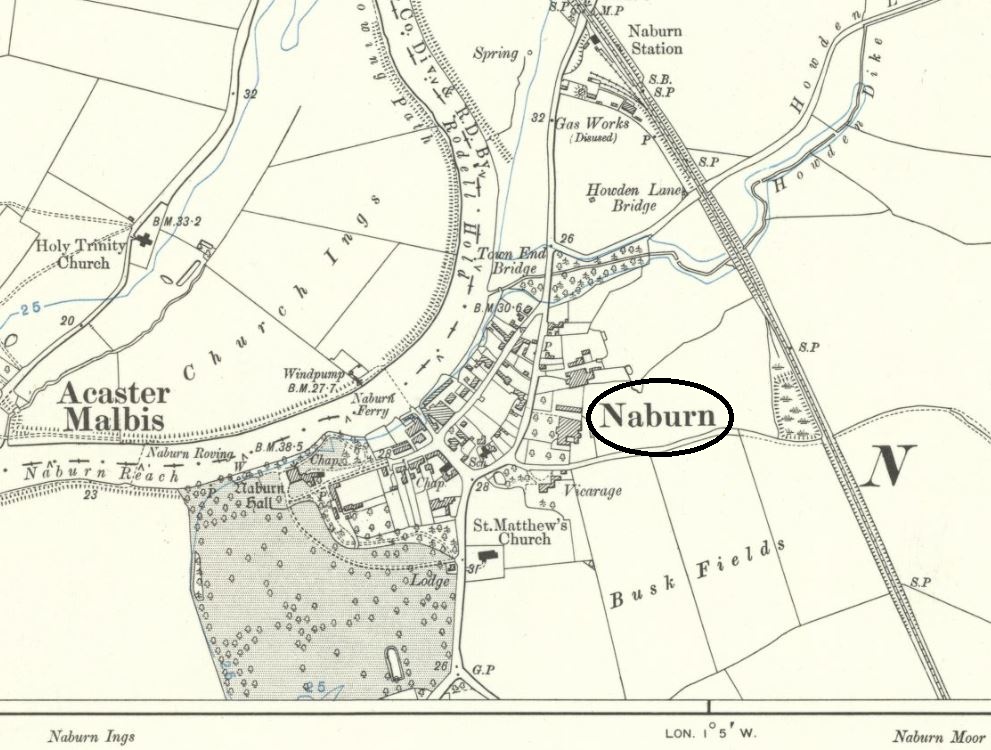
Guy was the youngest son of William Silversides (1842-1916) and Elizabeth Habbishaw (1842-1927). He was born in Naburn near York (see OS Yorkshire sheet CXCI.NW published 1910 map) and was said to be 18 and a gardener when he enlisted in the Northumberland Fusiliers on 27 February 1900. Guy was 5ft 5in tall, weighed 124lbs, with brown hair, blue eyes and a fresh complexion. His three older brothers, George, Robert and John had enlisted in the army before him and two of his sisters’ married men who served in WWI.
Guy’s military record indicated he had served as a bandsman in the West Indies and then South Africa where he arrived on 23 July 1902. The Treaty of Vereeniging, which ended the Second Boer War, had been signed on 31 May 1902. Guy remained in South Africa until 4 March 1907. As a sergeant bandsman he was posted to the army reserve on 7 March 1908. While serving in the army he gained his St John’s ambulance certificate for first aid to the injured. Perhaps this enabled him to gain a position at Stanley Royd as an attendant. Guy was working there when the 1911 census was taken on 2 April. Not long afterwards his military record showed that on 2 June 1911 he was permitted to go to Canada.
Emigration to Canada
Guy left Liverpool for Canada on 7 July 1911 as a passenger on the steamship Victorian, Allan Steamship Line, bound for Montreal, Quebec, Canada. He arrived on 14 July 1911 and was described as an attendant with the intention of farming. His entry on the passenger list was stamped “British Bonus Allowed”. Commission was paid to UK steamship booking agents, by the Canadian government’s Immigration Branch, for suitable immigrants who bought a ticket to sail. Guy as the passenger did not receive a bonus.
The next record found for Guy was his marriage to Edythe M Kimber (or Kember) in 1913 in Edmonton, Alberta. Edythe, a nurse, had left Liverpool on 21 February 1913 bound for New Brunswick, on the Hesperian, Allan Steamship Line.
On 8 January 1915 Guy enlisted in the 101st Canadian Overseas Expeditionary Force Band Corp. He was described as an attendant living at 9725, 96a St, Edmonton South, with his wife Edythe. His previous service with the Northumberland Fusiliers was noted.
Guy departed for England on 8 January 1915 and by 9 October 1915 he was a corporal in the 49th Battalion of the Canadian Infantry on his way to Boulogne, France. While he was serving in the army his personnel records showed that he was granted leave on the following dates:
20 August 1917 – 2 September 1917.
15 February 1918 – 3 March 1918.
25 January 1919 – 8 February 1919.
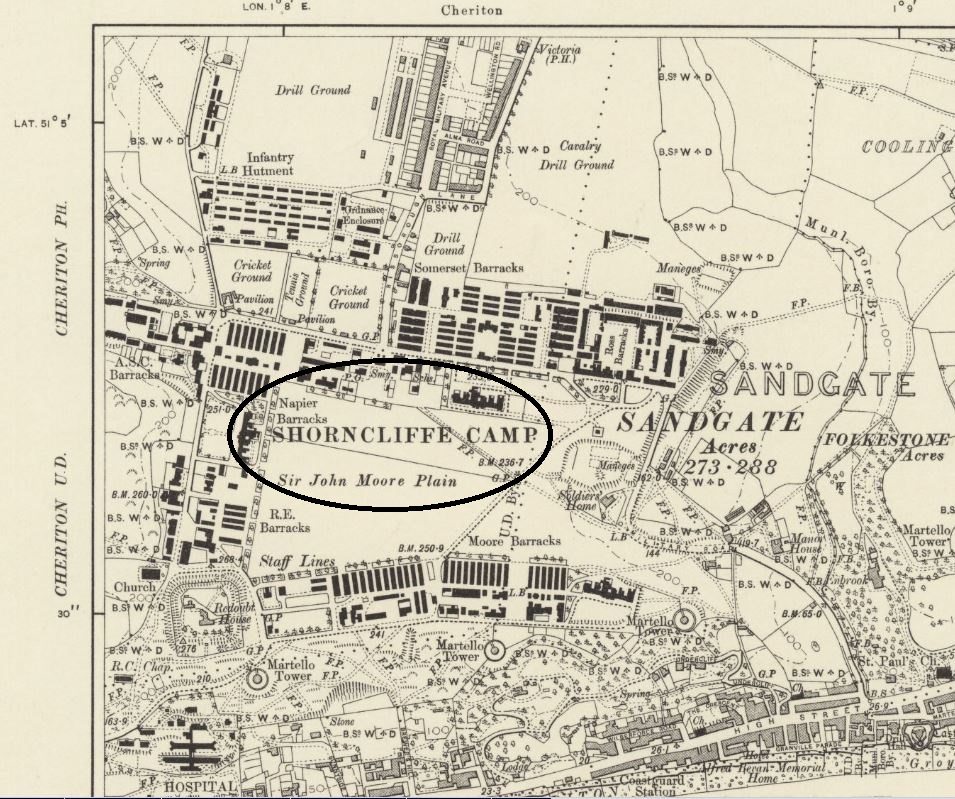
Guy’s personnel record also recorded separation payments to his wife Edythe. She returned to England on 2 August 1915 and gave her intended address as 43 Pentonville Rd, London. The record of her payments showed that she didn’t remain there for the duration of WWI. Edythe spent some time at 2 Darby Terrace, Horn Street, close to Shorncliffe camp used as a base for the Canadian forces (see OS Kent sheet LXXV.SW published 1908map). This was also where Guy’s brother John was base and his wife and family were at 2 Darby Terrace. Edythe’s final address was in Naburn, possibly with other members of Guy’s family. Perhaps he was able to visit her when he returned on leave from France.
After the end of WWI Guy and Edythe both returned to Canada on separate ships. Edythe arrived back at St John’s, New Brunswick on 25 April 1919 on the ship Corsican while Guy returned to Canada on 2 May 1919. After this date no records have been found which included either or both of them, notably the 1921 census. At some point Guy moved to Vancouver where he married his second wife, Elsie Davenport (1902-1970), on 23 May 1931. They were recorded together in the 1931 Canadian census when Guy’s occupation was recorded as a postman, who was not working. It is not clear what happened to his first wife Edythe. They may have divorced and it is possible Edythe remained in Alberta and remarried there in 1924.
Guy and Elsie continued to live in Vancouver where they were recorded on lists of voters:
1945 – Guy, a mail carrier, and Elsie living at 2784 Adanac St, Vancouver East.
1949 – Guy, retired, and Elsie living at 2784 Adanac St, Vancouver East.
1962 – Guy, retired, and Elsie living at 2784 Adanac St, Vancouver East.
Guy died on 12 May 1964 in Vancouver, British Columbia, Canada. His burial record stated that he had been in Canada for 45 years and Vancouver for 41 years. It also included information from his British Columbia marriage record and that he was a bachelor when he married Elsie. His first marriage to Edythe was mentioned and she was his next of kin in his Canadian Expeditionary Force personnel file. If he had been in Vancouver for 41 years then that suggests he moved there about 1921, possibly two years after he returned to Canada from serving in WWI.
Finally
I would like to know more about all the people mentioned in this blog post, and in particular, Guy who emigrated to Canada. Do contact me if you have any further information which you are willing to share.
Many of my ancestors worked on the land either as husbandmen or agricultural/field labourers, so when I find someone with a different occupation, I am always keen to write about them. The butler in my family was John Silversides ((1846-1833), my second cousin five times removed. He was born in Naburn, Yorkshire to parents Robert Silversides (1809-1898) and Hannah Waites (1815-1894). Robert was a farm labourer born in nearby Riccall and Hannah was from Kelfield.
The village of Naburn is located on the River Ouse about 4 miles south of the city of York. In the 19th century it was described by Lewis in his topographical directory as consisting of “2720 acres of rich land, two-thirds arable and the remainder meadow”. Just one of Robert and Hannah’s sons, William, remained a farm labourer in Naburn. Not only did John take up a different occupation but so did his brothers Thomas and Matthias. Thomas became a police officer; he died at the age of 91, a retired inspector of police, in Malton. Matthias worked on the railways in York.
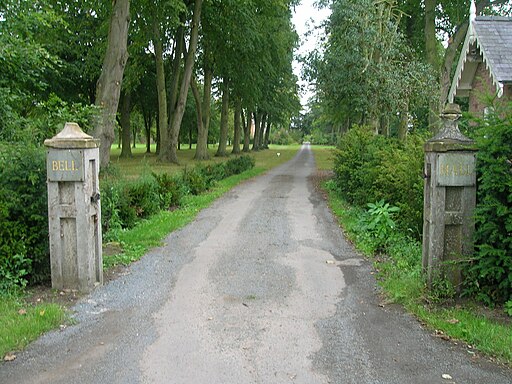
John was first recorded as a domestic servant, butler, at Bell Hall, Naburn in 1871 where he worked for the Baines family; they had inherited the estate in the 18th century. He was still working as a butler there when he married Eliza Palfreeman (born about 1849) on 26 May 1873 in St Mary Bishophill Senior church in York. Prior to her marriage Eliza was working as a parlour maid in Bootham in York.
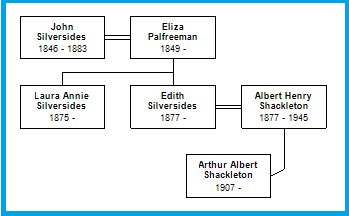
John and Eliza went on to have two daughters: Laura Annie Silversides born 4 August 1875 in Wheldrake and Edith Silversides born 20 January 1877 in Naburn. In both cases John was described as a butler (domestic servant); he was also the person who registered Laura’s birth. His father Robert registered Edith’s birth, which suggested that Eliza was living with him and his wife when she gave birth.
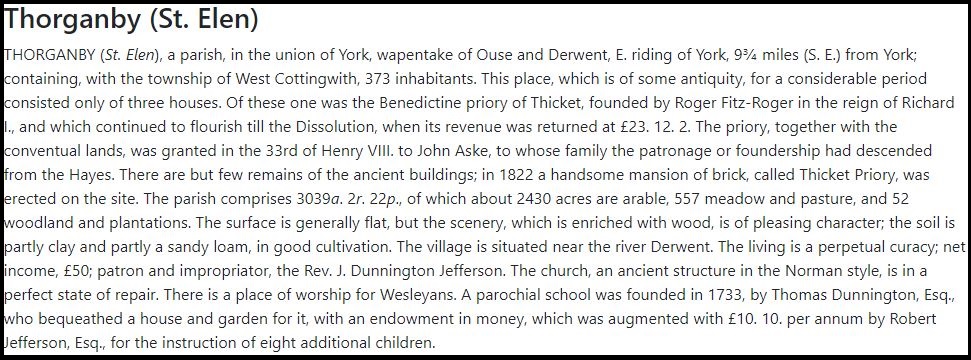
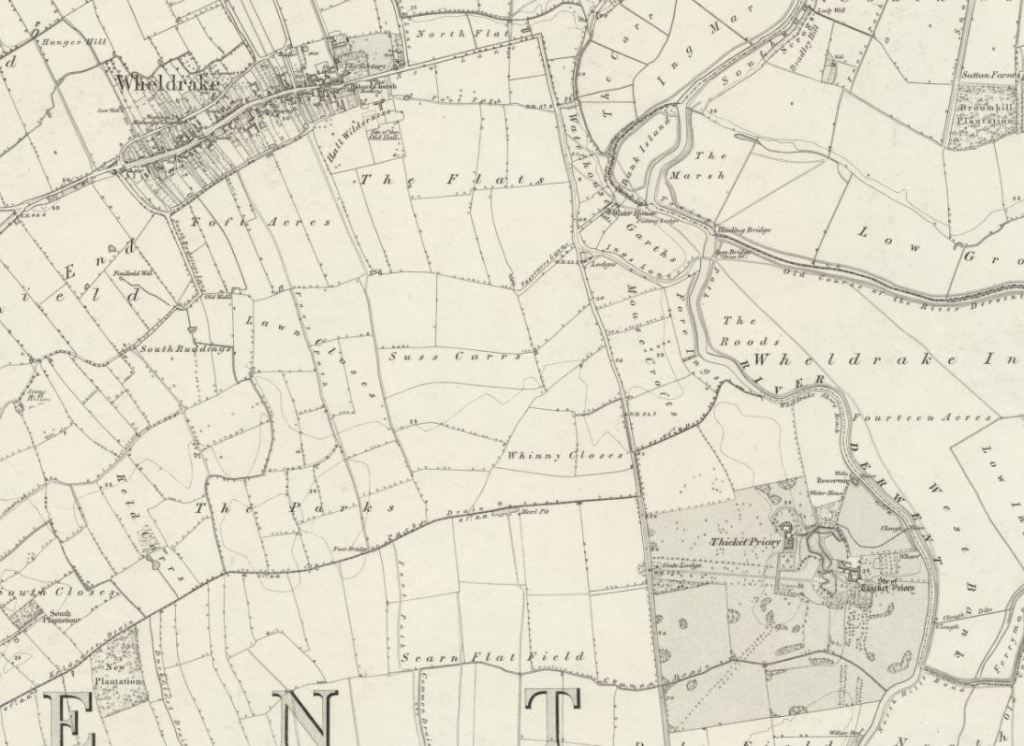
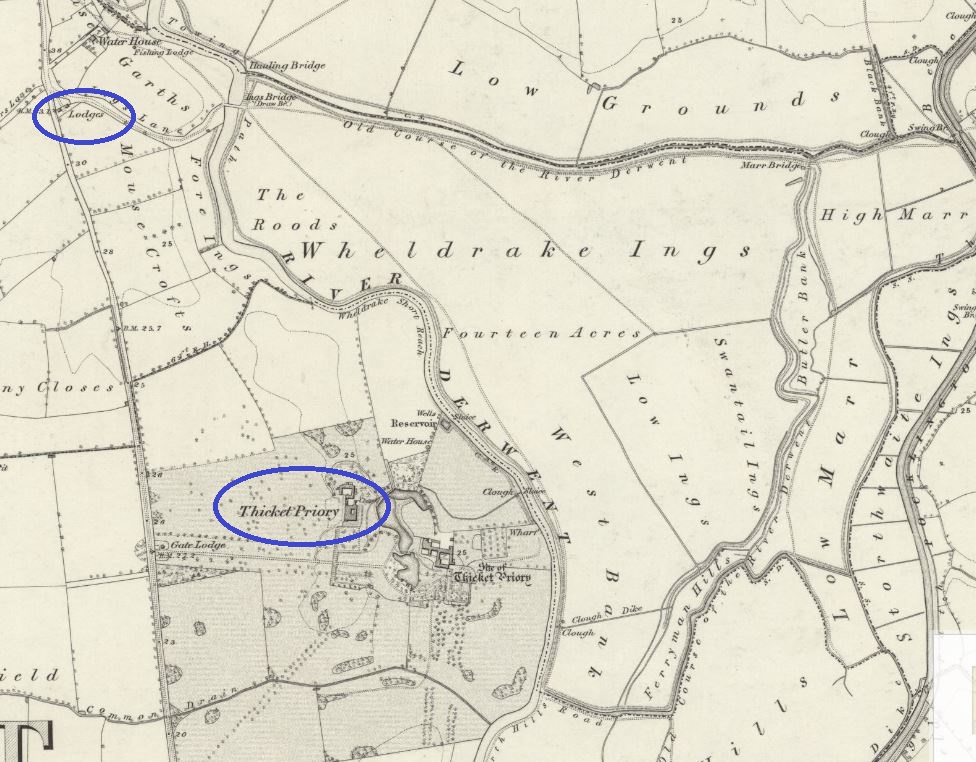
In the 1881 census the family were living together in “Jefferson Lodge” in Wheldrake, close to the boundary with the nearby village of Thorganby. The census record is blurred but it seems likely that this dwelling was on the northern side of Thicket Priory, owned by the Dunnnington-Jefferson family in the 19th century. They were probably John’s employers. Lewis’ 1848 topographical directory described Thicket Hall in his entry for Thorganby.
The following extracts from the OS map for Yorkshire sheet 192, dated 1854, show the position of the lodge and Thicket Priory.
The 1881 census is the last record which I’ve found for the family as a whole. John died on 5 August 1883 in 35 Cleveland St, St Mary Bishophill, York of pernicious anaemia. His death was reported by Isabella Lewins, the wife of a railway guard. John’s brother Matthias, a railway worker, had married his second wife on 10 February 1883, giving his address as Cleveland St. It seems likely that John died at his brother’s house. What isn’t clear was where his wife Eliza was when he died. By 1891 their two daughters Laura and Edith were pupils at St Stephen’s Orphanage, Trinity Lane, York. I’m planning a visit to the Borthwick Institute in York to find out more about their time there. So far, I haven’t been able to find out what happened to their mother Eliza. Do let me know if you have any stories about the family which you are willing to share with me.
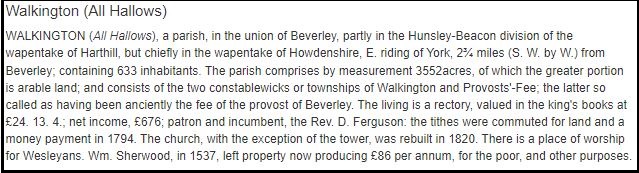
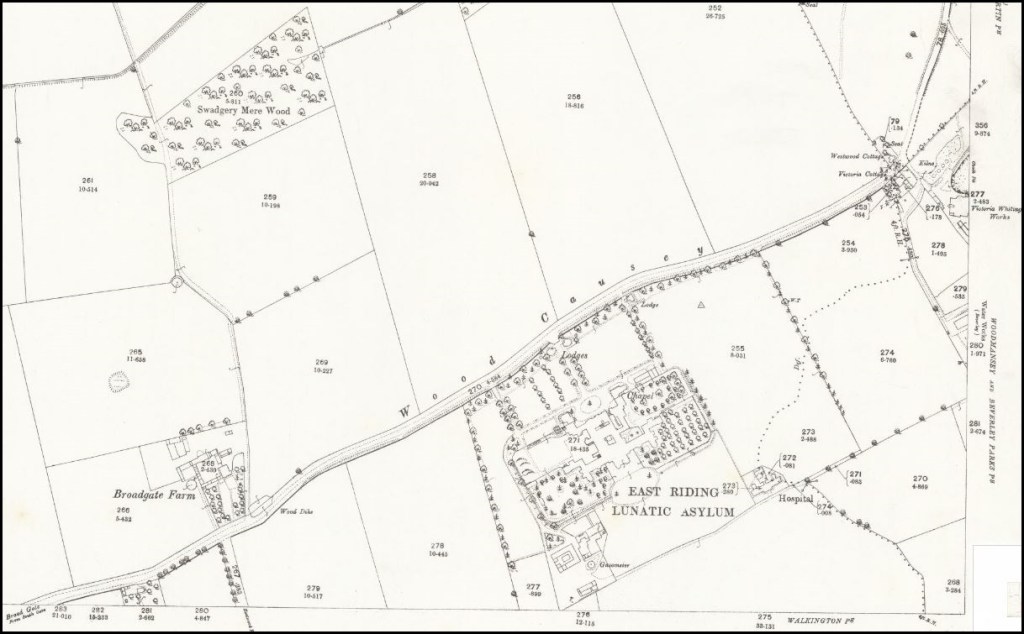
Whilst visiting the East Riding archives at Beverley, I carried out a search of the East Riding of Yorkshire County pauper lunatic asylum case books (NH6/64/20) to see if there were any records for any of my ancestors who might have been admitted to it. The asylum was called Broadgate Hospital and located in Walkington near Beverley. The land it was built on was part of Broadgate farm; it was opened on 25 October 1871 and has since been demolished. Walkington was described by Lewis in 1848 as follows:
The following OS Yorkshire CCX.II map, dated 1893, shows the location of the asylum to the north east of the village of Walkington, just off the B1230 road.
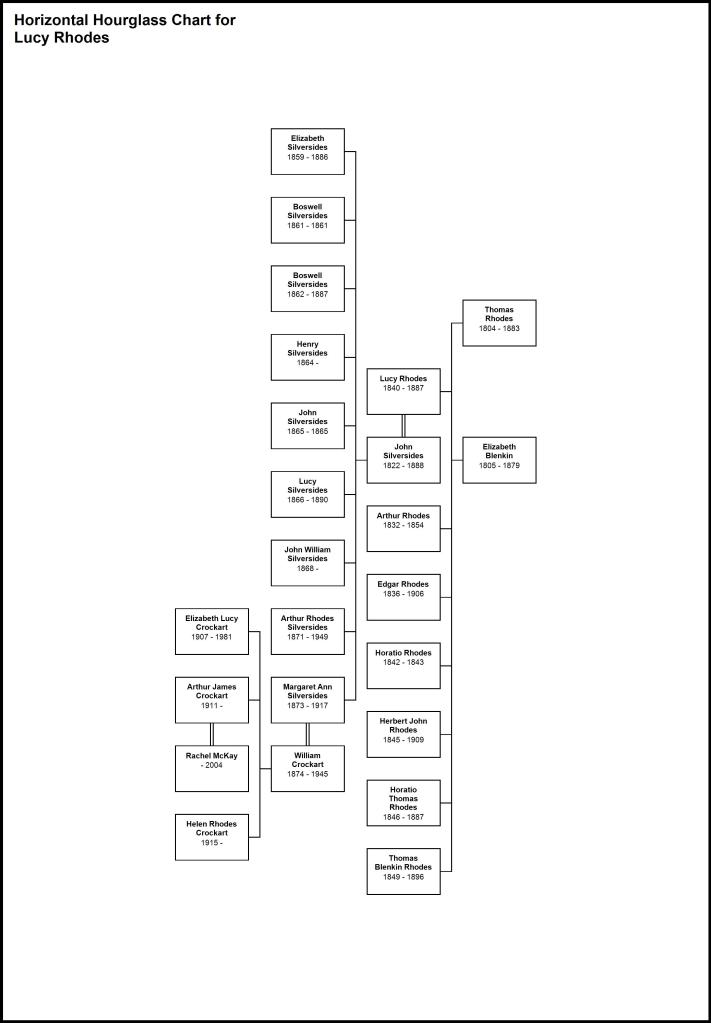
The East Riding archives hold a series of case books for Broadgate hospital and my ancestor Lucy Silversides featured in the women’s case book number 5. Lucy was the wife of John Silversides (1822-1888), my second cousin five times removed. She was born Lucy Rhodes in 1840 in Patrington, Yorkshire to parents Thomas Rhodes (1804-1883) and Elizabeth Blenkin (1805-1879). By the time Lucy’s brother Arthur died in 1854, the family were living in Osgodby, a few miles from Riccall where John Silversides lived. Lucy married John in St Mary’s church, Riccall on 11 November 1858; Lucy was 18 and John 36.
In the 1861 census John, Lucy and their daughter Elizabeth (1859-1886) were living in Riccall where John was described as a farmer of 100 acres employing two labourers. John and Lucy had nine children: six boys and three girls. Two of their sons died in infancy, three children in their twenties, two sons have been difficult to trace and just one of their children definitely married: Margaret Ann Silversides (1873-1917). In 1891 their son Arthur Rhodes Silversides (1871-1949) was a footman at The Villa in Escrick; a property where I once owned an apartment. By 1901 he had become a butler; when he died on 11 January 1949 in York, he left effects to the value of £1,784 8s 9d. The following chart shows John, Lucy and their family.
Arthur’s mother Lucy faired rather differently. By the 1881 census John, Lucy and six of their children (Elizabeth, Boswell, Henry, John, Arthur and Margaret) were living in Dam End in Riccall. Their daughter Lucy was living with her aunt and uncle. By now John was aged 59 and described as an agricultural labourer, as were their sons Boswell and Henry. Boswell and Henry were recorded as joining the police in Leeds in 1885. Daughter Elizabeth died in 1886 and sons John and Arthur and daughter Margaret were elsewhere in 1891. Perhaps by the time Lucy was admitted to the Broadgate hospital in 1887 she had been affected by significant changes in her family life.
Lucy was admitted to Broadgate from the Selby Union on 1 March 1887. The case book mentioned that her first mental health attack had lasted for eight months. It is interesting to note that she entered the asylum from the Selby Union. She was described as being aged 50, married and her religion was Church of England. With regards to her mental health, she was of a nervous temperament, dangerous and with her form of insanity described as mania. She was said to be excited and “the patient talks to herself”.
Her physical condition was described as tall, poorly nourished and dirty. The case book then goes onto outline her mental and physical state after her admission. On 4 March “her conversation was silly and voluble”. By 11 March Lucy was “physically in a very bad state and appears to be getting weaker daily…she is nervous and excited and most difficult to manage in short nothing can be done with her…she won’t eat.” It went onto say that “the diet for the most part consists of butter, eggs milk mixture with brandy”. Lucy had diarrhoea.
Lucy died on 13 March 1887 at 8.50pm in the presence of nurse Phebe Allan. Her cause of death was Phthisis. An autopsy was carried out and the record certified by the asylum Medical Superintendent Dr Murdoch Donald McLeod. After her death Lucy was buried in St Mary’s churchyard, Riccall. Her husband John died just over a year later on 16 March 1888. He too was buried in the churchyard. After his death the cottage he was living and his household furniture were sold at auction by Thomas Walker Auctioneers, according to the York Herald dated 14 April 1888. Perhaps by then none of his children were around to take an interest in his furniture.
So far, I’ve been unable to trace what happened to two of John and Lucy’s sons: Henry Silversides (born 1864) and John William Silversides (born 1868). Do let me know if you have any stories about the family which you are willing to share with me.
James is my second cousin four time removed on the Ellis side of my family. He was born on 10 February 1858 in Roxbury, Suffolk, Massachusetts, USA. James’ parents were James Bean (1822-1899) and Harriet Harvey (1821-1876). James and Harriet had nine children, five of whom were born in Yorkshire, England and the remaining four in USA.
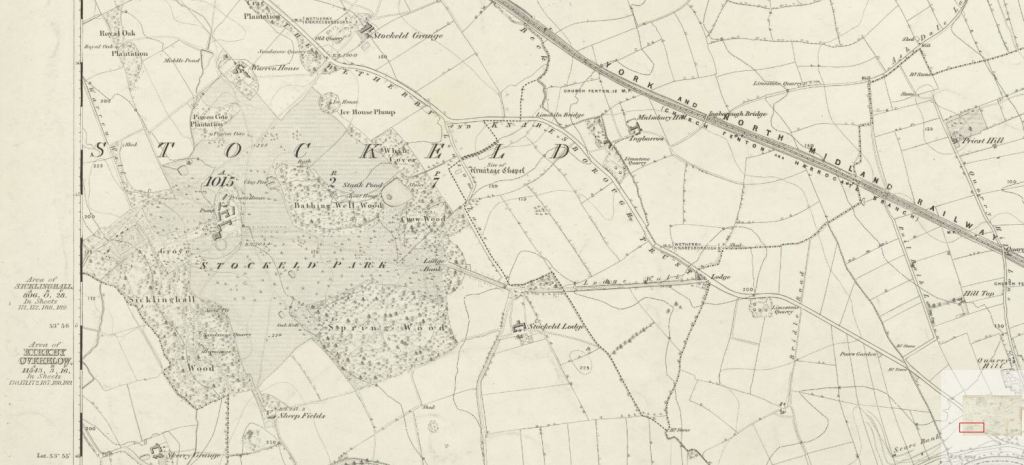
Prior to their emigration to the USA, James was a gardener living at the Garden House, Spofforth, Yorkshire and working on the Stockeld Park Estate. The following map (OS Yorkshire sheet 172 date 1850) shows the extent of Stockeld and its location near the York and North Midland railway line.
James, Harriet and their children Mary, Elizabeth, William and Charlotte left Liverpool on the ship Mariner, and arrived in the port of Boston on 12 May 1854. The family settled in Roxbury where James continued to work as a gardener and I have previously written about his life in USA .
James Harvey Bean was the first of James and Harriet’s children to be born in USA. He trained as a physician at the Jefferson Medical College at the Thomas Jefferson University in Philadelphia. James married Nellie Priestley (1863-1953) on 15 January 1883 and by 1900 they were living in Bannock, Pocatello, Idaho.
James and Nellie didn’t have children and James died on 8 June 1910 in Los Angeles, California, apparently of uremia, caused by irreversible damage to the kidneys. He was buried in Mountain View Cemetery, Pocatello, Bannock County, Idaho.
After his death Nellie applied to the Idaho court for probate as the sole beneficiary and executor under his will which he had signed on 13 February 1895. It seems that during his lifetime James had acquired a number of lots of land in Pocatello and created the South East Securities Corporation which Nellie took over after his death. Issues relating to the ownership of property in Weber County and Salt Lake, Utah were resolved by the Utah court in 1911, and the court decreed that this property also become the property of Nellie.
Nellie did not remarry and was considered a pioneer in Pocatello. On 16 June 1938 she was deemed in contempt of court for failing to sign over bonds to pay a labour debt and was jailed. She remained in jail even though friends had agreed to pay the debt (The Post Register 4 August 1938). Nellie died aged 90, on 2 January 1953, at her home 208 West Clark, Pocatello. She was buried in the family plot in Mountain View cemetery and left an estate worth $6853.
I added Luke, my 4th great grand uncle, and some of his family to my tree some time ago. In the 1841 census he was intriguingly described as a schoolmaster in Northgate, Market Weighton. As I re-checked my research before writing about him and his family, I discovered a previously unknown son. This led me to finding more school teachers, two Wesleyan Ministers, a number of solicitors, and a tragedy off the coast of New Zealand.
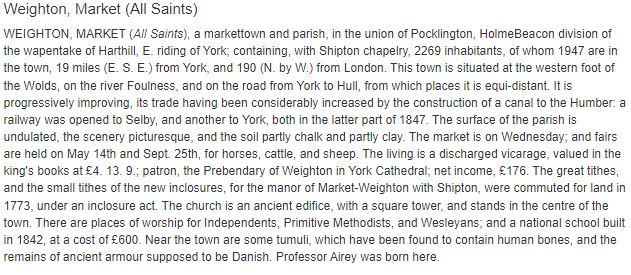
Luke was baptised on 27 February 1774 in St Catharine’s Church, Barmby Moor to parents Luke (1734-1813) and Ann Kirkby (1732-1811). He married Ann Cook (1781-1865) by license in St Michael’s Church, Spurriergate, York. Luke’s application for a license gave his address as Pocklington and that Ann was from York. They married on 1 December 1804. So far, I have traced eight children, four boys and four girls. Initially they lived in Pocklington, although by the time their second child Jane (1807-1883) was born, they had moved to Market Weighton. It’s not clear at what point the family became Wesleyan Methodists. The earliest non-conformist baptism record found for a member of the family is one for their youngest son Francis (1819-1854). He was baptised on 4 November 1819 in the Wesleyan Chapel in Market Weighton. The chapel is mentioned in Lewis’s description topographical directory of England as follows:
Lewis’s Topographical Directory of England – Market Weighton
What also proved helpful in finding out what Luke was doing prior to the 1841 census, was a series of trade directory entries for Market Weighton on the Genuki site. They provided the following information for Luke:
1823 Baines’s trade directory – gentlemen and boarders academy run by Luke Richardson in Northgate.
1829 Pigot’s trade directory – day pupils and boarders academy run by Luke Richardson in Northgate.
1834 Pigot’s trade directory – gentleman’s day and boarding school run by Luke Richardson in Northgate.
In the 1851 census Luke was still running the school in Northgate, assisted by two of his daughters, Jane (1807-1882) and Ann (1812-1886), and son Francis, who were all described as teachers. It is this census record which alerted me to Luke and Ann’s son Henry, who was a visitor, and described as a Wesleyan Minister.
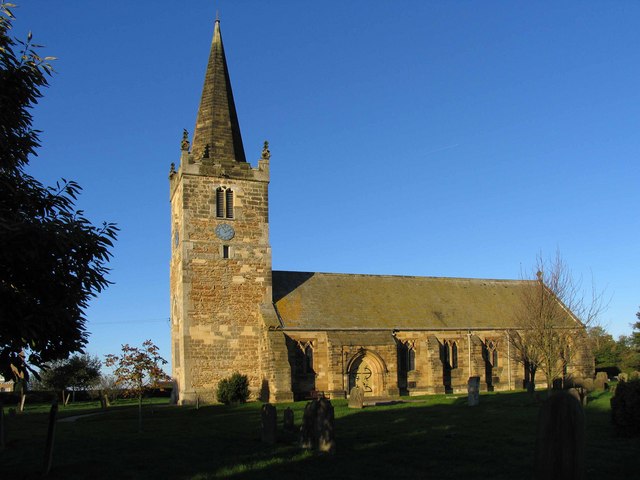
Luke died in 1852 and was buried in St Catharine’s churchyard, Barmby Moor.
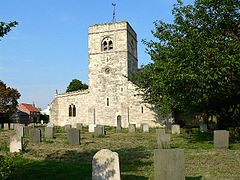
St Catharine’s Church, Barmby Moor
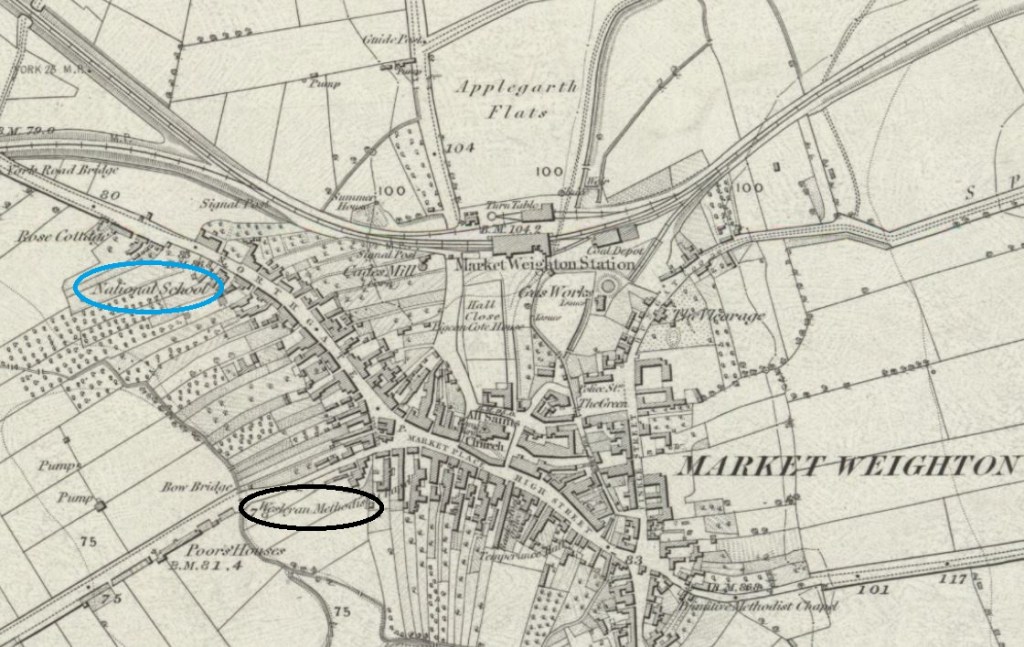
After his death the school continued to be run by his family. In the 1861 census it was described as the Northgate House boarding and day school. Luke’s widow Ann was the school proprietor, son William (1806-1887) assistant school master, daughters Jane and Ann school mistresses and daughter Mary Ann (1825-1882) the assistant manager. They had two servants, two male pupils aged 12 and 15 and 11 female pupils aged between 7 and 15. The following OS map from 1855 shows the Wesleyan Methodist Chapel circled in black and the National School, in North Gate circled in blue. Unfortunately, the precise location of Northgate house couldn’t be clearly identified; it was possibly on the other side of the street to the National School nearer to the junction with Market Place.
OS Yorkshire Sheet 209 date 1855
After Ann died in 1865, the school continued to be run by the family. In the 1871 census Jane was the head of the establishment with her siblings William and Ann recorded as teachers and Mary Ann as the housekeeper. By 1881 Ann was shown as the head of the school with Jane, Mary Ann and William as teachers. Jane and Mary Anne died in 1882. According to her gravestone, Ann was still living at Northgate House when she died on 10 March 1886. Her nephew Joseph Richardson was her executor and she was buried in Barmby Moor churchyard like her parents and siblings. William was living in Leeds when he died in 1887 and is also buried in Barmby Moor churchyard. There was no trace of the school in Bulmer’s 1892 trade directory for Market Weighton.
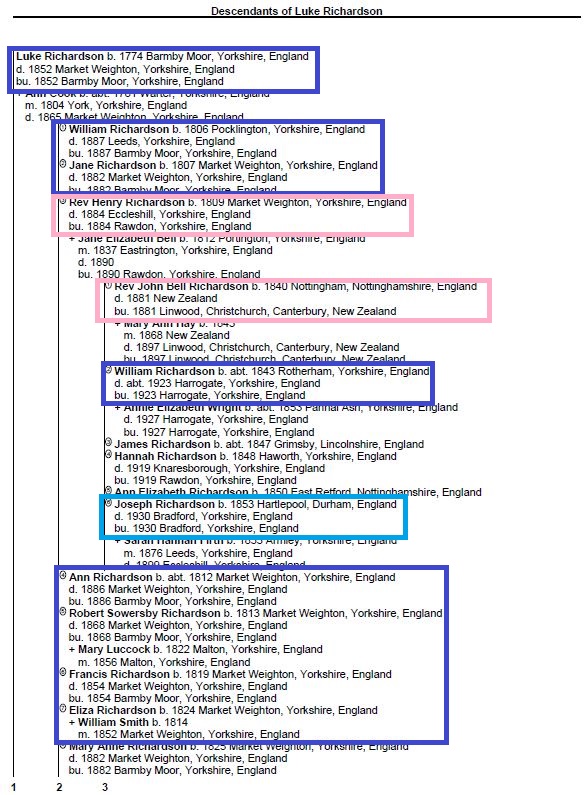
A summary of Luke and his family is included in the following outline descendant chart. People outlined in purple are the teachers in the family, the Wesleyan Ministers are outlined in pink and the solicitors in blue.
Outline descendant chart for Luke Richardson
Rev Henry Richardson (1809-1884) was the second oldest of Luke and Ann’s sons. He had probably become a Wesleyan Minister by 1833. Henry married Jane Elizabeth Bell (1812-1897) by license on 7 August 1837 in Eastrington parish church. They had at least six children, four boys and two girls. By the 1881 census Henry, Jane and daughter Hannah were living at 5 Stockhill Grove, Eccleshill, Yorkshire. They had moved to Greengates by the time Henry died on 28 January 1884. His probate record mentions his son William (1843-1923), schoolmaster of Ashville College, Harrogate. The college is still an independent day and boarding school operating under Methodist principles and values. Henry was buried in the Greenhill Wesleyan Methodist Chapel yard in Rawdon near Leeds. Underneath his name was the inscription “In labours more abundant”. The gravestone also remembers his eldest son, John Bell Richardson (1840-1881) with the inscription:
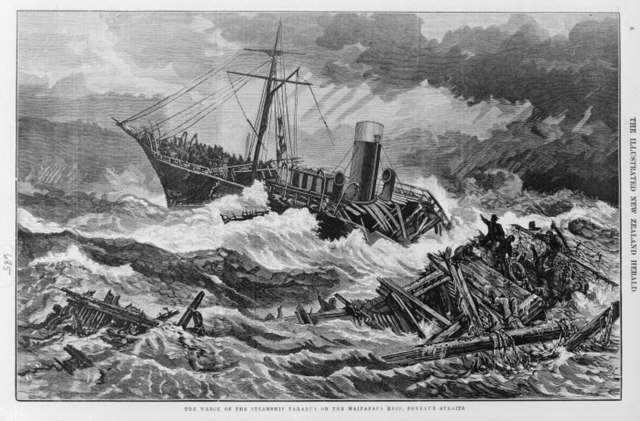
“Also, in living memory of his eldest son the Rev John Bell Richardson Wesleyan Minister President of the New Zealand Conference Born January 18th 1840 perished in the wreck of the SS Tararua off the coast of New Zealand April 29th 1881”
John had followed his father Henry into the Wesleyan Ministry, and by 1868, he was in New Zealand when he married Mary Ann Hay (1843-1897). They had at least eight children, three boys and five girls. Information about the wreck of the SS Tararua was easy to find on the Trove website as there were many reports of the tragedy (for example, The Ballarat Star, 2 May 1881). It seems that only 20 of the 140 passengers onboard were saved. The ship had struck a reef on the most southerly part of New Zealand’s South Island. John was one of a number of clergy and lay people traveling to Adelaide, Australia for an Intercolonial Wesleyan Conference. He was specifically mentioned as one of those who had died in the Mount Barker Courier and Onkaparinga and Gumerda Advertiser (6 May 1881). The following woodcut appeared in the Illustrated New Zealand Herald.
Wreck of the SS Tararua
John’s only surviving son, Henry Hay Richardson (1871-1951) trained in New Zealand as a teacher, while John’s youngest brother Joseph (1853-1930), remained in the UK where he married Sarah Hannah Firth (1853-1899) on 25 July 1876 in the Wesleyan Chapel in Armley near Leeds. The ceremony was carried out by his father Henry and Rev Joseph Midgley. In the 1891 census Joseph was described as a solicitor and the family were living in Eccleshill near Bradford. He was followed into the profession by his son Frederic Henry Richardson (1877-1964). When Joseph died in 1930, he was buried in the Norman Lane Wesleyan burial ground in Bradford.
Finally – It seems that an interest in schooling runs in the family. After I left university, my mother asked me if I was going to be a school teacher. I didn’t do that but have retained my interest in education. The last qualification I gained was an MSc in genealogy, palaeography and heraldic studies. I haven’t ruled out taking another Masters course as I’m finding that having some knowledge of local and social history adds to what I’ve been able to find out about my ancestors.
I am interested in knowing more about the Richardson family, and in particular, any descendants in New Zealand. Do contact me if you have any further information which you are willing to share with me.
Researching the Digweed side of my family has been much helped by Jenny who had already done so much before I even got started. She has also been a wonderful source of family photographs, something which adds so much to the stories of our ancestors.
What I hadn’t realised, until I started to look at my Digweed ancestors, is that the surname isn’t a Yorkshire surname. According to the Oxford Dictionary of Family Names, Digweed, and its variant Digwood, is a locative surname. Their presumption is that it comes from Thickwood in Colerne, Wiltshire. At some point -weed was substituted for -wood.
The dictionary also provides some information about early bearers of the surname, the earliest of which was Thomas de Thikwode, found in Colerne, Wiltshire in the 1332 Subsidy Rolls. So far, I have traced the Digweed line back to probably my 8th great grandfather William Digweed, possibly born about 1600 in Thatcham, Berkshire; a place about 43 miles from Thickwood. Interestingly the dictionary mentions a record for Guilelmi Digweed 1683 in Kingsclere, Hampshire and two records in Thatcham: Thomas Digweed 1691 and Ann Digwood 1764, which could be relevant to my research.
Unfortunately, the only available on-line parish records for Thatcham are transcriptions with the earliest baptism an unnamed Diggwid dated 16 March 1627, earliest marriage John Digweed/Digwood to Mary Norcutt on 30 November 1612 and earliest burial of John Diggwid on 16 August 1629. When I looked at a small selection of the Thatcham parish records, I found the following additional surname variants: Diggweed, Diggwidd and Dugwidd. A trip to consult the originals at the County Record Office is now on my list.
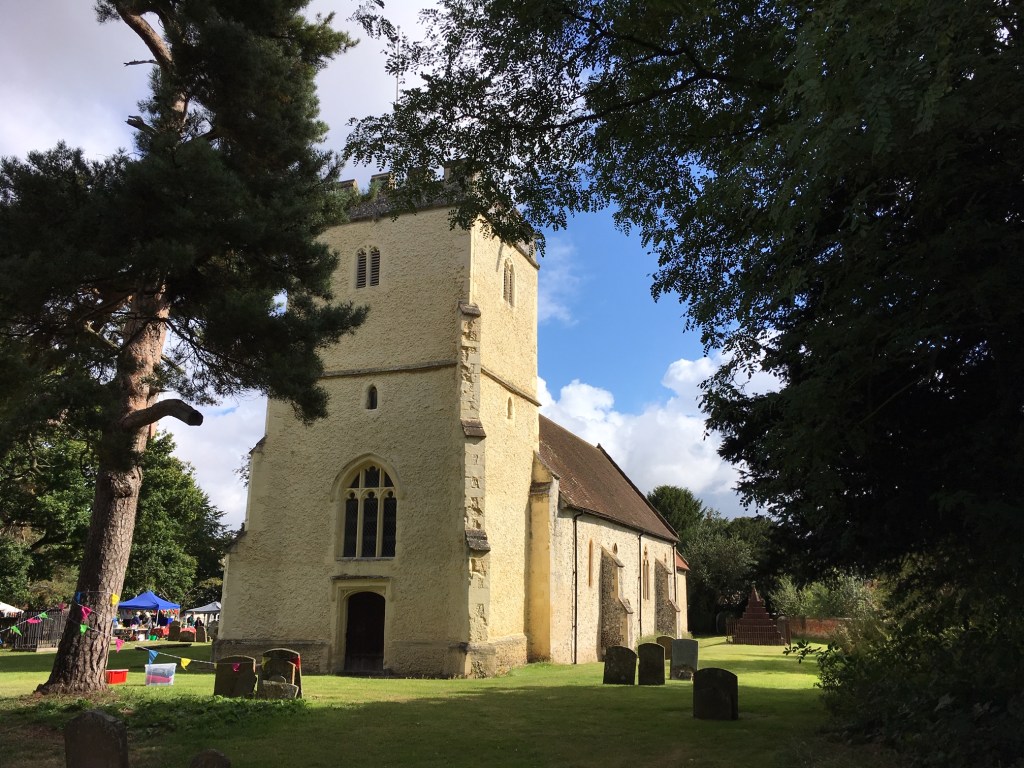
My Digweed ancestors continued to live near the parish of Thatcham, probably until the middle of the 18th century, when they next appear in the parish records for Hampstead Norris in Berkshire. William (1739-1823), my 4th great grandfather, married his wife Sarah Shackler (1739-1796) on 10 March 1765 in St Mary the Virgin, Hampstead Norris (see following photograph).
St Mary the Virgin, Hampstead Norris
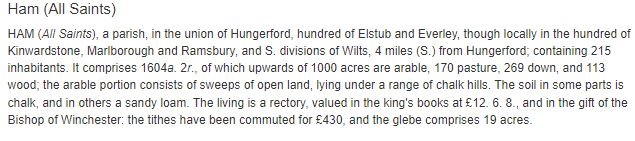
William and Sarah’s 6th son, John (1791-1855), my 3rd great grandfather, was baptised on 29 May 1791 in St Mary’s Church, Hampstead Norris. He married Rachel Hilliear (1793-1851) on 26 August 1811 in St Michael and All Angels Church, Inkpen. They had at least eight children which included seven sons and one daughter. The family initially lived in Inkpen and had moved to Ham by 1817 when their second son was born. John was recorded as a farm labourer living in the village of Ham in both the 1841 and 1851 censuses. It was largely an agricultural area as described in Lewis’ 1848 topographical directory of England:
Lewis’ 1848 Topographical Directory of England – Ham
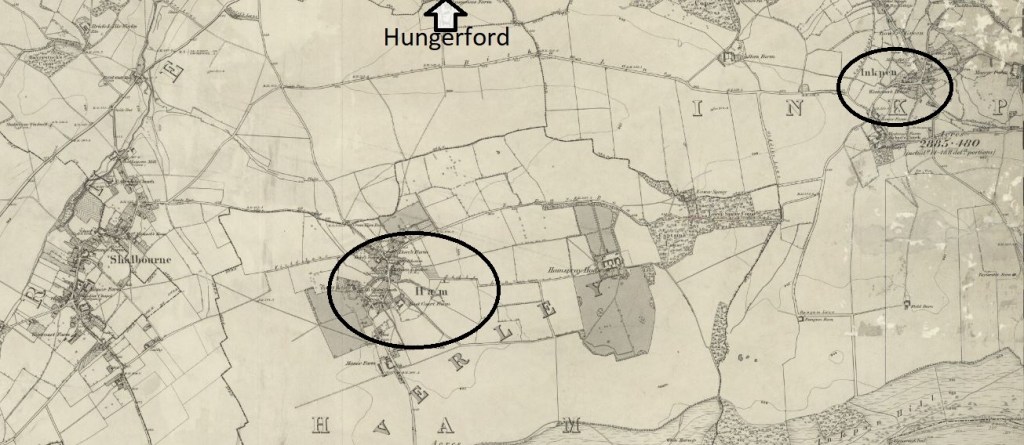
Rachel and John remained in Ham until their deaths in 1851 and 1855 respectively. The following OS map dated 1877 shows the relative locations of Ham and Inkpen and the arrow indicates that Hungerford was about 4 miles north of Ham.
Extract from OS Map Berkshire XLI dated 1877
John and Rachel’s youngest son was my 2nd great grandfather Thomas (1836-1910). He was baptised on 1 May 1836 in Ham parish church and, at the age of 14, was recorded as an agricultural labourer in the 1851 census in Ham. Thomas married Mary Ann Tuttle (1837-1900) on 1 May 1959 in St Mary’s Church, Reading. The family were living in Sherfield upon Loddon, Hampshire by the time my great grandfather Francis (1873-1959) was born.
Francis was only recorded with his parents in the 1881 census. By 1891 he was a boarder in a household in Hayes, Middlesex, where he was described as a “groom domestic servant”. At some point he moved to Yorkshire where he married my great grandmother Violet Kate Richardson (1878-1971) on 16 October 1900 in St Helen’s Church, Stillingfleet. By 1901 they were living at West Marton near Skipton where Francis was working as a “coachman domestic servant”.
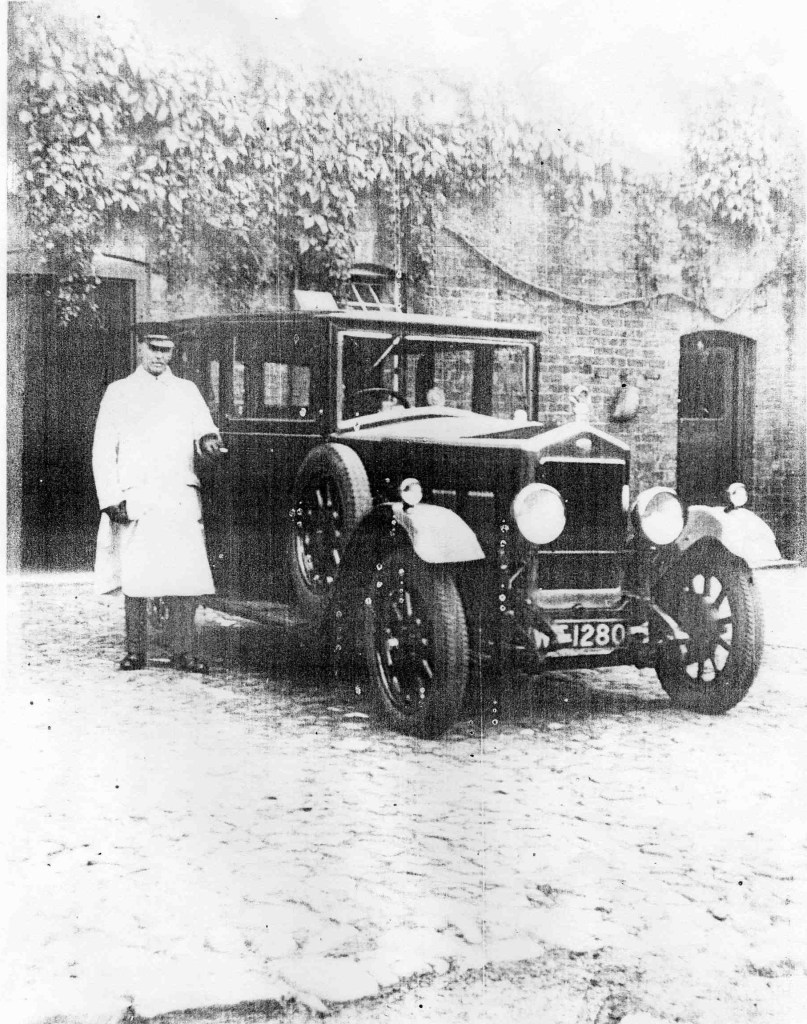
It is likely that the family had moved to Escrick, near York, by 1905. In 1911 Francis, Violet and six children where living at Escrick Park with Francis described as a “coachman domestic”. He continued to work for the Lawley/Forbes-Adam family and in 1939 was described as a “Chauffeur”. The following photograph shows him with the car he drove:
Great Grandfather Francis Digweed
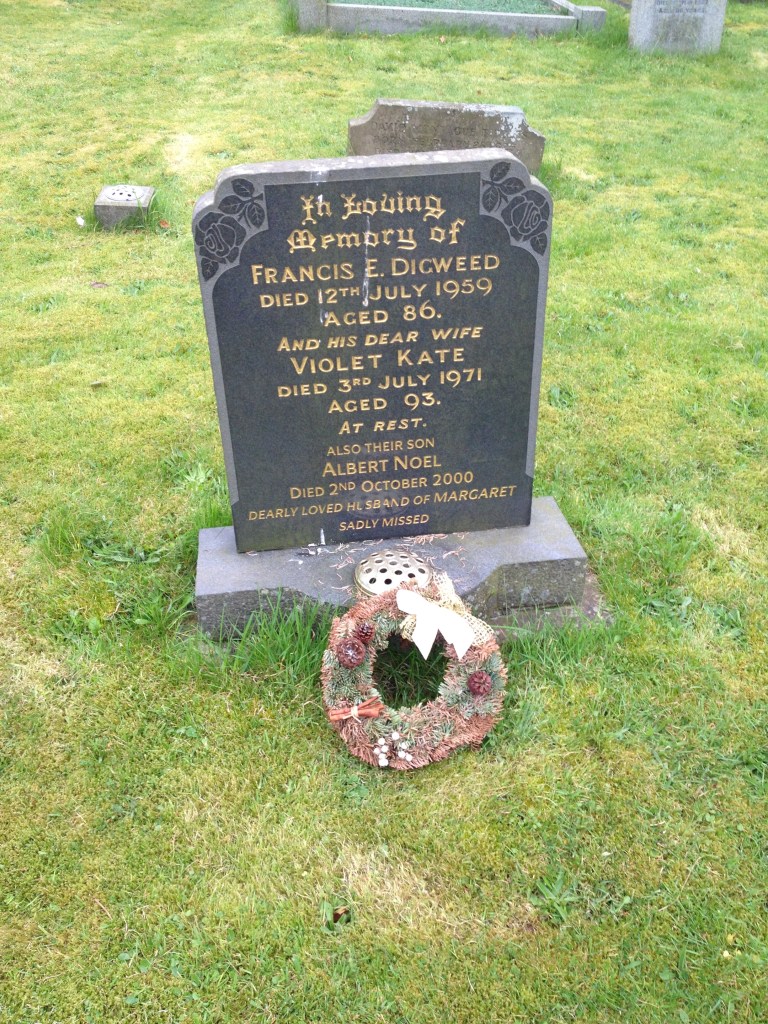
Francis and Violet continued to live in Escrick Park until their deaths in 1959 and 1971, respectively. The following photograph is of Francis and Violet’s grave in St Helen’s Churchyard, Escrick.
St Helen’s Churchyard, Escrick – Francis and Violet Digweed’s gravestone
I am interested in knowing more about the origins of the Digweed family on the Berkshire/Wiltshire/Hampshire borders. Do contact me if you have any further information which you are willing to share with me.
Moses (1736-1822) and Hannah (1735-1811) both have surnames featured in Redmonds dictionary of Yorkshire surnames. They are also brick walls in my Sarginson ancestral line.
According to Redmonds, Jewitt/Jewett could be surname variants of the Bradford surname Jowett, derived from “Juett”, the diminutive of Julian, a pet form of a popular female name. In the 1881 census Jowett/Jowitt surnames were mostly found in the West Riding of Yorkshire; in the same census, the variant Jewitt was more frequent than Jewett, although both were present across a number of places in Yorkshire. It is thought likely that these surname variants originated from more than family.
Redmonds dictionary identified that the surname Musgrave was derived from a specific place: Musgrave near Kirkby Stephen in Westmorland and that there was a long history of the surname in and around Leeds in the West Riding of Yorkshire. It seems that in the Tudor period Musgraves of different social statuses settled in both the East and North Ridings of Yorkshire. In the 1881 census Musgrave was found in the highest numbers in Yorkshire; the rare West Riding variant Musgreave was largely confined to the Barnsley and Wakefield areas.
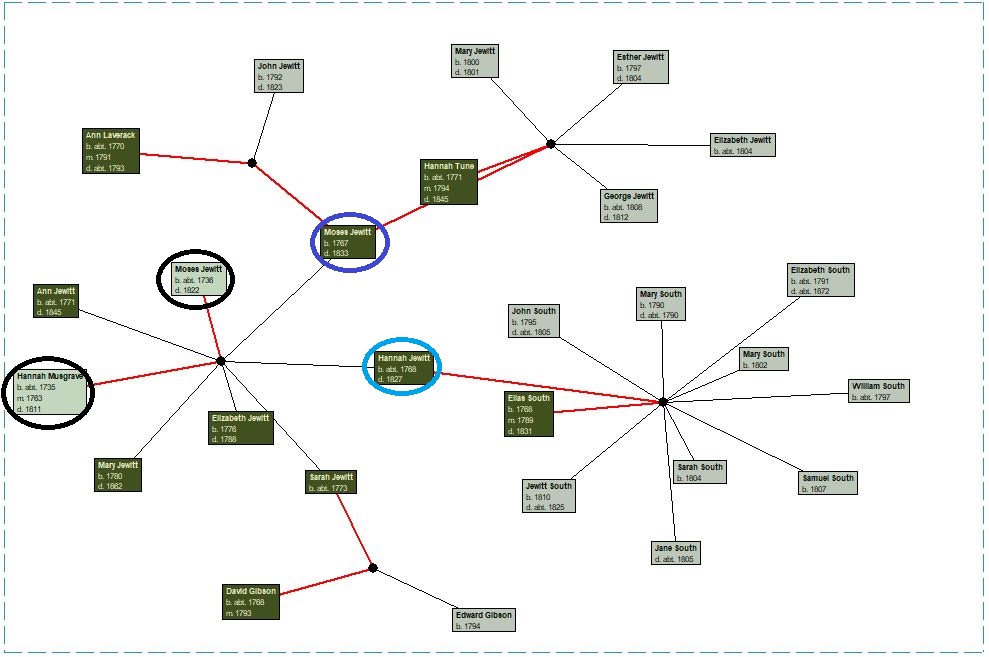
Moses, Hannah and their family – Moses and Hannah, my six times great grandparents, settled in Howden. Moses was described in parish records as a labourer. Together thy had a son and five daughters. Their eldest daughter Hannah (1768-1827), my five times great grandmother, is highlighted on the following chart with a blue circle, her parents are circled in black and her brother Moses in purple.
Moses and Hannah – descendant dandelion chart
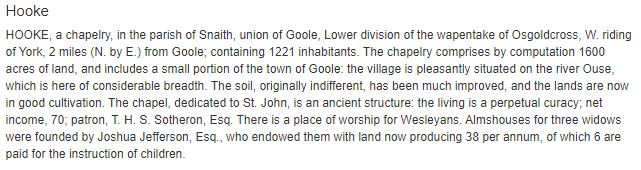
Hannah married Elias South (1768-1831) and they lived in Hooke/Hook (a few miles from Howden), which was described in Lewis’s topographical directory of 1848 as follows:
Hooke from Lewis’ 1848 Topographical Directory
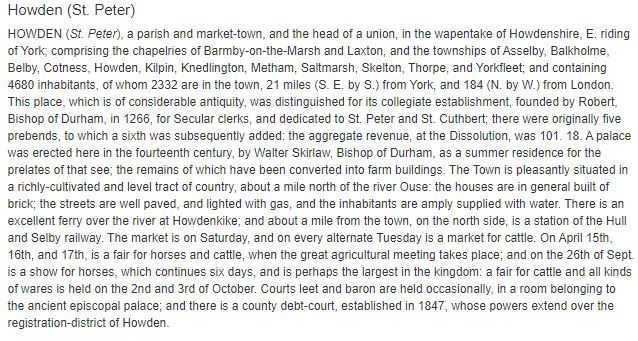
Moses senior, Hannah, son Moses and most of their daughters continued to live in Howden. Moses senior died at the age of 86 and was buried in St Peter’s churchyard, Howden on 18 June 1822. By then his son Moses (1767-1833) had become the landlord of the Black Bull Inn, Bridgegate, Howden. After Moses died in 1833, his wife Hannah (1771-1845) continued as the inn keeper. She was recorded there in the 1841 census with her daughter Elizabeth (1804-1857), Elizabeth’s husband Thomas Edmondson (1803-1865), a school master and their family. When Hannah died, aged 76, on 7 February 1845, she was described in a local newspaper (Yorkshire Gazette 15 February 1845) as the “relict of the late Moses Jewitt of the Black Bull Inn”. Howden was described in Lewis’s topographical directory of 1848 as follows:
Howden from Lewis’s 1848 Topographical Directory
Elizabeth, my first cousin six times removed, her husband Thomas Edmondson and their family were still living in Bridgegate, Howden in the 1851 census. After Elizabeth’s death, Thomas and their children moved at some point to Pinfold St, Howden where they were recorded in the 1861 census. Helpfully, Thomas gave his occupation as a school master of the National School. The school had been purpose built in 1826 in Pinfold St and it catered for both boys and girls who had paid a nominal fee. None of their children became school teachers.
Lastly – I would like to know more about all the people mentioned in this blog post. I am particularly interested in Moses senior and his wife Hannah Musgrave, as I am not sure that I have found either their baptisms or marriage. Do contact me if you have any further information which you are willing to share.

 Joan Reid Genealogy