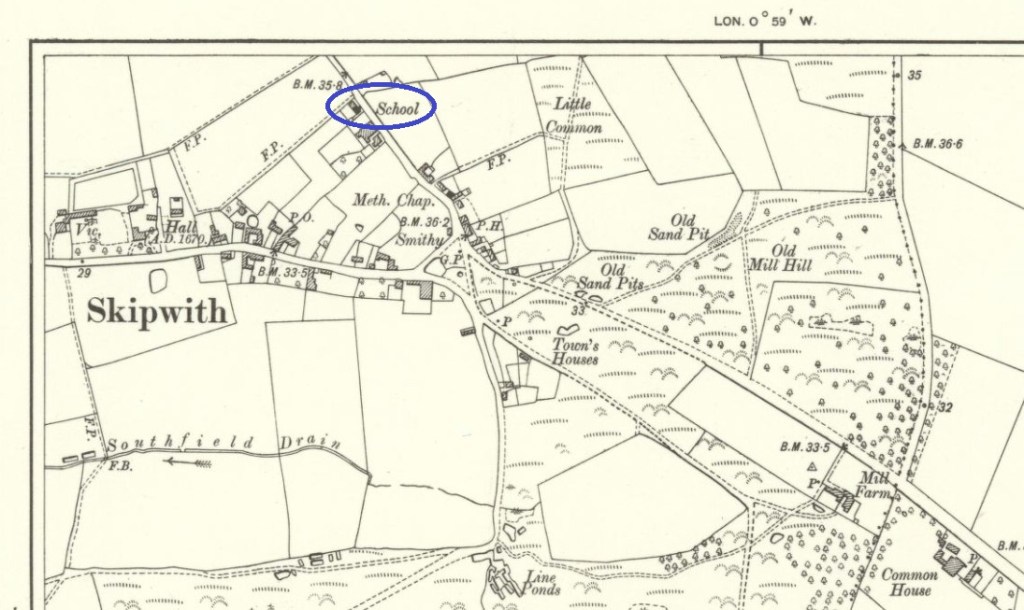
I’ve been writing about my family for some time now and decided to go back and look at the siblings of my grandparents. I came across John, the eldest brother of my granny Charlotte. He was born in Cliffe, Yorkshire on 12 March 1892 to my great grandparents William Ireland Barrett (1859-1942) and Charlotte Mary Burton (1870-1942). By the 1901 census the family had moved to Skipwith and John was a student at the Skipwith National School, having previously been educated in South Duffield. (See the following Ordnance Survey map for Yorkshire CCII.SW published in 1910.)
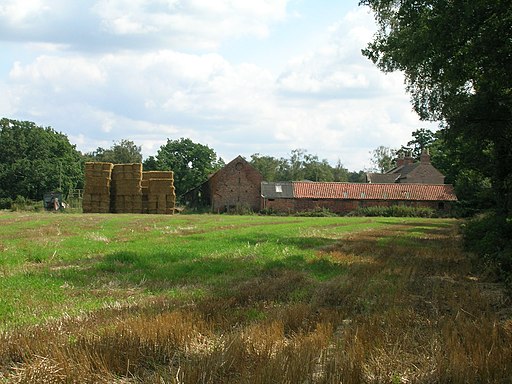
By the 1911 census John was working as a waggoner on Manor Farm, Skipwith: the farm run by his grandparents Thomas Burton (1842-1912) and Sarah Palframan (1844-1920). His grandfather Thomas died the following year, and Sarah took over the running of the farm. As World War I approached she continued to run Manor Farm. Sarah was a tenant of the Escrick Estate who owned the farm. In a letter she received from them on 27 August 1917 changes were made to the acreage of her farm. Sarah’s continued tenancy of the farm was conditional on her ‘keeping as much stock as you can to get manure as much more food must be produced on your farm if you wish to remain on it’. The following photograph is a more recent picture of Manor Farm.
Manor Farm, Skipwith – 2011 photograph. (See bibliography for acknowledgement.)
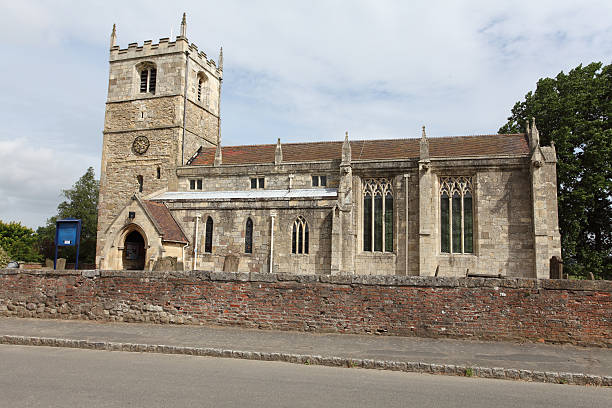
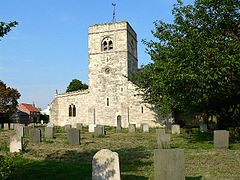
Meanwhile John had married Emily Marshall (1895-1962) on 8 December 1915 in St Helen’s Church, Skipwith. He was described as a farmer from Skipwith, and his father William the same. Emily was from nearby Hemingbrough, and her father Joshua Townsend Marshall was a farmer. There were three witnesses: Leonard Maud, William Alfred Barrett and Amelia Marshall; all relatives of John and Emily.
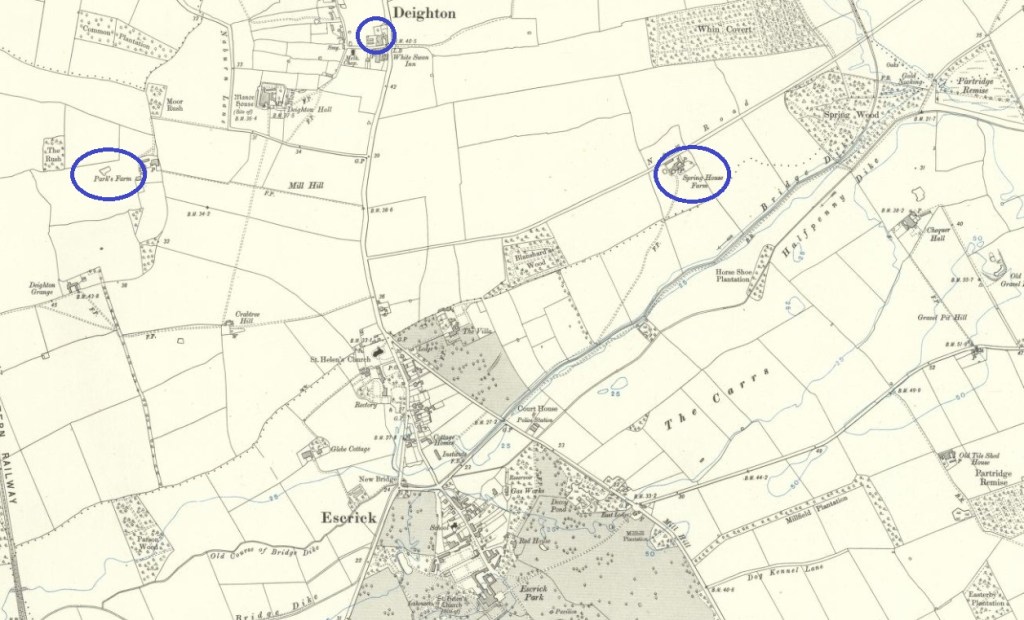
John and Emily went on to have a family and so far, I have found three daughters and four sons. By 1921 John was a farmer at Little Skipwith, Yorkshire. However, in 1939 John was a farm foreman living with Emily at Swan Farm, near Deighton with sons Thomas (1918-1984) and John (1933-1937). Their son Joseph (1920-1988) was a general farm labourer at a nearby farm called Parks Farm and son William (1917-1984) was a cowman working for his grandfather at Manor Farm, Skipwith. The following map shows the location of Swan and Parks farms near Deighton and Spring House Farm where John died in a cottage linked to the farm on 8 February 1978 aged 85. John left effects worth £1,768 in his will.
What surprised me when I researched John and his family was that they lived near the village of Escrick where I lived when I was a child. I don’t remember meeting them. I do think I visited Manor Farm with my father, although I just remember cold stone floors and being given a home baked scone. I would like to know more about the family members mentioned in this blog post. Do contact me if you have any further information which you are willing to share with me.
England and Wales, National Probate Calendar (Index of Wills and Administrations), 1858-1966. https://www.ancestry.co.uk/ : accessed November 2025.
Escrick Estate Letter 1917. Papers of the Forbes Adam/Thompson/Lawley (Barons Wenlock) Family of Escrick, 1387-1988. Collection ref U DDFA. http://catalogue.hullhistorycentre.org.uk/ : accessed November 2025.
National School Admission Registers & Logbooks 1870-1914.
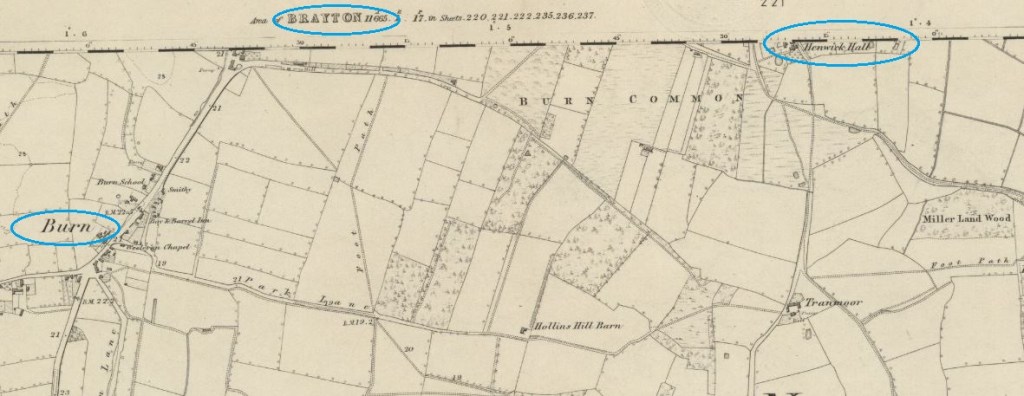
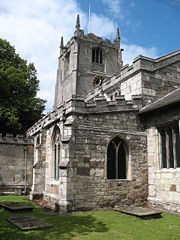
John, my first cousin four times removed, was baptised on 5 July 1817 in Brayton, Yorkshire. His parents were Thomas Palframan (1786-1858) a farmer, and Mary Ann Brabs (1792-1852). John married Sarah Otley, by licence, on 22 September 1846 in Brayton parish church. He was a bachelor and farmer from Henwick Hall in nearby Burn and Sarah (1818-1872) a spinster from Brayton. Together they had nine children, six daughters and three sons, although one son died in infancy. (The following map is OS Yorkshire sheet 236 published in 1853 and shows the location of Henwick Hall.)
By the 1851 census the family had moved to Old Ouse, Wistow where John was a farmer of 76 acres. By 1861 he was farming 80 acres and employed one man and two boys and in 1871 he was farming 86 acres with two farm labourers. John’s wife Sarah died on 25 November 1872 and was buried on 27 November in All Saints, Wistow churchyard. On her burial record her location in Wistow was given as Wistow Lordship. Not long after his wife’s death John made his last will and testament which was dated 20 January 1873.
John died on 11 April 1874. At the time of his death two of his daughters, Joanna (1848-1902) and Mary (1846-1916), were married and the ages of his other six children were as follows:
Daughters Amplias 25 (1849-1878), Emily 22 (1852-1927), Annie 21 (1853-1939) and Elizabeth 19 (1855-1883).
Sons John 17 (1856-1924) and Ot(t)ley 13 (1861-1937).
Unusually for members of my family John left a will with effects of less than £600. His married daughters, Joanna and Mary, were left £19 19s each with the specific request that the money was for them and not their husbands. Sons John and Otley were left £50 each on the basis they received the bequest when they were 21. John’s remaining goods, chattels etc were to be divided equally among his six unmarried children. His farming stock, horses, cattle, carts and carriages, hay, corn and all other produce on the farm and his tenant rights and insurances were left in trust. The trustees were his friends George Riley of Henwick Hall, farmer, Robert Hodgson of Selby, Gentleman and Henry Dixon of Wistow, shopkeeper.
John requested in his will that his tenanted farm should carry on after his death, to benefit his six unmarried children, until his youngest son Otley was 21, which would have been in 1882. There was a further request that the farm stock should be offered to John when he was 21. John senior’s executors were George Riley, Henry Dixon and Robert Hogson.
John’s will was proved at Wakefield and his executors posted a notice in the Selby Times (31 July 1874, p1) requesting that his creditors came forward with their claims on John’s estate by 1 September 1874. After that date the executors intended to distribute his assets according to his will.
It seems there may have been difficulties managing John’s affairs after his death. Notices were submitted to the Selby Times on 13, 20 and 27 October 1876 advising that John Palframan the younger was ‘no longer authorised to transact business’ on behalf of the executors (George Riley and Henry Dixon). And that they ‘are not answerable to any business debt or claim’ that anyone may have against him.
Although Otley had not reached the age of 21 by 1877, the farm and two closes of excellent land (lots 2 and 3) occupied by the trustees of John, appeared in an advert for sale by auction in the Selby Times (29 June 1877, p1). Lot 1 was a farm in Wistow occupied by Mr William Varley and lot 4 a house and premises in Sherburn St, Cawood occupied by Mr John Farrer. The properties were said to be ‘Copyhold of the manors of Wistow and Cawood where the Fine is small and certain’. At this stage it wasn’t clear who the owner of the four lots was, just that the auctioneer was Mr Acton and the auction was to be held at the Londesborough Arms Hotel in Selby on 10 July 1877 at 5pm.
Further information from the Selby Times (20 July 1877, p1) indicated that lots 1 and 2 were not sold and that lot 3 was bought by Mr T Jackson of Cawood Hagg for £350. Lot 2 consisted of 64 acres 0 roods 8 perches of land, a farm house and buildings and that the price reached £4,700 before the lot was withdrawn from sale. The lots were the residue of Mr Morritt’s estate, which had mostly been sold in the autumn of 1876. A full list of the lots sold then had appeared in the Selby Times (10 November 1876, p4). Lots 55 and 56, in the occupation of Mr Palframan, were the two lots later withdrawn from sale in 1877. The owner of the properties was R A Morritt esq of Rokeby, county Durham. The Morritt family had been landlords in the area for many years and memorials to them are in Wistow church. R A Morritt (1816-1890) had retained some interest in Wistow as he donated £25 to the Wistow new school building fund in 1877 (Selby Times 23 March 1877, p1).
A further request from John’s trustees, regarding outstanding debts for his estate, was made in the Selby Times of 15 February 1878. The intention was to distribute his assets to those parties entitled to receive them. Not long after this date, the Selby Times of 21 June 1878 reported on the results of a case at Selby County Court brought by E Shearsmith potato merchant against George Riley and Henry Dixon, trustees. He had lent a saddle to John the younger in September 1877. When he learnt that the trustees were selling the farming stock he went to them and asked them not to sell it. The saddle was sold by the auctioneer. Shearsmith was awarded 12s 6d with costs. The Justice of the Peace remarked that ‘if trustees would act in an overbearing manner, they must take the consequences’.
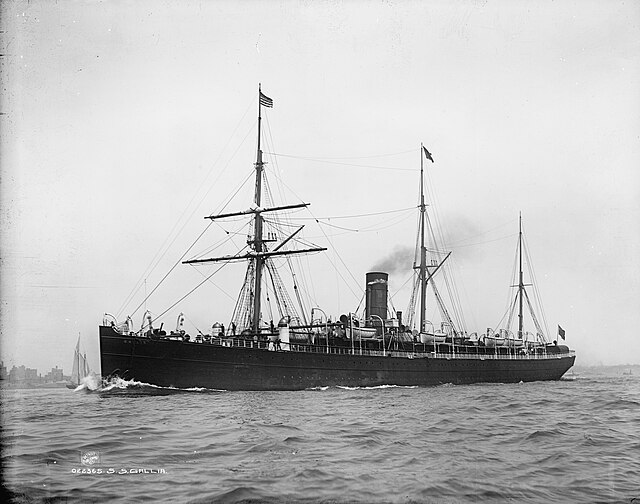
The next twist in this story involved John’s two sons, John and Otley. Together they left Liverpool on 12 November 1881 on the ship Gallia (see following image). On arrival in New York on 25 November 1881, they were described as farmers bound for Canada. While John made a life for himself in Ontario, Canada, Otley returned to Wistow where he married Elizabeth Lacy (1861-1938), on 30 June 1883, in Wistow parish church. Unfortunately, Otley was an unsuccessful farmer and was declared bankrupt in 1895 (York Herald 3 May 1895, p3). Otley was buried in St Peter and St Paul, Drax churchyard on 6 June 1937.
John and Otley’s eldest sister Mary, a widow, emigrated to Canada with her children Ellen (Helen), Louise and John together with Ellen’s husband Edward Bridgeman. They left Liverpool on 11 January 1894 on the ship Mongolian, bound for Halifax, Nova Scotia. It seems likely that Mary’s son Otley Palframan Turner preceded them to Canada, but a passenger list record has so far not been found for him. Mary died on 7 September 1916 in Toronto, Canada and was buried in Mount Pleasant cemetery. York, Ontario. When her brother John died on 26 June 1924 he was buried in Prospect cemetery, another Toronto Trust Cemetery, in a grave owned by his wife Frances Wheeler (1858-1938).
Finally
I would like to know more about the people mentioned in this blog post. Do contact me if you have any further information which you are willing to share with me.
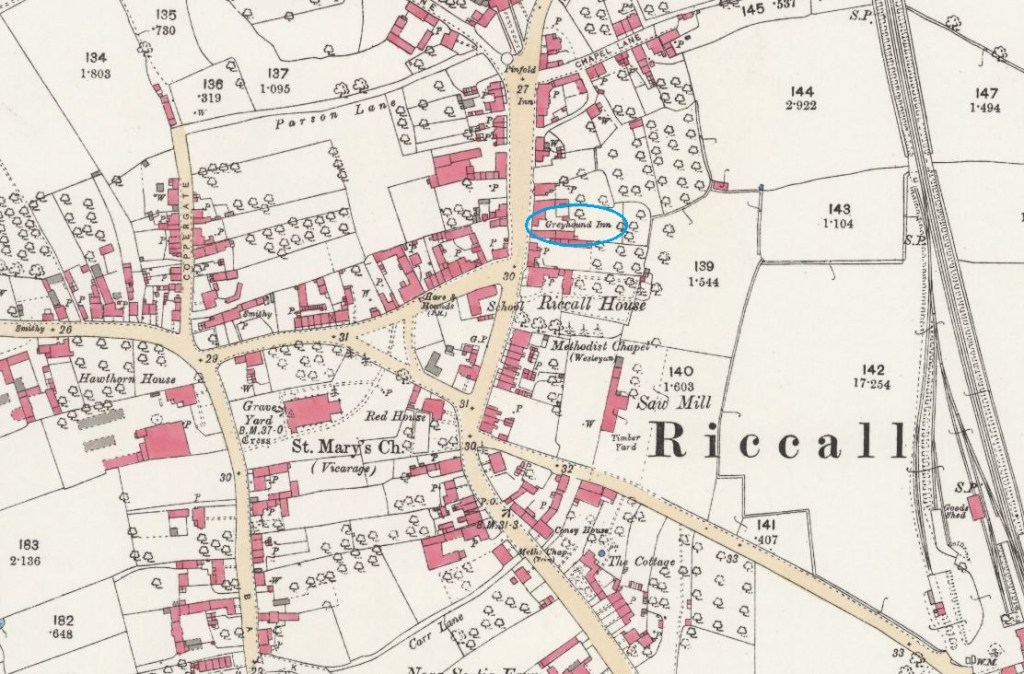
Guy Silversides (1784-1861), the publican at the Greyhound Inn in Riccall, was convicted on 2 March 1824 at the East Riding of Yorkshire Quarter Sessions. His offence, ‘against the conditions of recognizance for the license of an ale house’, resulted in a fine of one guinea with costs of 10 shillings and two pence. The following map shows the location of the Greyhound Inn in Riccall (Ordnance Survey Yorkshire CCVI.II date 1891).
The record from the Quarter Sessions (QSF/463/F/1) provided an insight into the case. A key witness was John Harper junior, an apprentice to Guy. (Guy was also a shoemaker.) John reported that on the evening of the offence, 20 January 1824, four people had played cards in the inn for money. They were his master Guy Silversides, Varley of Cawood, Edward Hawkins, Dowson and Jonathan Romans of Riccall. John saw Jonathan Romans cheating. He suggested that the house was a meeting place for prostitutes and used for gaming. It seems that his master, Guy, had entered his room the following morning, between 5 and 6 am, and ‘struck me twice upon the head’.
Guy, in his defence, asked that the magistrates consider that this was his first offence. It seems that a fellow card player, Jonathan Romans (1791-1858,) had previously been convicted at the Quarter Sessions for using dogs to destroy game in the nearby village of Escrick. His conviction on 17 February 1824 had resulted in a fine of £20 (QSF/463/F/20). Jonathan was described as a farmer from Riccall. A key witness in his trial was the Escrick gamekeeper John Smith. Other witnesses were George Kirk a labourer from Riccall, John Harper of Riccall and Susanna Wellman, a servant of Guy Silversides. Jonathan remained unmarried until his death in the Selby Union Workhouse on 31 January 1858. He was aged 68 and his cause of death was recorded as ‘decay’.
Returning to Guy, my 4th great grandfather; together with his wife Mary Tomlinson (1796-1866), the couple had twelve children. It isn’t clear when Guy gave up the Greyhound Inn. However, in White’s 1840 directory, Guy was recorded as a shoemaker and not the publican at the Greyhound Inn. He continued as a shoemaker in Riccall until at least the 1861 census. Guy died on 11 July 1861 and was buried in St Mary’s Churchyard, Riccall on 14 July 1861.
Finally:
I would like to know more about the people mentioned in this blog post. Do contact me if you have any further information which you are willing to share.
Quarter Session Records: QSF/463/F/1 and QSF/463/F/20. East Riding Archives.
White, William. (1840) History, Gazetteer and Directory of the East and North Ridings of Yorkshire. Sheffield: Robert Leader. pp. 334-5. https://www.ancestry.co.uk/ : accessed June 2025.
 Joan Reid Genealogy
